

World Bank, ADB delay $1.1 billion loans to Pakistan over deadlock in IMF talks

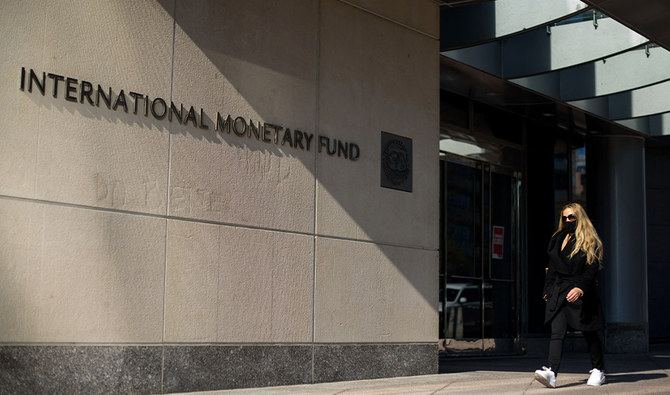
A woman walks past an International Monetary Fund headquarters(IMF) building in Washington, DC on April 5, 2021. (AFP)
Short Url
Updated 17 June 2021
Follow

World Bank, ADB delay $1.1 billion loans to Pakistan over deadlock in IMF talks

  • Economic experts say two international lenders likely to wait for outcome of Pakistan-IMF talks before releasing the money
  • Pakistan expects $800 million for budgetary support from World Bank, $300 million from Asian Development Bank 

Pakistan faces a delay of $1.1 billion in project loans from the World Bank and the Asian Development Bank, officials at the multilateral institutions said on Wednesday, as the government prepares to renegotiate conditions imposed by the International Monetary Fund to approve the remaining tranches of a $6 billion loan program which began in 2019.

Apart from the delay, the World Bank has cut down the size of its Securing Human Investments to Foster Transformation (SHIFT-II) program and the Program for Affordable and Clean Energy (PACE) from $500 million to $400 million and postponed the approval of a loan under the Resilient Institutions for Sustainable Economy (RISE-II) program.
“The amounts for SHIFT-II and PACE, at $400 million each, were jointly agreed upon by the Government of Pakistan and the World Bank,” Mariam Sara Altaf, the bank’s spokesperson in Pakistan, told Arab News on Tuesday.
Asked about the delay in the approval of RISE-II, she said it was due to process requirements.
The program supports reforms to broaden the tax base, strengthen debt management and transparency, and implement urgently needed reforms to achieve financial viability of the power sector.
“RISE-II has been delayed to accommodate the processes required by the government to implement the reforms outlined in the program,” Altaf said, adding: “SHIFT-II and PACE are scheduled for the board’s consideration on June 28.”
Pakistan is also facing delayed approval of the second tranche of a $300 million loan from the Asian Development Bank for the Energy Sector Reforms and Financial Sustainability Program.
“We will continue to work closely with other international financial institutions to ensure consistency and complementarity in the policy dialogue with the government,” F. Cleo Kawawaki, acting country director of the ADB in Pakistan, told Arab News. “An energy sector policy-based loan is in the pipeline for 2021. The ADB has been working in partnership with the Government of Pakistan in the energy sector and in infrastructure investment and reforms.”
Pakistan is also trying to negotiate with the IMF to get some relaxation in the conditions attached to the $6 billion loan program.
Pakistan’s newly appointed finance minister Shaukat Tarin has consistently called for the review of the IMF conditions which primarily focus on power tariffs and tax hikes.
“The World Bank and the Asian Development Bank have linked their lending to the IMF review for at least the last two years,” Dr. Vaqar Ahmed, joint executive director at the Sustainable Development Policy Institute, told Arab News on Wednesday. “If the program review goes smoothly, their lending to Pakistan will also happen more easily since they have linked their documents with the macroeconomic stability.”
Ahmed said the World Bank and the Asian Development Bank would wait for the outcome of the Pakistan-IMF renegotiations.
Pakistan’s finance ministry did not respond to Arab News queries by the time this story was filed.


Afghans rally against Pakistan and civilian casualties

Updated 6 sec ago
Follow

Afghans rally against Pakistan and civilian casualties

  • UN says a week of border fighting killed dozens of Afghan civilians, displaced over thousands
  • Fighting broke out along the Afghan border after Pakistan launched air strikes targeting militants

GARDEZ, Afghanistan: Decorating their soldiers with colorful garlands, hundreds of Afghans rallied in border provinces to decry Pakistan killing civilians and to show support for their troops battling at the frontier.

A week of border fighting between the two neighbors has killed dozens of Afghan civilians and displaced tens of thousands, according to UN figures.

In Gardez, the capital of eastern Paktia province, residents gathered while some waved the white flag of the Taliban government.

“Today we’re out in central Paktia, Gardez, against the cruel attacks of Pakistan on Afghan civilians,” said Ghamay, a demonstrator who only gave one name.

“We’re out here to defend our land,” he added.

At least 42 civilians have been killed and 104 wounded since February 26, including children, the UN mission in Afghanistan reported.

Islamabad is yet to comment on civilian casualties and said its troops have killed more than 430 Afghan soldiers.

Afghanistan estimated Pakistani fatalities among troops at around 150. Casualty claims from both sides are difficult to verify independently.

Fighting erupted with an Afghan border offensive in retaliation for earlier Pakistani air strikes, which Islamabad said were targeting militants.

A rally was also held in the Gurbuz district of Khost province, which has been hit by fighting.

“Today’s protest is not just for a show, we’re out for those 17 martyrs in Kunar including women, children and old people,” said protester Obaidullah Gurbaz.

“You can see the soldiers standing behind us for the past seven, eight days. They are hungry and thirsty but defending the country strongly,” the 70-year-old added.

Afghanistan’s defense ministry said more than 25 soldiers have been killed.

FIGHTING HITS FOOD AID

Clashes at the border have also displaced nearly 66,000 Afghans, the International Organization for Migration (IOM) said.

At least one of the UN agency’s centers in Nangarhar province “sustained significant collateral damage,” the IOM said.

As well as putting a halt to humanitarian support for Afghans returning from Pakistan, the fighting has also suspended emergency food aid.

About 160,000 people have been affected by the stoppage, the World Food Programme said, in a country already facing a hunger crisis.

One resident in Nangarhar said the UN agency “used to help us a lot,” but now he has cut the amount of bread he eats.

“We search around, sometimes with a full stomach and sometimes with half,” said Farhad, who only gave one name.

“Last night I went to my neighbors and relatives to borrow 1,000 Afghanis ($16) but nobody gave it to me.”