

Authorities close six 'illegal' Iranian schools in southwest Pakistan

Pakistani authorities seal a school operated illegally by Iranian nationals in Quetta, Balochistan province on June 11, 2021. (Photo courtesy: Quetta Assistant Commissioner)
Short Url
Updated 13 June 2021
Follow

Authorities close six 'illegal' Iranian schools in southwest Pakistan

  • Schools were teaching foreign curriculum in violation of Pakistani law, officials say
  • Management and faculty of the schools consisted of Iranian nationals

KARACHI: Pakistani authorities have closed six Iranian schools that were operating illegally in southwestern Balochistan province, officials said on Saturday.

All of the schools shut on Friday were run by Iranian nationals in Quetta, the capital of the province bordering Iran. 

“We have sealed six schools, which were being illegally run by Iranian nationals and where international syllabus was being taught in violation of the country law,” Quetta Assistant Commissioner Muhammad Zuhaib-ul-Haq told Arab News.

Shabbir Ahmed, monitoring and evaluation director of the provincial government's Balochistan Education Foundation, said four more schools are being investigated, also for teaching foreign curriculum

"It’s more likely that the remaining four schools will also be sealed since they also don’t fulfil requirements," Ahmed said. "Foreign-funded schools with foreign faculty and foreign syllabus are unacceptable."

He added that not only the management of the schools but also their faculty consisted of Iranian nationals. 
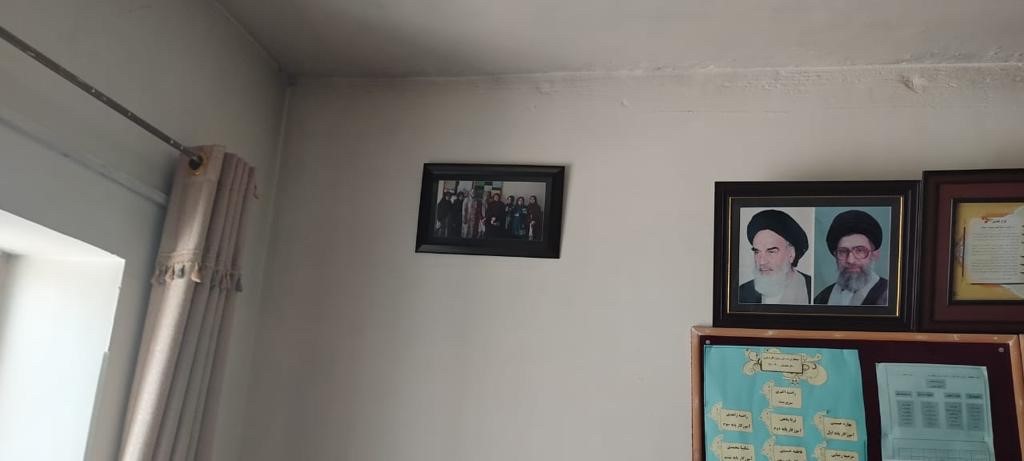


Portraits of Iranian leaders are displayed on the wall of a school operated illegally by Iranian nationals in Quetta, Balochistan province on June 11, 2021. (Photo courtesy: Quetta Assistant Commissioner)

It remains unclear when the schools were established. While they had their 1992 no objection certificates displayed on notice boards, Ahmed said, this was not sufficient for them to operate as they had not registered with the provincial home and education departments.

The closed schools attracted the attention of local authorities five months ago and were asked to get properly registered.
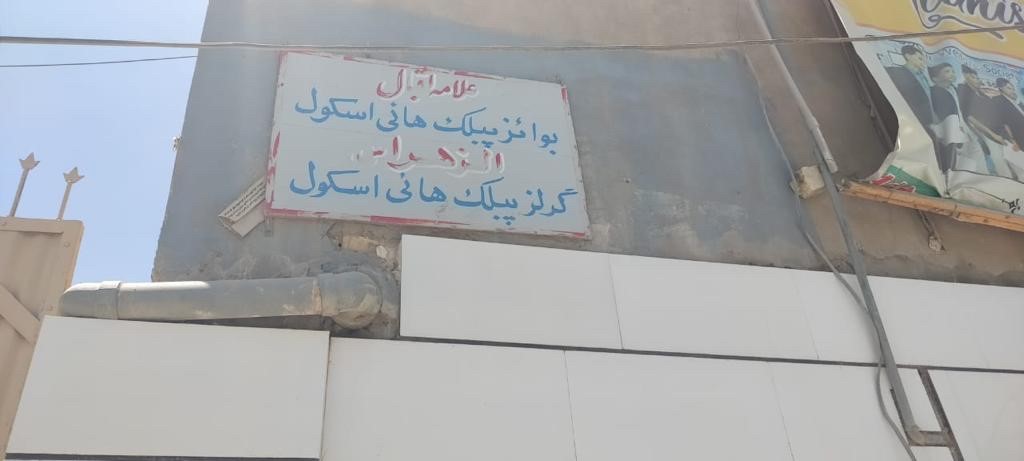


A signboard of an Iranian school is visible on its wall in Quetta, Balochistan province on June 11, 2021, as Pakistani authorities move to seal it over operating without registration. (Photo courtesy: Quetta Assistant Commissioner)

"A form was handed over to them to get themselves registered but registration was declined after they failed to fulfil requirements," Ahmed said.

“If you are teaching in Pakistan, which is a sovereign state, you will have to teach Pakistani syllabus," he added. "This is not possible to teach a foreign curriculum in a sovereign state."


Pakistan explores new food export routes, protections for farm supply amid Middle East conflict

Updated 7 sec ago
Follow

Pakistan explores new food export routes, protections for farm supply amid Middle East conflict

  • Senior ministers review alternative sea routes, new markets amid the war in Iran
  • Pakistan relies heavily on Middle Eastern sea lanes for its imports and exports

ISLAMABAD: Pakistan reviewed the supply of perishable food items and fertilizer stocks on Monday, according to the state media, as the escalating conflict in the Middle East threatens to disrupt shipping routes and energy supplies critical to the country’s trade and agriculture.

The meetings, chaired separately by Deputy Prime Minister and Foreign Minister Ishaq Dar and Food Security Minister Rana Tanveer Hussain, came as tensions following US-Israeli strikes on Iran have raised concerns about the security of key maritime routes and energy markets that underpin Pakistan’s economy.

Pakistan relies heavily on Middle Eastern sea lanes for both fuel imports and exports of agricultural and food products, making disruptions in the region particularly sensitive for the country.

Dar chaired a meeting of the PM’s Committee to review the supply and export of perishable food items, examining steps to maintain domestic availability while ensuring timely exports of surplus produce.

“In the light of evolving regional trade dynamics and disruptions to some traditional routes, the committee explored alternative export pathways, sea routes, and potential new markets,” Radio Pakistan reported after the meeting.

Officials also discussed proposals from exporters and emphasized improving storage facilities, logistics and market access while assessing global demand and pricing trends to support export competitiveness.

In a separate meeting in Islamabad, Food Security Minister Rana Tanveer Hussain said the government would ensure stable fertilizer availability despite regional uncertainties.

“Agricultural productivity and food security will remain protected despite external challenges,” he said while chairing a meeting of the Fertilizer Review Committee.

He stressed the need for close coordination among manufacturers, distributors and provincial authorities to maintain uninterrupted fertilizer supply across the country.

The committee also reviewed fertilizer pricing and distribution mechanisms to prevent artificial shortages and hoarding, officials said, adding that authorities would monitor prices closely to ensure farmers have access to affordable inputs.