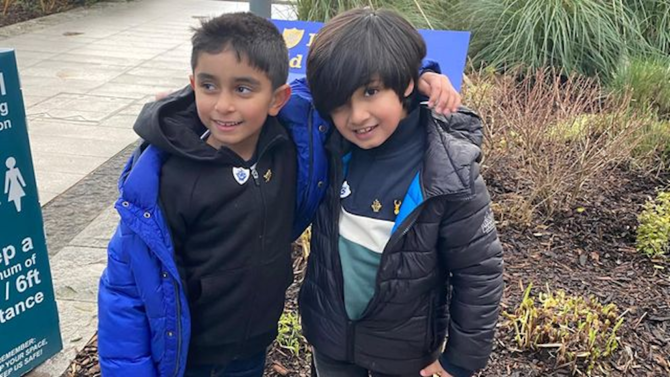

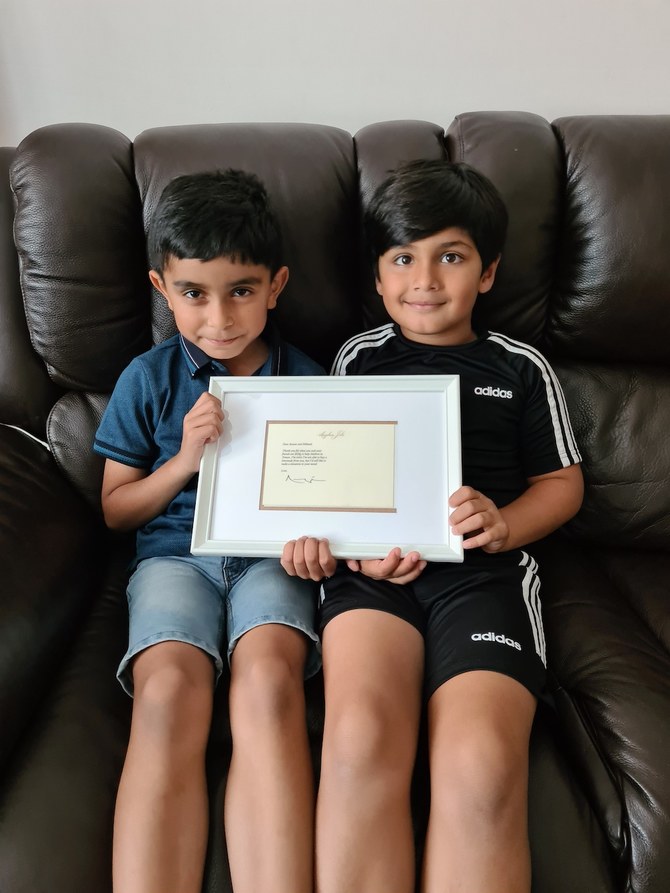
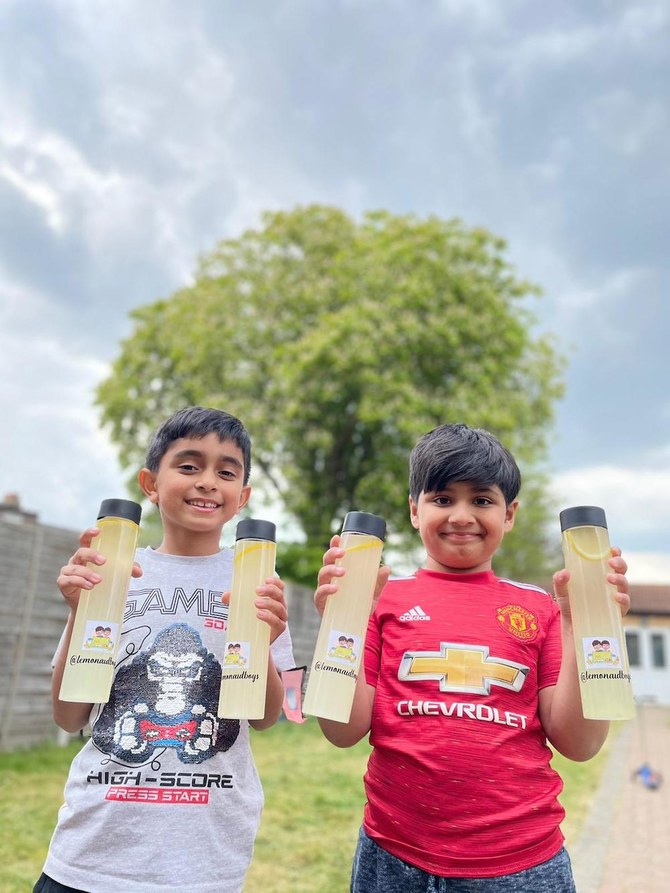


LONDON: Two seven-year-old boys have single-handedly managed to up the world of philanthropy and the act of giving, as they aim to raise “a quadrillion pounds for every single country” they are supporting.
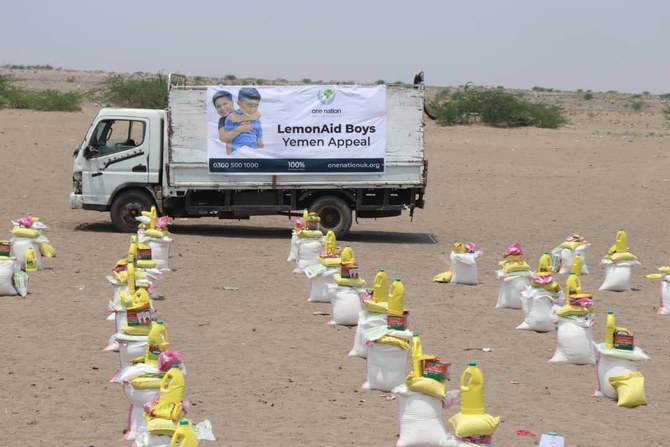
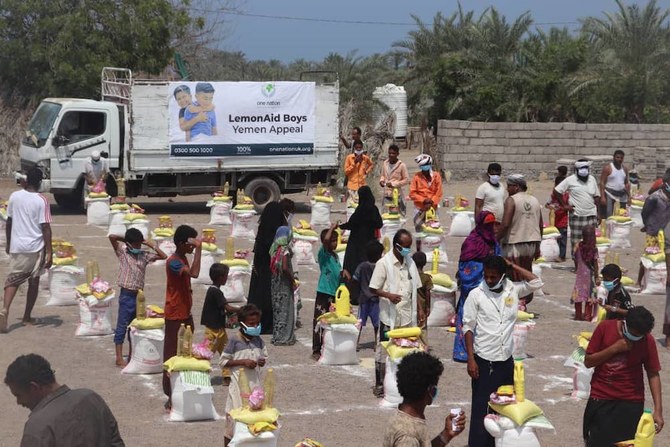
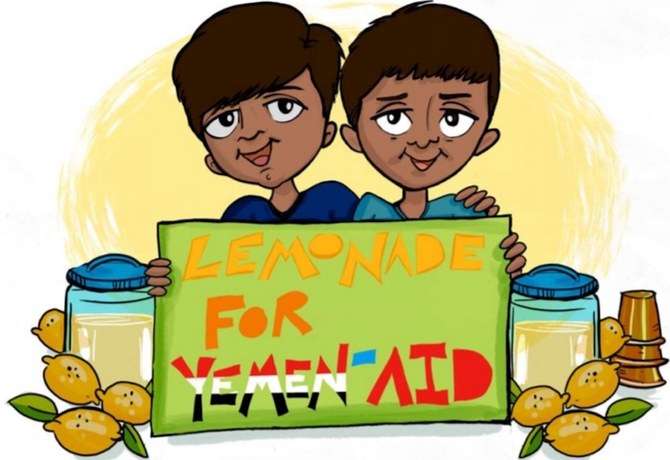
Best friends Ayaan Moosa and Mikaeel Ishaaq, from Ilford in east London, set up their homemade lemonade stand to raise £500 ($700) for Yemen’s humanitarian and famine crisis and, to their surprise, managed to raise £140,000, gaining them international recognition in such a short span as their campaign went viral.
We did not expect it, but we were hoping for it, they told Arab News.
The Yemen fundraising initiative caught the attention of award-winning actress and human rights campaigner Angelina Jolie, who was trying to gain media and international attention for the plight in Yemen.
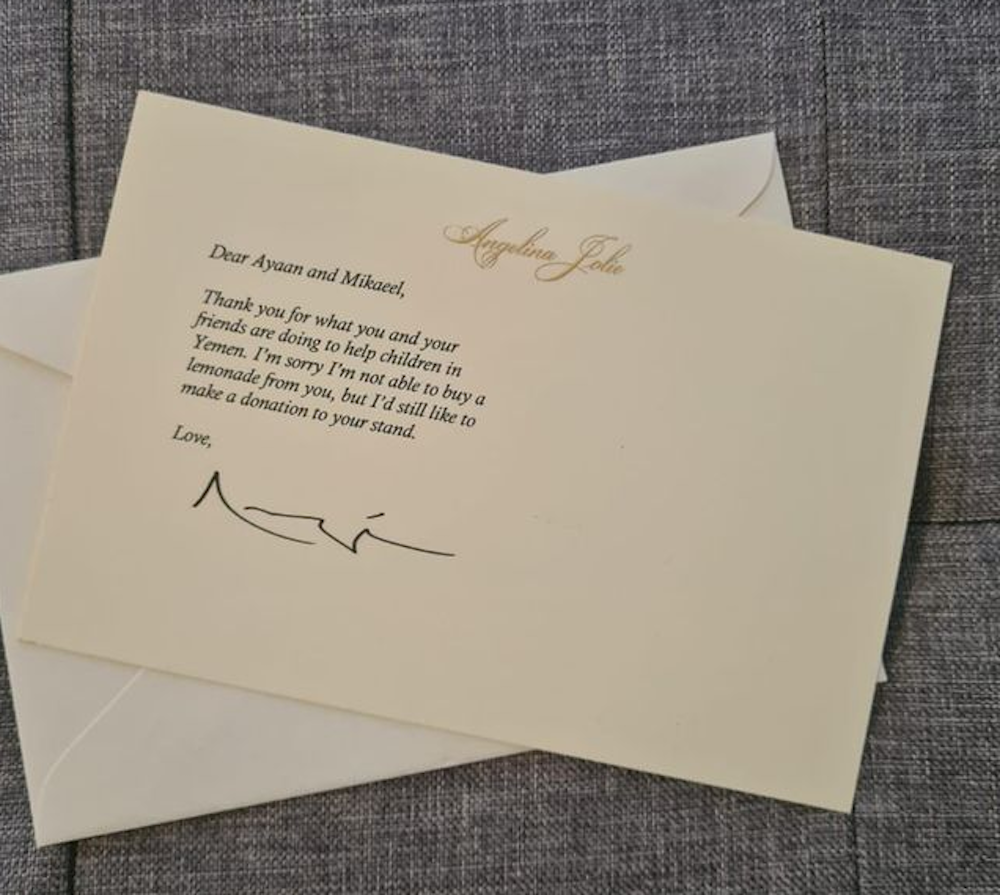
Angelina Jolie made a very generous donation to the stand and sent the boys some presents to gain them more publicity. (Twitter/@LemonAidboys)
“She (Jolie) saw the interview they gave on the BBC (website). She had been trying to raise awareness for Yemen and obviously she is considered quite a high-list celebrity, but she was struggling to get such a sad story into the news,” Ayaan’s father Shakil Moosa said.
“Not very many people wanted to cover it, even given her high profile. She saw the story and she thought, how are two seven-year-old boys able to bring that much international attention to the famine and the crisis that is going on in in Yemen, how are they able to do that?
“She has been amazing. She’s been a big inspiration, and a big support in the stuff that they are up to...and when she is in London next, we are going to try to get her to come over and meet the boys and get a glass of lemonade,” Moosa said.
Jolie made a very generous donation to the stand and sent the boys some presents to gain them more publicity. Off the back of that the boys won some big accolades. They were nominated for a gold Blue Peter Badge, the highest award given for exceptional achievement by the BBC children’s program, by the British rapper Stormzy. Following that, they won the Rotary Great Britain and Ireland Young Citizen Awards for their humanitarian causes because they raised so much money.
'You're a pair of little legends!'
Stormzy recorded a special message for 2 boys who raised £100k with ‘Lemonade for Yemen-aid’, AND nominated them for Gold Blue Peter Badges!!
Blue Peter Gold Badge Awards, on @CBBC and @BBCiPlayer right now!
https://t.co/NSWQ9kqpXI pic.twitter.com/gsrQ6YqVSB— BBC North (@BBCNorthPR) February 25, 2021
Stormzy sent them a recorded message saying when he was their age he wasn’t doing lemonade stands and inspiring people the way they have. “I would like to nominate you for a Gold Blue Peter Badge, you’re a pair of little legends, wear it with pride because you guys deserve it,” he said.
They have also received support from some of their favorite footballers, including Bruno Fernandes of Manchester United and David Luiz of Arsenal.
During the Muslim month of Ramadan, the boys raised £25,000 for the Rohingya by selling lemonade and with international donations via their JustGiving page.
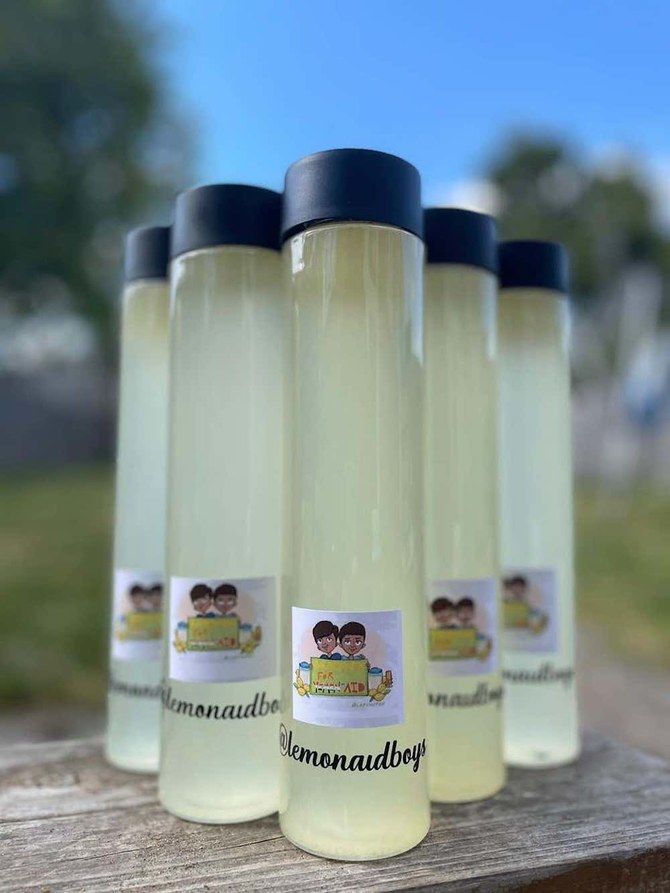
“We squeezed the lemons, and then we made the lemonade with our special ingredients, and then we stood outside, and then we got the money, we gave it to the bank, and then the bank put it into our charity,” the boys said.
Why lemonade? “Because we think everyone likes lemonade, and we like lemonade too,” they said.
While still fundraising for Yemen and the Rohingya, Ayaan and Mikaeel have also turned their attention to the Palestinian cause, following an 11-day war that rocked the Gaza Strip last month.
“People in Palestine are getting hurt and they have no more water and food and houses, because their houses are being bombed and we wanted to help them,” Ayaan said.
Mikaeel said the Palestinian issue was important to him “because people are getting injured and people are dying and their houses are getting bombed and people are just breaking their houses and stealing them,” in reference to the Sheikh Jarrah neighborhood in Jerusalem where dozens of Palestinians are facing eviction from their homes by Israeli forces.
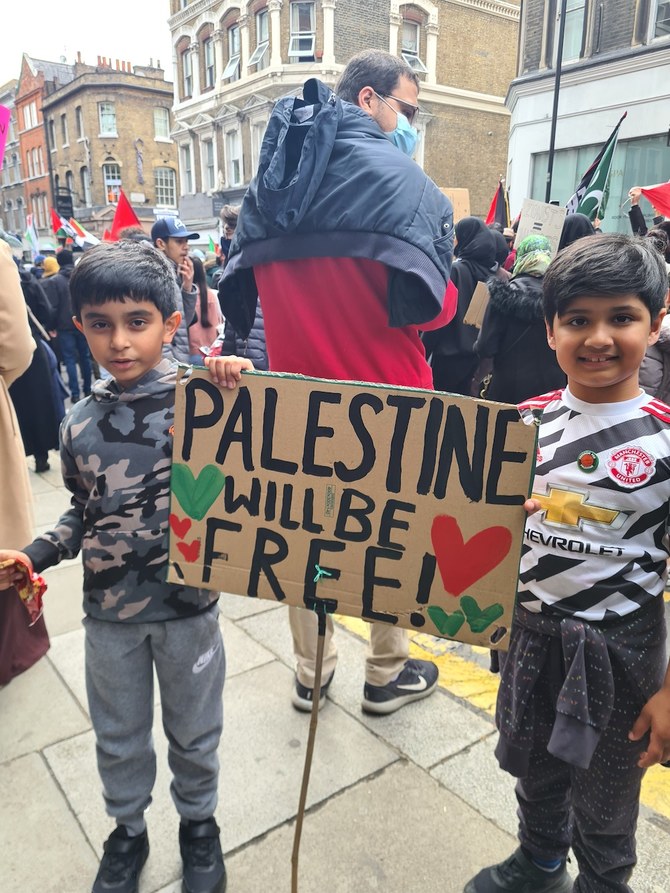
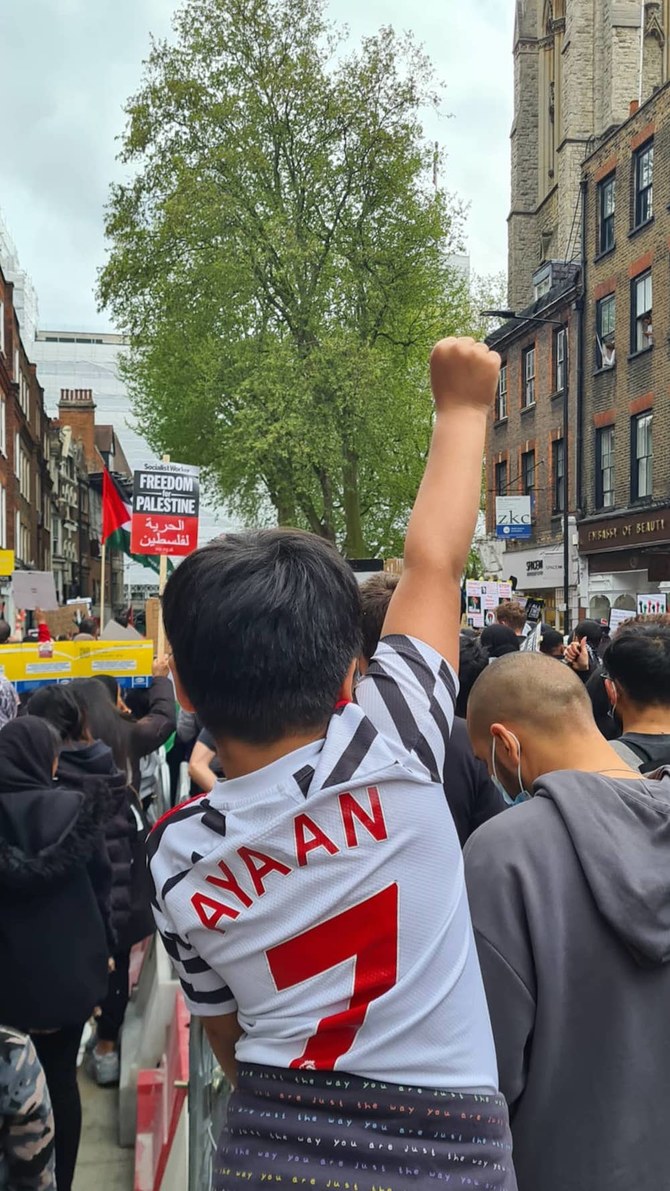
The boys also participated in Palestinian protests in central London organized by the UK-based NGO Friends of Al-Aqsa (FOA).
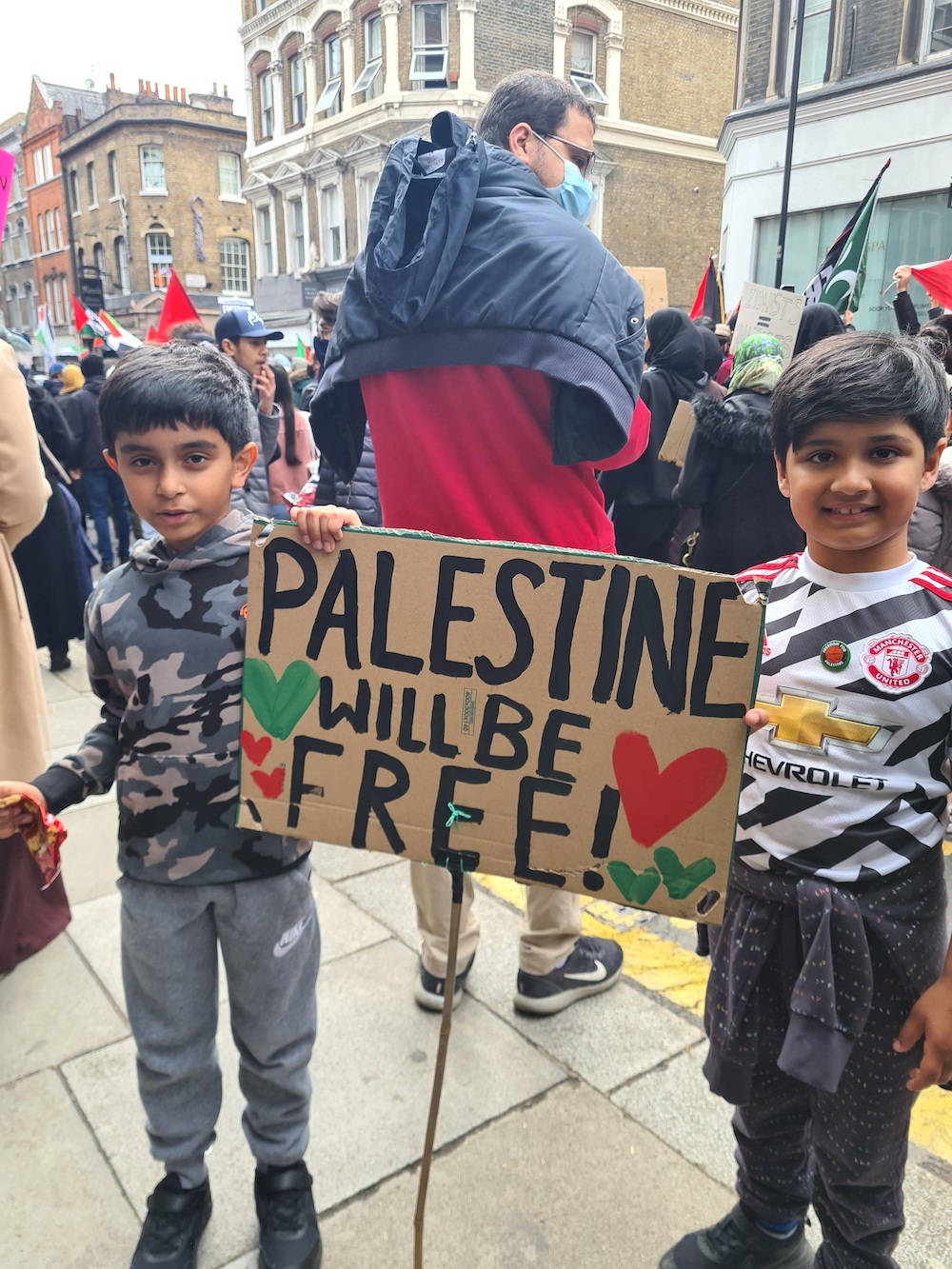
Best friends Ayaan Moosa and Mikaeel Ishaaq set up their homemade lemonade stand and managed to raise £140,000 for Yemen. (Supplied)
“We walked five kilometers but it was really hard because our legs were really hurting,” Ayaan said, but the boys added that they would do it again.
FOA, which focuses on defending the human rights of Palestinians and protecting the sacred Al-Aqsa mosque, organized a protest on May 15 and a larger one on May 22, in which up to 200,000 people marched past Downing Street in solidarity with the Palestinian people, calling for sanctions on Israel.
Dubbed the LemonAid Boys, they have now embarked on a partnership with FOA and are expected to do a live interview with British-Iraqi rapper Lowkey who is a vocal activist on Palestinian issues.
WE ARE THRILLED that the @LemonAidboys Ayaan & Mikaeel have received GOLD #BLUEPETER badges for their immense fundraising efforts for the #refugee children of #Yemen So wonderful to hear that #theboyatthebackoftheclass helped inspire. Congratulations boys! And THANK YOUpic.twitter.com/yqxOjf4qWc
— ORefugeeAidTeam (@o_refugee) February 26, 2021
Shamiul Joarder, from FOA, said that they have seen a clear change in the demographic of people in support of the Palestinian cause, including “young, dynamic groups of protesters” from mid-late teens to early-mid 20s, as well as young families with their children.”
Joarder was introduced to the great work the boys do when they participated in the demonstration.
“We thought this is really cool, they’ve obviously got a profile ready, they’re so young, and they already care about justice, so it kind of made sense for us to reach out and see if they wanted to do more on Palestine and raise awareness, because we were planning to do something for students.
“We are setting up an Instagram interview between the boys and Lowkey and the idea was to keep it very simple and informal, but within that, getting some basic information for young people — the bombs have stopped dropping in Gaza, does that mean everything is OK now? That obviously allows the opportunity to expand on to the occupation and the fact that it is 73 years of occupation and colonization that is still happening, and that we should still care for justice, so it opened things up having such a young dynamic duo involved,” Joarder said.
Shout-out to the @LemonAidBoys: I sent them a congratulations message when I heard about their @RotaryGBI Youth award because I'm just so impressed at the amazing work they're doing to raise awareness & funds for #Yemen. They should inspire us all! pic.twitter.com/x94QIE4Qwm
— David Beasley (@WFPChief) May 27, 2021
The sky is the limit for the boys and every milestone that they reach is just another tick box more than the initial £500 target. However, they are looking to diversify to strengthen their cause. They are in talks with a drinks manufacturer and have released a children’s book, with all proceeds going to charity.
“I don’t think there is anything that they could do that would make me more proud. They are helping humanity, and they have got that empathy and humility inside them to want to help others. As parents, we help to facilitate that, we help give them the platform and help them do that, but it is their own reckoning, they are the bosses,” Moosa said.
“They are just two regular seven-year-old boys, they just love what they do, and they have not let it get to their heads. They just want to continually help people and I’m extremely, extremely, extremely proud of both of them,” he added.