

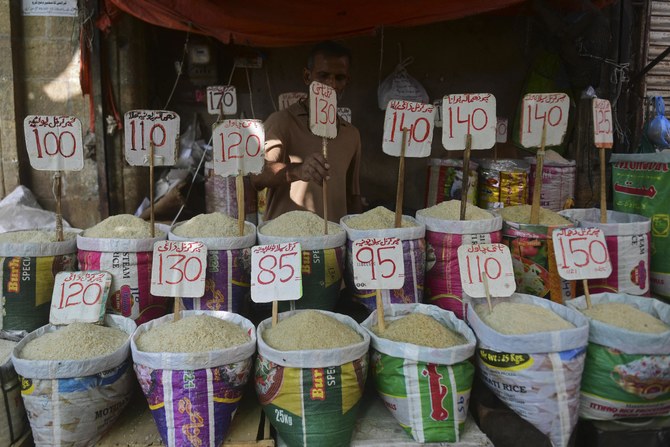

KARACHI: Amid desk thumping and sloganeering from opposition politicians in the national assembly, Pakistani finance minister Shaukat Tarin on Friday presented a deficit budget with a total outlay of Rs8.4 trillion ($53.93 billion), a revenue generation target of Rs5.829 trillion and a growth target at 4.8% of GDP.
The Pakistan Tehreek-e-Insaf (PTI) government presented its third budget at a time when the country is facing multiple challenges including an economic downturn propelled by the coronavirus pandemic. The main objective of the budget, officials have said, is to strike a balance between fiscal deficits due to COVID-19 and boosting economic growth.
The budget also comes while Pakistan is in talks with the IMF as part of the sixth review of a $6 billion bailout programme, which it entered in 2019. The revenue target has been a key topic in negotiations, and Tarin has said the IMF and Pakistani government have debated ways to achieve the target, which is 23% higher than the current year’s expected collection.
“Prime Minister Imran Khan's government did not hesitate to take many difficult decisions,” Tarin, the fourth finance minister in the Khan-led government, said as he addressed the budget session in parliament. “The government, through its sound economic policies, has turned the current account deficit into a surplus in FY20.”
He announced a $1.1 billion allocation to procure coronavirus vaccines, saying the government planned to vaccinate 100 million people by July 2022 and had also set aside Rs100 billion to combat coronavirus spread in the next fiscal year.
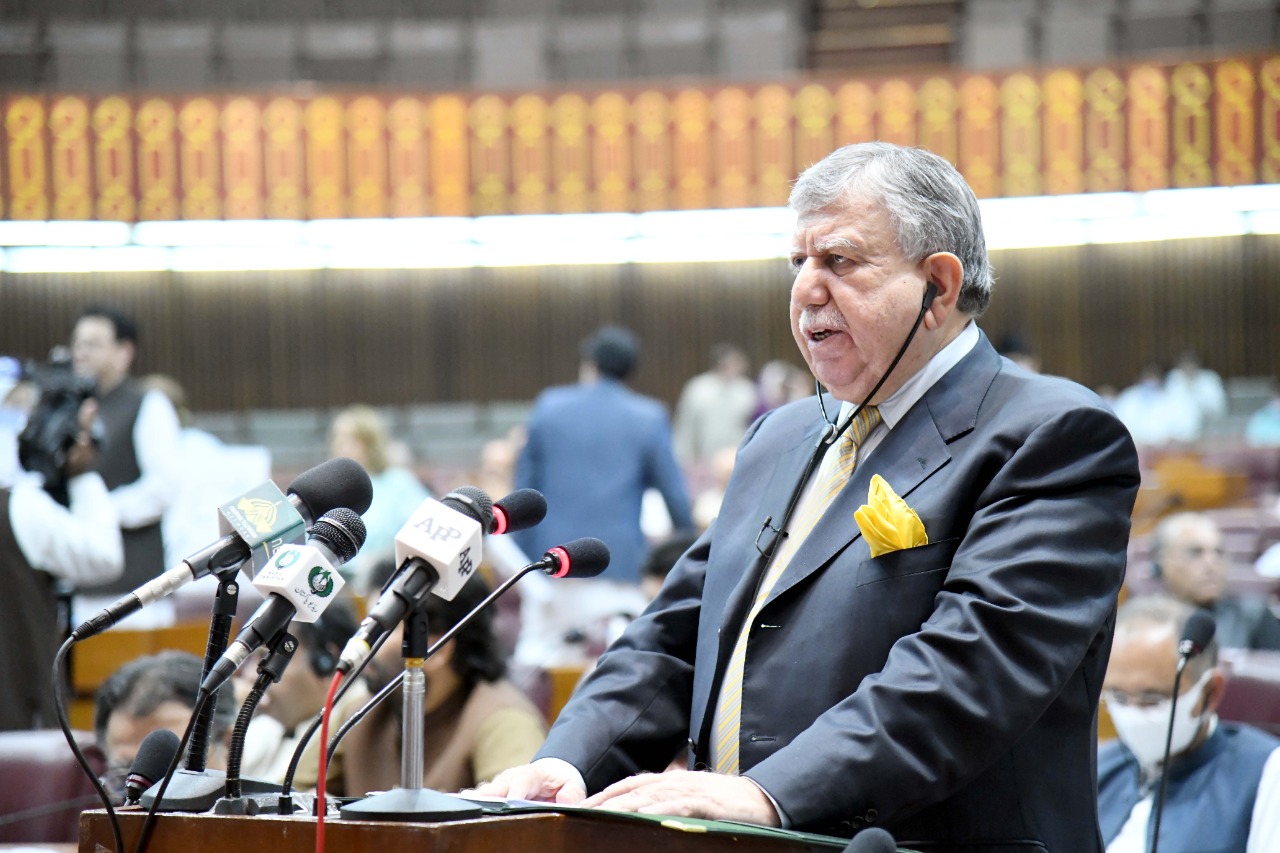
Pakistan's finance minister Shaukat Tarin presents federal budget for fiscal year 2021-22 at the National Assembly in Islamabad, Pakistan, on June 11, 2021. (Photo courtesy: Finance Ministry)
The finance minister announced an increase in the Public Sector Development Program for next fiscal year to Rs900 billion from Rs630 billion, while Rs1.37 trillion would be spent on defence.
Tarin reiterated that the economy was moving from a stabilization phase “on its way to growth”: “18% increase in tax collection has come on the back of Pakistan's economic recovery.”
He also proposed a number of pro-people measures, including a reduction in taxes and an increase in the salaries of federal government employees and pensions by 10% in light of inflationary pressures.
He ruled out the imposition of new taxes on the salaried class, saying the government would introduce reforms in the taxation system that would make it easier to file returns.
The finance minister also announced that the federal government had increased subsidies allocation to Rs682 billion and slashed sales tax on locally manufactured cars from 17% to 12.5%. The government has also exempted Federal Excise Duty (FED) on 850cc cars.
The federal government also announced cutting withholding taxes on mobile phones which would be done in a phased manner: 10% in the first phase and then 8% later on.
To lift the poor out of poverty, “the government had decided to provide interest-free loans of up to Rs500,000 to the poor,” Tarin said.


