

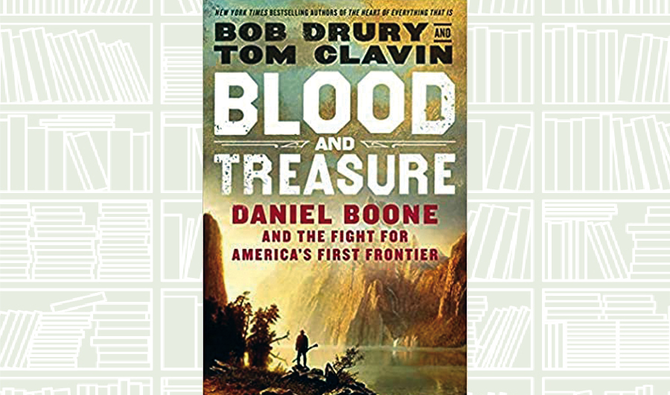
What We Are Reading Today: Blood and Treasure

Short Url
Updated 09 June 2021
Follow

What We Are Reading Today: Blood and Treasure

Edited by Bob Drury and Tom Clavin

Bob Drury and Tom Clavin’s Blood and Treasure is a fast-paced and fiery narrative which chronicles the explosive saga of the legendary figure Daniel Boone and the bloody struggle for America’s frontier.

It is the mid-eighteenth century, and in the 13 colonies founded by Great Britain, anxious colonists desperate to conquer and settle North America’s “First Frontier” beyond the Appalachian Mountains commence a series of bloody battles. These violent conflicts are waged against the Native American tribes whose lands they covet, the French, and finally against the mother country itself in an American Revolution destined to reverberate around the world.

This is the setting of Blood and Treasure, and the guide to this epic narrative is America’s first and arguably greatest pathfinder, Daniel Boone — not the coonskin cap-wearing caricature of popular culture but the flesh-and-blood frontiersman and Revolutionary War hero whose explorations into the forested frontier beyond the great mountains would become the stuff of legend.


What We Are Reading Today: Three Roads Back by Robert D. Richardson

Updated 06 March 2026
Follow

What We Are Reading Today: Three Roads Back by Robert D. Richardson

In “Three Roads Back,” Robert Richardson, the author of magisterial biographies of Ralph Waldo Emerson, Henry David Thoreau, and William James, tells the connected stories of how these foundational American writers and thinkers dealt with personal tragedies early in their careers. 
For Emerson, it was the death of his young wife and, 11 years later, his five-year-old son; for Thoreau, it was the death of his brother; and for James, it was the death of his beloved cousin Minnie Temple. 

Filled with rich biographical detail and unforgettable passages from the journals and letters of Emerson, Thoreau, and James, these vivid and moving stories of loss and hard-fought resilience show how the writers’ responses to these deaths helped spur them on to their greatest work, influencing the birth and course of American literature and philosophy.
As Richardson shows, all three emerged from their grief with a new way of seeing, one shaped by a belief in what Emerson called “the deep remedial force that underlies all facts.”