Emirates cargo unit boosts vaccine transport capacity

1 / 2
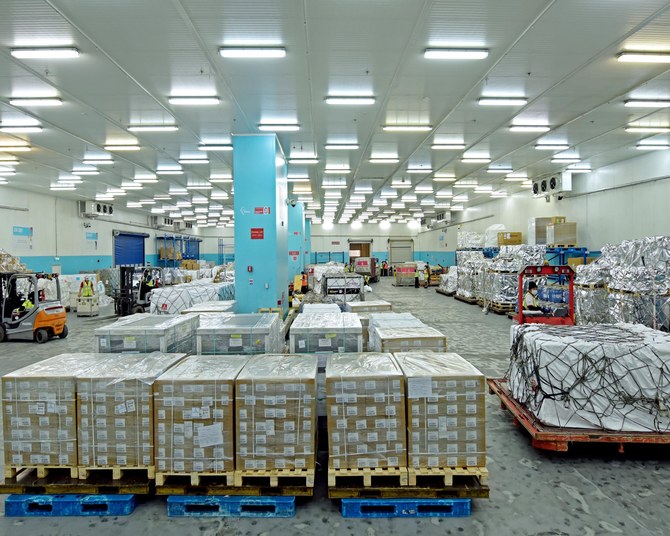
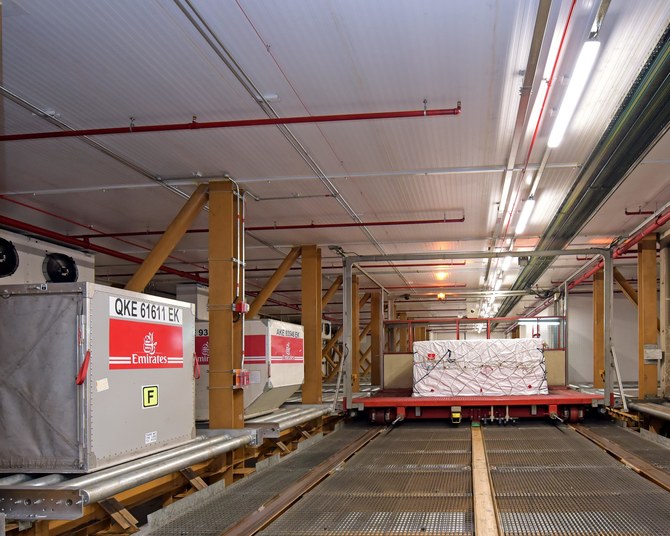
The Dubai carrier’s cargo unit has played a big part in the transport of vaccines worldwide. (Supplied)
2 / 2
The extended cool room will provide an additional 2,600 square meters of temperature-controlled environment. (Supplied)
Short Url
Updated 08 June 2021
Follow

Emirates cargo unit boosts vaccine transport capacity

  • About 94 pallet positions will be added to the existing infrastructure, which can now hold an additional of 60-90 million doses of the COVID-19 vaccine
  • SkyCargo has moved over 75 million doses of the vaccine on more than 250 flights to over 60 destinations since late last year

DUBAI: Emirates SkyCargo is expanding its vaccine storage facility at the Dubai International Airport to provide more handling capacity as demand for the jab picks up.
The extended cool room will provide an additional 2,600 square meters of temperature-controlled environment (2-25 degrees Celsius) for the storage and handling of vaccines and other pharmaceuticals.
About 94 pallet positions will be added to the existing infrastructure, which can now hold an additional of 60-90 million doses of the COVID-19 vaccine.
The Dubai carrier’s cargo unit has played a big part in the transport of vaccines worldwide, having moved over 75 million doses of the vaccine on more than 250 flights to over 60 destinations since late last year.
“Emirates SkyCargo is proud to have flown over 350 tons of COVID-19 vaccines around the world, delivering much needed support to communities that are still heavily impacted by the current wave of the pandemic,” Nabil Sultan, Emirates’ divisional vice president for cargo, said.
He said there will be an increase in demand to transport vaccines to developing nations in the second half of the year.
“Already, we have seen a ramping up of COVID-19 vaccine volumes that were transported over the last few weeks in line with increased manufacturing. We expect to reach the 100 million doses milestone well before the end of this month,” Sultan added.


Saudi Arabia’s foreign reserves rise to a 6-year high of $475bn

Updated 22 February 2026
Follow

Saudi Arabia’s foreign reserves rise to a 6-year high of $475bn

RIYADH: Saudi Arabia’s foreign reserves climbed 3 percent month on month in January to SR1.78 trillion, up SR58.7 billion ($15.6 billion) from December and marking a six-year high.

On an annual basis, the Saudi Central Bank’s net foreign assets rose by 10 percent, equivalent to SR155.8 billion, according to data from the Saudi Central Bank, Argaam reported.

The reserve assets, a crucial indicator of economic stability and external financial strength, comprise several key components.

According to the central bank, also known as SAMA, the Kingdom’s reserves include foreign securities, foreign currency, and bank deposits, as well as its reserve position at the International Monetary Fund, Special Drawing Rights, and monetary gold.

The rise in reserves underscores the strength and liquidity of the Kingdom’s financial position and aligns with Saudi Arabia’s goal of strengthening its financial safety net as it advances economic diversification under Vision 2030.

The value of foreign currency reserves, which represent approximately 95 percent of the total holdings, increased by about 10 percent during January 2026 compared to the same month in 2025, reaching SR1.68 trillion.

The value of the reserve at the IMF increased by 9 percent to reach SR13.1 billion.

Meanwhile, SDRs rose by 5 percent during the period to reach SR80.5 billion.

The Kingdom’s gold reserves remained stable at SR1.62 billion, the same level it has maintained since January 2008.

Saudi Arabia’s foreign reserve assets saw a monthly rise of 5 percent in November, climbing to SR1.74 trillion, according to the Kingdom’s central bank.

Overall, the continued advancement in reserve assets highlights the strength of Saudi Arabia’s fiscal and monetary buffers. These resources support the national currency, help maintain financial system stability, and enhance the country’s ability to navigate global economic volatility.

The sustained accumulation of foreign reserves is a critical pillar of the Kingdom’s economic stability. It directly reinforces investor confidence in the riyal’s peg to the US dollar, a foundational monetary policy, by providing SAMA with ample resources to defend the currency if needed.

Furthermore, this financial buffer enhances the nation’s sovereign credit profile, lowers national borrowing costs, and provides essential fiscal space to navigate global economic volatility while continuing to fund its ambitious Vision 2030 transformation agenda.