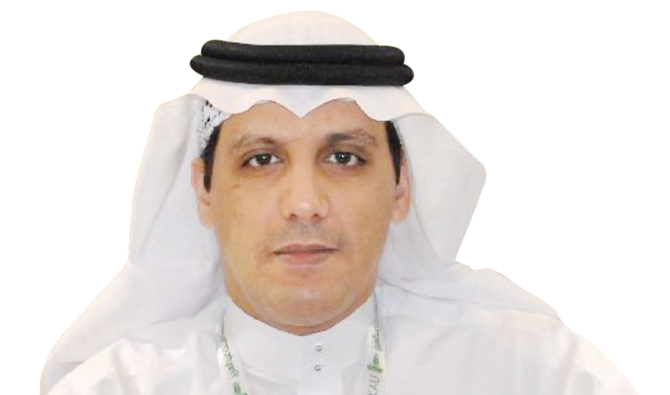
Dr. Abdulrahman Hilal Al-Talhi was recently appointed president of Prince Sattam bin Abdul Aziz University (PSAU).
PSAU’s College of Dentistry has been accredited by the Accreditation Agency in Health and Social Sciences, which is an interdisciplinary and multi-professional organization with a focus on accreditation of both undergraduate and master’s programs at universities and higher education institutions.
Al-Talhi obtained a bachelor’s degree in computer science at the College of Science, King Abdul Aziz University (KAU) in 1994. Four years later, he graduated from the University of New Orleans in the US with a master’s degree in the same field. In 2004, he obtained a Ph.D. in the same discipline also from New Orleans.
In March 2020, he was appointed vice president for development at KAU. Al-Talhi also served as vice dean of the College of Computing and Information Technology from 2009 to 2013, before becoming the full dean of the college from 2013 to 2020.
Between 2006 and 2013, Al-Talhi worked as director of KAU’s computer skills unit. He also chaired the university’s IT department for nearly three years beginning in 2007.
The newly appointed rector worked as a functional data analyst between 1998 and 1999 at CACI-Federal, Inc. in New Orleans, where he later served as a computer system analyst for two years beginning in 1999.
From 2001 to 2004, Al-Talhi led the CACI-Federal, Inc. team of computer system analysts.
Al-Talhi, whose research interests include big data and computer networks, has been a member of the Association for Computing Machinery since 1997. He has attended several programs on leadership and strategic planning.


![]()

Who’s Who: Dr. Abdulrahman Hilal Al-Talhi, president of Prince Sattam bin Abdul Aziz University
Short Url
https://arab.news/5fngx
Who’s Who: Dr. Abdulrahman Hilal Al-Talhi, president of Prince Sattam bin Abdul Aziz University


Latest updates


Recommended


© 2026 SAUDI RESEARCH & PUBLISHING COMPANY, All Rights Reserved And subject to Terms of Use Agreement.