WEEKLY ENERGY RECAP: Oil prices make the second consecutive week of gains

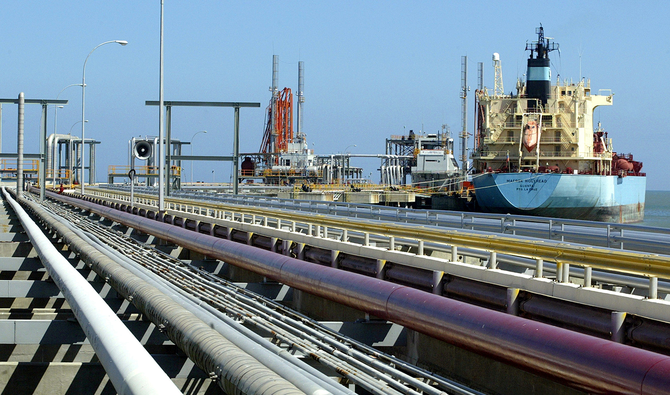
An oil tanker is seen at Jose refinery cargo terminal in Venezuela. (Reuters/File)
Short Url
Updated 06 June 2021
Follow

WEEKLY ENERGY RECAP: Oil prices make the second consecutive week of gains

  • The oil market is very unpredictable and all price movement scenarios are possible

Oil prices made the second consecutive week of gains and rose to a two-year high on stronger demand prospects, as OPEC+ succeeded in draining global oil inventories and the successful rollout of vaccine programs continued.

On the week closing, Brent crude price rose to $71.89 per barrel. West Texas Intermediate (WTI) rose to $69.62 per barrel.

After two years of resistance, the Brent crude price finally rose above the $70 mark amid tighter oil market prospects. However, it is not yet clear if there is room to jump much higher to make the $70 mark a base level. More importantly, is a Brent price level above $70 per barrel mark considered a sustainable price for a barrel of oil?

The oil market is very unpredictable and all price movement scenarios are possible, especially when it seems that speculators are finally back to leverage this price rally and bet on oil after being mellow for a while.

Plans to gradually increase production in July were already factored into oil prices ahead of the OPEC+ meeting, driven by expectations that recovering summer travel demand and the reopening economies will easily accommodate the gradual increase.

OPEC+ output cuts also helped to offset significant second-half stock draws, which is a strong bullish factor supporting an extremely tight market ahead, amid post-pandemic optimism about rising oil demand in the US, China and Europe.

The latest figures from the Commodity Futures Trading Commission (CFTC) on June 1 showed that long positions on crude oil futures on the New York Mercantile Exchange (NYMEX) numbered 646,517 contracts, up by 9,520 contracts from the previous week (1,000 barrels for each contract).

Is it time to bet on crude futures?

Apparently it is demand, not OPEC+, that is driving oil prices above $70 per barrel. Oil traders are much happier than OPEC+ producers to see these higher prices.

It is widely believed that crude oil prices will continue to rise. High gasoline demand during the summer season is perhaps a major factor, especially as many of the constraints currently in place could be eased significantly amid the exit from COVID-19 restrictions.

However, the ability of unconventional oil producers to respond to the increased crude oil demand will be constrained by the scarcity of drilling rigs, crews and high cost capital.

• Faisal Faeq is an energy and oil marketing adviser. He was formerly with OPEC and Saudi Aramco. 

Twitter: @faisalfaeq


Saudi POS spending jumps 28% in final week of Jan: SAMA

Updated 06 February 2026
Follow

Saudi POS spending jumps 28% in final week of Jan: SAMA

RIYADH: Saudi Arabia’s point-of-sale spending climbed sharply in the final week of January, rising nearly 28 percent from the previous week as consumer outlays increased across almost all sectors. 

POS transactions reached SR16 billion ($4.27 billion) in the week ending Jan. 31, up 27.8 percent week on week, according to the Saudi Central Bank. Transaction volumes rose 16.5 percent to 248.8 million, reflecting stronger retail and service activity. 

Spending on jewelry saw the biggest uptick at 55.5 percent to SR613.69 million, followed by laundry services which saw a 44.4 percent increase to SR62.83 million. 

Expenditure on personal care rose 29.1 percent, while outlays on books and stationery increased 5.1 percent. Hotel spending climbed 7.4 percent to SR377.1 million. 

Further gains were recorded across other categories. Spending in pharmacies and medical supplies rose 33.4 percent to SR259.19 million, while medical services increased 13.7 percent to SR515.44 million. 

Food and beverage spending surged 38.6 percent to SR2.6 billion, accounting for the largest share of total POS value. Restaurants and cafes followed with a 20.4 percent increase to SR1.81 billion. Apparel and clothing spending rose 35.4 percent to SR1.33 billion, representing the third-largest share during the week. 

The Kingdom’s key urban centers mirrored the national surge. Riyadh, which accounted for the largest share of total POS spending, saw a 22 percent rise to SR5.44 billion from SR4.46 billion the previous week. The number of transactions in the capital reached 78.6 million, up 13.8 percent week on week. 

In Jeddah, transaction values increased 23.7 percent to SR2.16 billion, while Dammam reported a 22.2 percent rise to SR783.06 million. 

POS data, tracked weekly by SAMA, provides an indicator of consumer spending trends and the ongoing growth of digital payments in Saudi Arabia.  

The data also highlights the expanding reach of POS infrastructure, extending beyond major retail hubs to smaller cities and service sectors, supporting broader digital inclusion initiatives.  

The growth of digital payment technologies aligns with Saudi Arabia’s Vision 2030 objectives, promoting electronic transactions and contributing to the Kingdom’s broader digital economy.