

Startup of the Week: The Inspiring Vision, a web development company

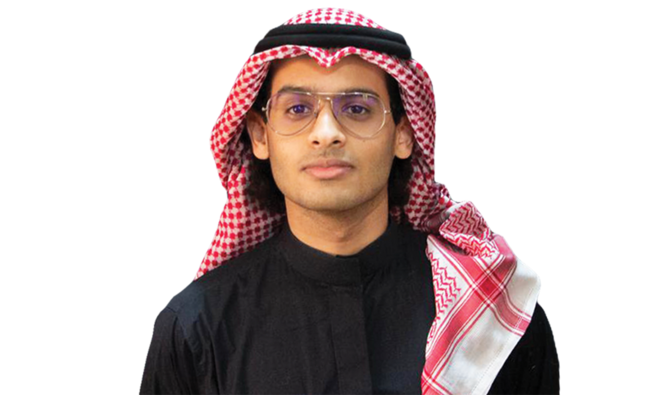
Turki Al-Jadani
Short Url
Updated 01 June 2021
Follow

Startup of the Week: The Inspiring Vision, a web development company

JEDDAH: Turki Al-Jadani is the entrepreneur behind startup The Inspiring Vision (TIV), a technical service provider that develops software including phone applications and websites.

The 24-year-old founder went through his fair share of struggles before building TIV. He dropped out of King Abdul Aziz University, where he was studying medicine, to pursue his passion in computer science. Following that, his first startup idea failed.

“After that, I worked with a partner and was able to kick-start another business. However, I ended up disagreeing with my partners on something and had to leave that as well,” he told Arab News.

After disentangling himself from previous startup efforts, Al-Jadani created TIV, and within six months, the company had gained the trust of its first six clients.

“I have seen people suffer losses after working hard because the communication between the provider and client wasn’t good to begin with. That’s why I decided to come up with a solution to acquire the trust of the client,” he said.

The company offers free consultations to potential clients. This allows clients to communicate their needs precisely to TIV and, after discussions with developers, if they decide the proposal can be delivered, the two sides can agree on terms and begin work on a project.

“We don’t want to make the client go through the loss of money and time. Another principle I have built my business around is that, if we are not able to deliver the product within the time frame that we specify in the contract, all the money is refunded to the clients,” Al-Jadani said.

The young businessman said that these qualities are essential if you want to gain the trust of clients.

While he personally dropped out of college to pursue his passion, Al-Jadani does not advise everyone to do the same, unless they have a backup plan and are prepared to put in the work to achieve success.

“I could drop out of college because I knew my family would back me up, but I don’t recommend anyone else do this. It took me four long years to learn a skill that was strong enough to build my career and a solid company on,” he said.

“I treat those events not strictly as failures, but as lessons that I needed to learn in order to become successful,” he added.


Emerging markets driving global growth despite rising risks: Saudi finance minister 

Updated 41 sec ago
Follow

Emerging markets driving global growth despite rising risks: Saudi finance minister 

RIYADH: Emerging markets now account for a growing share of global output and are driving the bulk of world economic expansion, Saudi Arabia’s finance minister said, even as those economies grapple with rising debt and mounting geopolitical risks. 

Speaking at the opening of the annual AlUla Conference for Emerging Market Economies on Feb. 8, Mohammed Al-Jadaan said the role of emerging and developing nations in the global economy has more than doubled since 2000, underscoring a structural shift in growth away from advanced economies.

The meeting comes as policymakers in developing markets try to keep growth on track while controlling inflation, managing capital flows and repairing public finances after years of heavy borrowing. Saudi Arabia has positioned the forum as a platform to coordinate policy responses and strengthen the voice of emerging economies in global financial discussions. 

“This conference takes place at a moment of profound transition in the global economy. Emerging markets and developing economies now account for nearly 60 percent of the global gross domestic product in purchasing power terms and 70 percent of global growth,” Al-Jadaan said. 

He added: “Today, the 10 emerging economies and the G20 alone account for more than half of the world’s growth. Yet, emerging markets face a more complex and fragmented environment, elevated debt levels, slower trade growth and increasing exposure to geopolitical shocks.” 

According to Al-Jadaan, more than half of low-income nations face the risk of debt distress, while global trade growth has slowed to around half its pre-pandemic pace. 

Launched in 2025, the conference this year brings together economic decision-makers, finance ministers, central bank governors, leaders of international financial institutions, and a select group of experts and specialists from around the world. 

Al-Jadaan said credible fiscal frameworks and disciplined debt management are essential for long-term growth, pointing to Saudi Arabia’s own reform experience. 

“Macroeconomic stability is not the enemy of growth; it is actually the foundation. Credible fiscal framework, clear medium-term anchors, and disciplined debt management create the space for investment and reform, especially in volatile global conditions,” he said. 

The minister stressed that policy credibility depends on execution rather than plans, adding that structural reforms succeed only when institutions are able to deliver. 

The importance of multilateral cooperation is rising as the global system becomes more divided, he said, calling for stronger international financial safety nets for developing economies. 

“International cooperation matters more, not less, in a fragmented world. Strong multilateral institutions, effective surveillance and adequate global financial safety nets are essential, particularly for emerging and developing economies,” Al-Jadaan said. 

Kristalina Georgieva, managing director of the International Monetary Fund, said emerging markets are growing faster than advanced economies but remain vulnerable to future shocks. 

“Growth still lags pre-pandemic levels, and this is doubly concerning as we will surely experience more shocks, but face them with depleted fiscal buffers in many places, with high spending pressures practically everywhere, and rising debt levels in many countries,” she said. 


Georgieva outlined two policy priorities emerging economies should embrace to sustain growth. 

“First priority, unleash private sector-led growth by cutting red tape, deepening financial markets, strengthening institutions and improving governance,” she said.  

Georgieva added: “Second priority is stepping up integration. In a world of shifting alliances and trade partners, there are new opportunities for cooperation at the regional and cross-regional levels.”  

Lan Fo’an, China’s finance minister, said the world has entered a period of turbulence marked by unilateralism and geopolitical conflict. 

“A cold wave of deglobalization is sweeping across the globe, and the world once again stands at a crucial crossroads,” he said, adding that the global economy expanded 3.3 percent in 2025, below the pre-pandemic average of 3.7 percent. 

He called for reforms to global economic governance and greater attention to the needs of developing countries. 

“We should improve the global economic governance system through reforms. We should add dialogue over confrontation. We should practice multilateralism to ensure that our countries, regardless of their size or wealth, can participate, make decisions and benefit on an equal footing.” 

According to Fo’an, China has joined hands with the Global South to advance cooperation in food security, development financing and climate change.