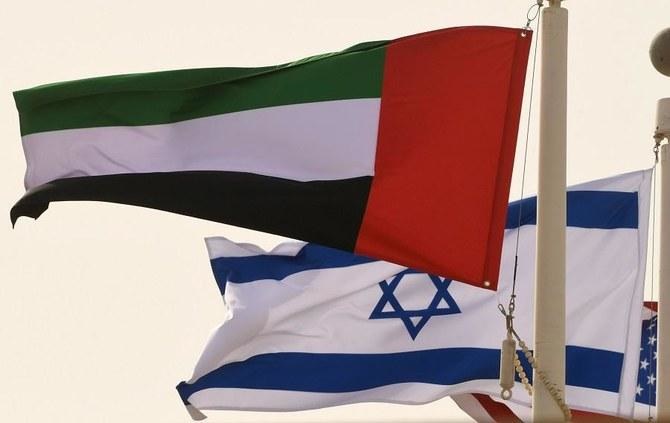
JERUSALEM: Israel and the United Arab Emirates signed a tax treaty on Monday, Israel’s Finance Ministry said, describing the move as a spur to business development between the countries after they normalized relations last year.
The UAE finance ministry said in October that it had reached a preliminary agreement with Israel on avoiding double taxation.
The tax convention, once ratified by ministers and parliament this year, will be Israel’s 59th and go into effect on Jan. 1, 2022.
It is the first tax treaty reached in the wake of Israel’s normalizing relations with the UAE and Bahrain last year. In parallel, Israel has moved to improve ties with Morocco and Sudan.
The treaty is based primarily on the OECD model, Israeli Finance Minister Israel Katz said in a statement, adding that it “provides certainty and favorable conditions for business activity and will strengthen economic ties” with the UAE.
Under the agreement, tax deductions, dividends and royalties are capped.
Israeli Foreign Minister Gabi Ashkenazi said the treaty will enable significant promotion of investment and trade that will help both countries’ economies.
Since a normalization deal was signed last September, Israeli and Emirati banks and other companies have signed cooperation deals, while also establishing direct flights.


Israel, UAE sign tax treaty to boost economic cooperation
https://arab.news/8c9d6
Israel, UAE sign tax treaty to boost economic cooperation
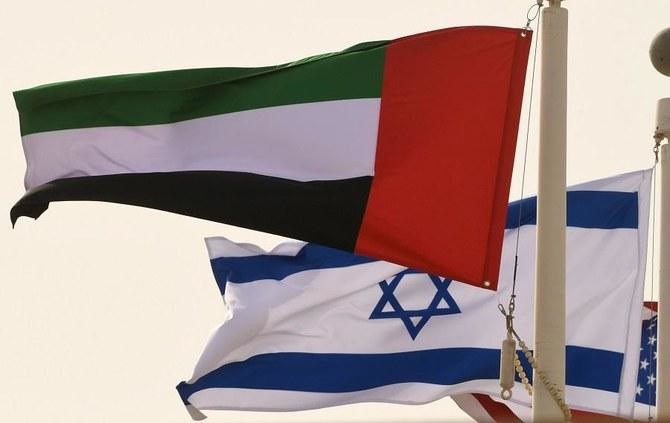
- The UAE finance ministry said in October that it had reached a preliminary agreement with Israel on avoiding double taxation


S&P affirms UAE sovereign credit ratings at AA/A-1+ amid regional tensions
JEDDAH: The UAE’s sovereign credit ratings have been affirmed at AA/A-1+ with a stable outlook, as S&P Global Ratings highlighted the country’s strong fiscal buffers, diversified economy, and policy flexibility in the face of escalating regional conflict.
The agency cited the UAE’s consolidated net assets, estimated at 184 percent of gross domestic product in 2026, and its low general government debt of around 27 percent of GDP, as key buffers against economic shocks.
Sovereign credit ratings play a key role in determining a country’s borrowing costs and investor demand for its debt. A high rating signals strong fiscal health and policy stability, helping governments attract foreign investment and access global capital markets at favorable terms.
S&P noted that “our baseline forecasts carry a significant amount of uncertainty” amid heightened tensions involving Iran, Israel, and the US, including potential threats to key infrastructure.
The report added: “We also believe the authorities will deploy their substantial policy flexibility to counteract the effects of volatility stemming from geopolitical tensions in the Gulf region on economic growth, government revenue, and its external accounts.
“We believe this flexibility will enable the UAE to withstand periods of low oil prices and, more importantly, the temporary disruption of oil production and export routes.”
The UAE is facing a tense geopolitical environment amid escalating Iran-Israel-US conflicts. Threats around the Strait of Hormuz have nearly stopped vessel traffic, fueling oil market volatility and investor concern.
The ratings agency also emphasized the UAE’s diversified economic base, with non-oil sectors accounting for roughly 75 percent of GDP, as a stabilizing factor.
Strategic infrastructure, including the Abu Dhabi Crude Oil Pipeline to Fujairah, enables the country to bypass the Strait of Hormuz and safeguard oil exports, while ADNOC’s overseas storage investments further mitigate risk.
Despite the risks, S&P expects sectors such as financial services, trade, and tourism to remain resilient. It forecasts that UAE growth will moderate to 2.2 percent in 2026, down from 5 percent in 2025, reflecting potential impacts from expatriate outflows, reduced tourism revenue, and lower real estate demand.
S&P cautioned, however, that “we now expect weaker economic and external performance due to increased intensity, scope, and potential duration of conflict in the Middle East,” underscoring that prolonged disruption could weigh on fiscal and external accounts.
The affirmation underscores investor confidence in the UAE’s ability to navigate short-term geopolitical challenges while maintaining long-term stability. Analysts said the country’s large liquid asset buffer and effective policy tools will likely contain the credit impact of regional tensions and support continued economic growth.
The UAE has consistently maintained strong and stable sovereign credit ratings, reflecting a resilient and diversified economy, as well as prudent fiscal management.
Despite occasional caution during regional tensions or oil market swings, ratings have remained high, underscoring the country’s policy flexibility, fiscal strength, and appeal to global investors.


