

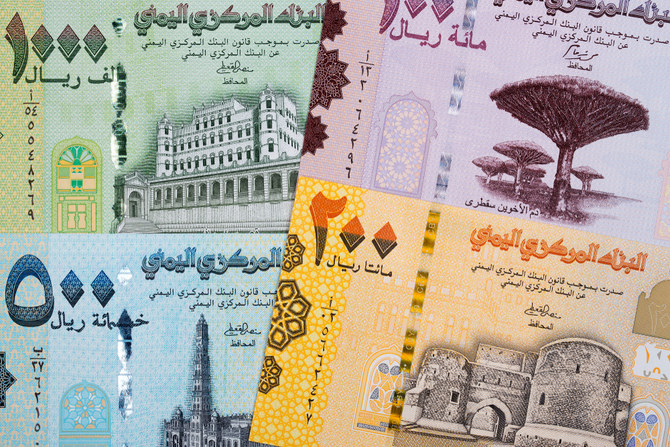

AL-MUKALLA: Yemen’s riyal hit a new record low on the weekend amid deadlocked diplomatic efforts to end the war and rising tensions between the Yemeni government and southern separatists in Aden.
The riyal traded at 930 to the dollar on Saturday in the government-controlled areas, plunging from 900 riyals a couple of weeks ago.
The riyal was 215 to the dollar when the Houthis placed the Yemeni President Abed Rabbo Mansour Hadi under house arrest in early 2019, sparking the current conflict.
When the new unity government, formed under the Riyadh Agreement in December, returned to Aden as troops withdrew from Abyan, the Yemeni riyal surged to 720 against the US dollar, recovering almost 20 percent of its value.
Experts link the current fall of the riyal to the outcome of UN-brokered peace efforts, renewed hostilities between the Yemeni government and the separatist Southern Transitional Council (STC), and the government’s failure to resume oil exports and collecting revenues from state bodies.
“The fall of the riyal is due to the economic and political instability in Yemen,” Mustafa Nasr, director of the Economic Media Center, told Arab News on Saturday.
Politically, the UN Yemen envoy Martin Griffiths’ latest diplomatic shuttle between Riyadh and Muscat yielded no fruit as warring factions rejected his peace initiative, known as the Joint Declaration, that proposes putting into place a nationwide truce.
The Houthis are still pressing ahead with their deadly offensive on the central city of Marib despite international condemnations and appeals.
In Aden, the interim capital of Yemen, the internationally recognized government has not returned to the city for more than two months amid reports about renewed tension with the STC.
The STC on Saturday appointed Gen. Shalal Ali-Shayae as the commander of counterterrorism forces in Aden, fueling tension with the government whose supporters accused the separatists of violating the Riyadh Agreement.
SPEEDREAD
The STC on Saturday appointed Gen. Shalal Ali-Shayae as the commander of counterterrorism forces in Aden, fueling tension with the government whose supporters accused the separatists of violating the Riyadh Agreement.
Shayae, former security chief of Aden and a senior separatist figure, was appointed in December as a military attache at the Yemen Embassy in the UAE.
“The implantation of the Riyadh Agreement (in December) sent positive signals about new economic policies and support to the economy,” Nasr said, adding that the Yemeni riyal plunged again after the government did not remain in Aden or apply reforms to boost revenues and exports.
“Many negative things have happened recently. The crisis in Aden returned. The government neither improved revenues that generate hard currencies nor created a mechanism for covering exports of goods and fuel. To pay public servants, the government printed millions of riyals without coverage,” he said.
During previous rounds of devaluation of the national currency, the Yemeni government replaced the central bank governors, shut down exchange firms to put an end to currency speculation, and provided local fuel and goods traders with the dollar.
The government also floated the riyal to bridge the gap between the official rate and that of the black market and relocated the central bank office from Sanaa to Aden.
The Yemeni government blamed the Houthis for banning the use of new banknotes printed by the Yemeni government in Aden and refusing to deposit revenues from Hodeidah seaports and tax into the central bank in Aden.
Economists argue that the Yemeni riyal would keep falling against the dollar as long as the Yemeni government remains outside the country.
The depreciation of the riyal has led to an expected surge in the price of foods and fuel and sparked protests in several Yemeni cities.
Hundreds of people took to the streets of Aden and Taiz to voice rage over the collapse of the Yemeni currency and the subsequent increase in the price of food and goods.
“My salary has lost more than 20 percent of its value due to the devaluation of the riyal. My relatives in Saudi Arabia donate to me to keep me afloat since my salary can’t cover my expenses,” Abu Abdullah, a government employee, told Arab News.


