GENEVA: The World Health Organization warned Friday that efforts to uncover the COVID-19 pandemic’s origins were being hampered by politics, insisting scientists needed space to work on solving the mystery.
“We would ask that we separate the science from the politics, and let us get on with finding the answers that we need in a proper, positive atmosphere,” WHO emergencies chief Michael Ryan told reporters.
“This whole process is being poisoned by politics,” he warned.
The UN health agency has been facing intensifying pressure for a new, more in-depth investigation of where COVID-19 came from, but so far there is no timeline for the next stage in the probe.
US President Joe Biden this week ordered the US intelligence community to investigate whether the COVID-19 virus first emerged in China from an animal source or from a laboratory accident.
The move hints at growing impatience with waiting for a conclusive WHO investigation into how the pandemic that has killed more than 3.5 million people worldwide began.
During an ongoing meeting of WHO member states, European Union countries and a range of others also pressed for clarity on the next steps in the organization’s efforts to solve the mystery, seen as vital to averting future pandemics.
But the UN health agency said earlier Friday it was still waiting for recommendations from a team of WHO technical experts on how to move forward.
“The technical team will prepare a proposal for the next studies that will need to be carried out and will present that to the director-general,” spokeswoman Fadela Chaib told reporters.
“He will then work with member states about the next steps,” she said, acknowledging “there is no timeline.”
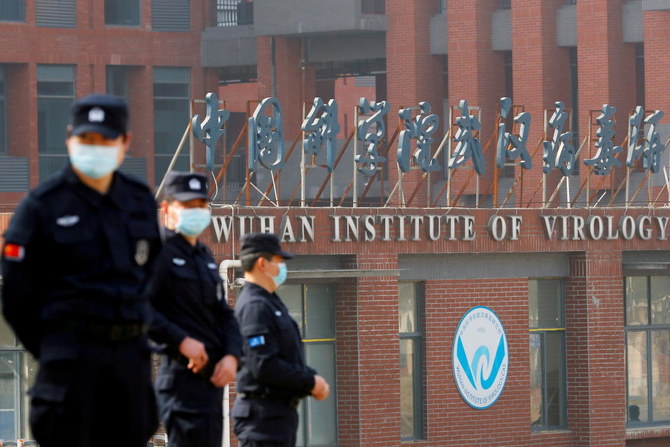
The WHO finally managed to send a team of independent, international experts to Wuhan in January, more than a year after COVID-19 first surfaced there in late 2019, to help probe the pandemic origins.
But in their long-delayed report published in late March, the international team and their Chinese counterparts drew no firm conclusions, instead ranking a number of hypotheses according to how likely they believed they were.
The report said the virus jumping from bats to humans via an intermediate animal was the most probable scenario, while a theory involving the virus leaking from a laboratory was “extremely unlikely.”
But the investigation and report have faced criticism for lacking transparency and access, and for not evaluating the lab-leak theory more deeply — a mere 440 words of the report were dedicated to discussing and dismissing it.
WHO director-general Tedros Adhanom Ghebreyesus has also continued to insist that all theories remain on the table and further investigation is needed.
Long dismissed as a right-wing conspiracy theory, and vehemently rejected by Beijing, the idea that COVID-19 emerged from a lab leak in Wuhan in China has been gaining increasing momentum in the United States.
While not suggesting that a lab leak was necessarily the source, a number of prominent international scientists have said a deeper, more scientific look at the theory was needed.
“Every country and every entity is free to pursue their own particular theories of origin... It’s a free world,” Ryan said.
But he complained that the discourse around the origins search, and around WHO’s role in it, was making it difficult to focus on the science.
“Putting WHO in a position like it has been put in is very unfair to the science we’re trying to carry out,” he said.
“It puts us, as an organization, frankly in an impossible position to deliver the answers that the world wants.”


![]()

COVID-19 origins search ‘being poisoned by politics’: WHO
Short Url
https://arab.news/bvaq4
COVID-19 origins search ‘being poisoned by politics’: WHO
- "We would ask that we separate the science from the politics, and let us get on with finding the answers that we need in a proper, positive atmosphere," said WHO emergencies chief
- UN health agency has been facing intensifying pressure for a new, more in-depth investigation of where Covid-19 came from


Latest updates


© 2026 SAUDI RESEARCH & PUBLISHING COMPANY, All Rights Reserved And subject to Terms of Use Agreement.