

UK targets Gulf states for post-Brexit trade deal

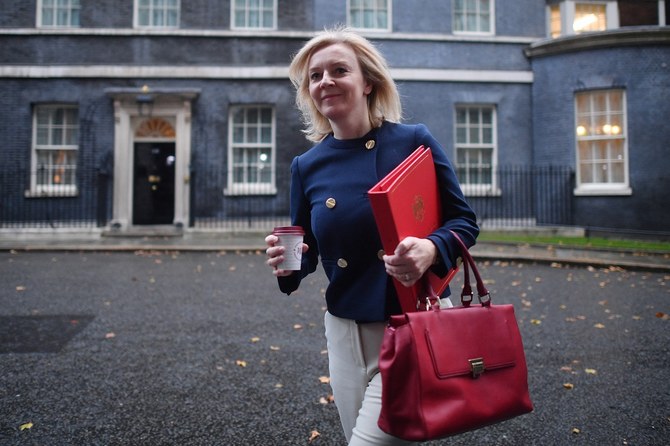
UK International Trade Secretary Liz Truss says the Gulf is an area for potential trade with post Brexit Britain. (File/AFP)
Short Url
Updated 27 May 2021
Follow

UK targets Gulf states for post-Brexit trade deal

  • Gulf Cooperation Council among Britain’s top trading partners
  • International trade secretary: ‘We are in discussions with the GCC and I hope that we’ll be able to say more about that soon’

LONDON: The UK has its sights set on trade deals with the six members of the Gulf Cooperation Council (GCC), according to International Trade Secretary Liz Truss.

“The Gulf is a definite target and we are working on the approach to (the) Gulf,” Truss told the Daily Telegraph.

“We are in discussions with the GCC and I hope that we’ll be able to say more about that soon.”

The GCC — comprising Saudi Arabia, the UAE, Bahrain, Kuwait, Oman and Qatar — makes up a significant proportion of Britain’s international trade.

In 2019, the UK’s trade with the six Gulf states was worth around $63.5 billion, putting the GCC behind only the US, China and the EU in value of trading partners.

Truss is also closing in on a potentially lucrative investment deal with Mubadala, the UAE’s sovereign wealth fund, which a source told the Daily Telegraph is “getting some real traction now” after a “couple of very big meetings.”

Mubadala is said to be targeting investment in the UK’s health, clean energy, infrastructure and technology sectors, in what could be a significant boost to Britain’s post-Brexit economy.

Since the UK’s decision to leave the EU was implemented at the beginning of this year, the country has been pushing hard for trade deals with its existing trade partners and allies.

Last year, the British government announced a review into UK-GCC trade, and said in a statement: “With the United Kingdom embarking on its new independent trade policy outside of the European Union, and with GCC Member States delivering their economic diversification and vision plans, now is the moment for the United Kingdom and the GCC to build on their historic and deep friendship to develop even closer economic ties, boosting our trade and investment further still.”

It added: “We celebrate the strength of the bilateral relationship, nowhere more apparent than through our continued collaboration on the Covid-19 pandemic, and share an ambition of boosting our businesses, delivering new investment, creating new jobs and ensuring prosperity in the years to come.”


Saudi POS stays above $4bn as Ramadan spending lifts outlays on home goods

Updated 48 min 36 sec ago
Follow

Saudi POS stays above $4bn as Ramadan spending lifts outlays on home goods

RIYADH: Saudi point-of-sale transactions remained above $4 billion in the week ending Feb. 14, with spending on furniture and home supplies rising ahead of Ramadan, central bank data showed.

Overall POS activity totaled SR15.34 billion ($4.09 billion), representing a 4.8 percent week-on-week decrease, while the number of transactions dipped 1.6 percent to 252 million, according to the Saudi Central Bank. 

Spending on furniture and home supplies rose 5.9 percent to SR697.35 million, marking the strongest weekly increase among major retail categories. 

Expenditure on electronics increased 2.9 percent, while spending on construction and building materials rose 1.1 percent.

Sectors that saw declines includes freight transport and courier services, which posted a drop of 5 percent to SR64.86 million.

Pharmacy and medical supplies spending fell 8.2 percent to SR223.81 million, but outlays on medical services rose 5.7 percent to SR539.68 million. 

Food and beverage expenditure decreased 4.3 percent, but the total spend of SR2.57 billion meant it retained the largest share of POS activity.

Restaurants and cafes followed with SR1.73 billion, despite a 4.7 percent decline. Apparel and clothing outlays represented the third-largest share of POS spending during the monitored week, up 0.5 percent to SR1.38 billion.

The Kingdom’s major urban centers mirrored the mixed national changes. Riyadh, which accounted for the largest share of total POS spending, saw a 3.4 percent drop to SR5.32 billion. The number of transactions in the capital reached 80.7 million, down 0.8 percent week on week. 

In Jeddah, transaction values decreased 4.4 percent to SR2.12 billion, while Dammam reported a 3.3 percent decrease to SR746.29 million. 

POS data, tracked weekly by SAMA, provides an indicator of consumer spending trends and the ongoing growth of digital payments in Saudi Arabia.  

The data also highlights the expanding reach of POS infrastructure, extending beyond major retail hubs to smaller cities and service sectors, supporting broader digital inclusion initiatives.  

The growth of digital payment technologies aligns with Saudi Arabia’s Vision 2030 objectives, promoting electronic transactions and contributing to the Kingdom’s broader digital economy.