DUBAI: The cost for Lebanese banks to restructure debts could range from 30 percent to 134 percent of the country’s GDP for 2021, S&P Global said.
The political deadlock in the country has left key institutions, including the banking system, unable to pursue economic recovery and restructure outstanding debt.
“The main stumbling block to restructuring appears to be that Lebanon is currently functioning with a caretaker government without authority to agree terms with creditors,” the report said.
Failure to restructure the financial system could leave the Levant country with banks unfit to support economic recovery, it added.
But even if banks are able to restructure, the global credit agency said external funding alone “will probably be insufficient to absorb those costs.”
“At this stage, bailing in depositors – for example by paying them below-market exchange rates, or converting deposits into equity – seems highly likely,” S&P said.
Lebanon earlier suspended payments on its Eurobonds.
As of March 31, 2021, domestic banks held about 60 percent of their assets in the form of Banque du Liban (central bank) deposits and certificates of deposits, and 11 percent in government treasury bills and Eurobonds.
In turn, the central bank held about 44 percent of government debt, and commercial banks 26 percent directly at year-end 2020.
Lebanon needs strong political will and cooperation between key stakeholders, including the central bank, to resolve its current situation, the report highlighted.
S&P added the country could learn from other countries that also experienced economic blows in the past, but were able to overcome them through different measures.
These measures include external support, setting up an asset-management company, or the consolidation of the banking sector.
“Thus far, we have not seen any mergers or closures of Lebanon’s banks, although we expect this may change in 2021-2022,” the report indicated.

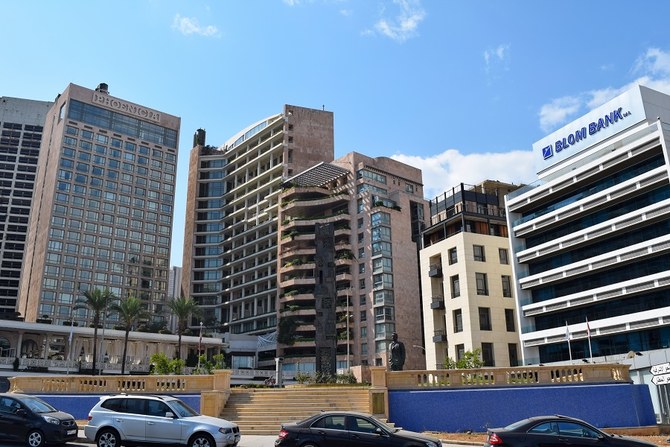
Debt restructuring could cost up to 134 percent of Lebanon’s GDP, S&P warns
https://arab.news/nr5zr
Debt restructuring could cost up to 134 percent of Lebanon’s GDP, S&P warns
- The political deadlock in the country has left key institutions, including the banking system, unable to pursue economic recovery
Free trade negotiations between GCC, India mark new phase of partnership, says sec-gen
RIYADH: The Gulf Cooperation Council’s secretary-general affirmed that the negotiations for a free trade agreement between the GCC and India, and the signing of the joint statement, represents a new phase of strategic partnership.
Jasem Mohamed Al-Budaiwi said that this contributes to enhancing close cooperation and strengthening economic and trade ties, according to the Saudi Press Agency.
This came during the signing ceremony of the joint statement on launching the free trade agreement negotiations between the Al-Budaiwi and India’s Minister of Commerce and Industry, Piyush Goyal, which took place in New Delhi, on Tuesday.
During the signing ceremony, Al-Budaiwi said that the Terms of Reference, signed on Feb. 5, provide a comprehensive and clear framework for these negotiations. The two nations agreed to discuss enhancing cooperation in vital strategic areas, including trade in goods, customs procedures, and services.
Additionally, the framework covers Sanitary and Phytosanitary measures, intellectual property rights, cooperation on Micro, Small, and Medium Enterprises, along with other topics of mutual interest. This reflects the comprehensive nature of the agreement and its ability to keep pace with the future economy.
Al-Budaiwi expressed hope that these negotiations would lead to a comprehensive and ambitious free trade agreement that works to remove customs and non-customs barriers, enhance the flow of quality investments in both directions, and achieve further liberalization in trade and investment cooperation between the GCC and India for mutual benefit.
This would provide a stimulating economic environment and an investment climate that opens broad horizons for the business sector, supports supply chains, and accelerates the pace of economic growth in line with the ambitious developmental visions of the GCC states.
The top official affirmed the full readiness of the General Secretariat to host the first round of negotiations at its headquarters in Riyadh during the second half of this year.
The two sides held a meeting during which they reviewed the existing cooperation relations between the GCC and India and discussed ways to develop and elevate them to broader horizons, serving mutual interests and enhancing opportunities for strategic partnership between the two sides, particularly in the economic, investment, and trade fields.
They praised the role undertaken by the negotiating teams from both sides, appreciating the efforts contributing to reaching a comprehensive agreement that enhances economic integration and supports the smooth flow of trade between the two nations.


