Debt restructuring could cost up to 134 percent of Lebanon’s GDP, S&P warns

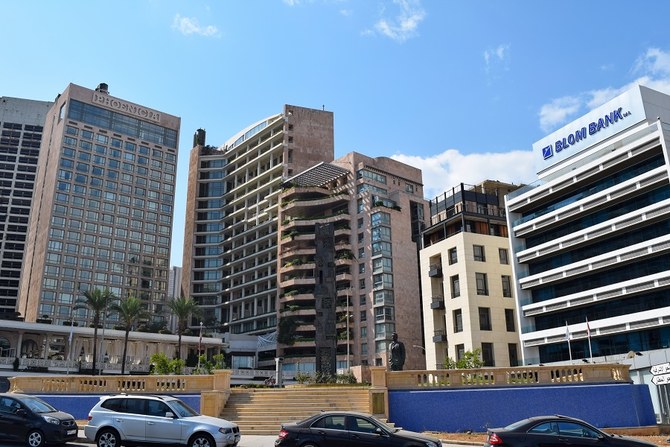
Lebanon needs strong political will and cooperation between key stakeholders, including the central bank, to resolve its current situation. (File/Shutterstock)
Short Url
Updated 25 May 2021
Follow

Debt restructuring could cost up to 134 percent of Lebanon’s GDP, S&P warns

  • The political deadlock in the country has left key institutions, including the banking system, unable to pursue economic recovery

DUBAI: The cost for Lebanese banks to restructure debts could range from 30 percent to 134 percent of the country’s GDP for 2021, S&P Global said.
The political deadlock in the country has left key institutions, including the banking system, unable to pursue economic recovery and restructure outstanding debt.
“The main stumbling block to restructuring appears to be that Lebanon is currently functioning with a caretaker government without authority to agree terms with creditors,” the report said.
Failure to restructure the financial system could leave the Levant country with banks unfit to support economic recovery, it added.
But even if banks are able to restructure, the global credit agency said external funding alone “will probably be insufficient to absorb those costs.”
“At this stage, bailing in depositors – for example by paying them below-market exchange rates, or converting deposits into equity – seems highly likely,” S&P said.
Lebanon earlier suspended payments on its Eurobonds.
As of March 31, 2021, domestic banks held about 60 percent of their assets in the form of Banque du Liban (central bank) deposits and certificates of deposits, and 11 percent in government treasury bills and Eurobonds.
In turn, the central bank held about 44 percent of government debt, and commercial banks 26 percent directly at year-end 2020.
Lebanon needs strong political will and cooperation between key stakeholders, including the central bank, to resolve its current situation, the report highlighted.
S&P added the country could learn from other countries that also experienced economic blows in the past, but were able to overcome them through different measures.
These measures include external support, setting up an asset-management company, or the consolidation of the banking sector.
“Thus far, we have not seen any mergers or closures of Lebanon’s banks, although we expect this may change in 2021-2022,” the report indicated.


Saudi industrial output rises 8.9% in December: GASTAT 

Updated 16 sec ago
Follow

Saudi industrial output rises 8.9% in December: GASTAT 

RIYADH: Saudi Arabia’s industrial production rose 8.9 percent in December from a year earlier, driven by stronger mining and manufacturing activity, signaling continued momentum in the Kingdom’s non-oil and energy sectors. 

The Industrial Production Index reached 113.6 in December, up from 104.3 a year earlier, the General Authority for Statistics said.  

The latest IPI figures underscore continued momentum in the Kingdom’s industrial sector as Saudi Arabia pursues economic diversification under its Vision 2030 agenda. 

In its latest report, GASTAT stated: “Preliminary results indicate an increase of 8.9 percent in the IPOI in December 2025 compared to the same month of the previous year, supported by the rise in mining and quarrying activity, manufacturing activity and water supply, sewerage and waste management and remediation activities.”  

Mining and quarrying activity — the largest component of the index — increased 13.2 percent year on year after Saudi Arabia raised oil production to 10.1 million barrels per day from 8.9 million bpd a year earlier. Manufacturing expanded 3.2 percent, supported by a 13.4 percent rise in chemicals output and a 7.3 percent increase in food production. 

The sub-index of electricity, gas, steam and air-conditioning supply activity recorded an annual decrease of 2.5 percent. 

The sub-index of water supply, sewerage and waste management and remediation activities increased 9.4 percent. 

Compared to November, Saudi Arabia’s IPI recorded a marginal decline of 0.1 percent. 

On a monthly basis, the sub-index of mining and quarrying activity increased 0.3 percent. 

Manufacturing activities also rose 0.3 percent in December compared to the previous month, driven by a 2.8 percent increase in the manufacture of chemicals and chemical products. 

Compared to November, the manufacture of food products increased 9.6 percent in December. 

Overall, the index of oil activities advanced 10.1 percent year on year in December, while non-oil activities increased 5.8 percent. 

Compared to November, oil activities decreased 0.3 percent, while non-oil activities increased 0.4 percent. 

The IPI measures changes in industrial output based on the International Standard Industrial Classification framework and covers mining, manufacturing, utilities and waste management sectors.