

Muslim World League chief Al-Issa calls on religious leaders to play role in fight against drugs

1 / 2
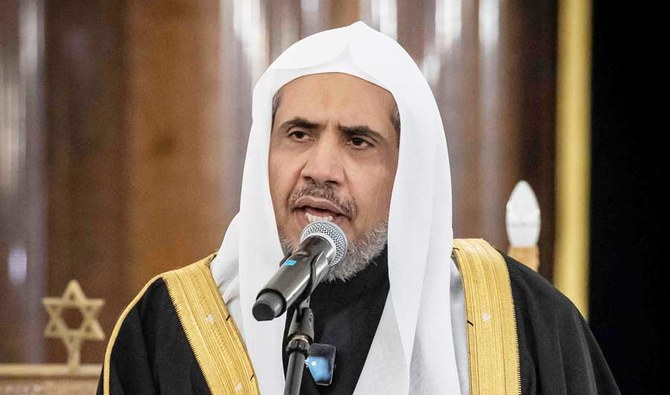
Dr. Mohammad Abdulkarim al-Issa. (AFP)
2 / 2
Photo/SPA
Short Url
Updated 25 May 2021
Follow

Muslim World League chief Al-Issa calls on religious leaders to play role in fight against drugs

  • Al-Issa stressed the need to embrace and help the addicted, and the importance of the role played by society in spreading awareness about the dangerous phenomenon

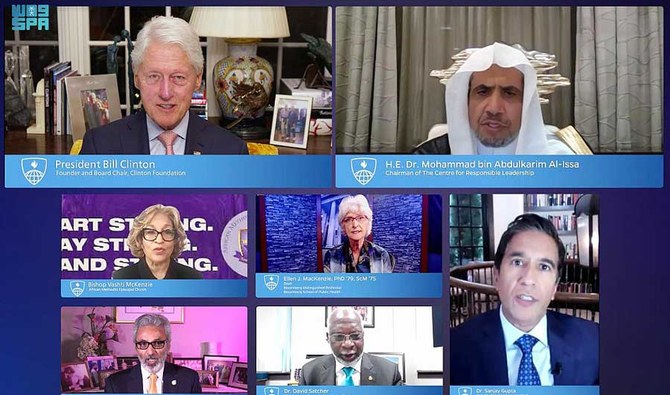
JEDDAH: An international symposium was held to discuss ways of combating drug addiction, the Saudi Press Agency reported, with the Centre for Responsible Leadership (CRL), the Clinton Foundation, and the Johns Hopkins Bloomberg School of Public Health taking part.
The CRL chairman and secretary-general of the Muslim World League, Dr. Mohammed bin Abdul Karim Al-Issa, former US President Bill Clinton, and Dr. Ellen J. MacKenzie, the dean of Johns Hopkins Bloomberg School of Public Health, were the participants.
Al-Issa told the symposium that the primary objective of religious and social leadership, and specialist scientific centers, was to launch initiatives to distance people from addiction and expose them to treatment.
He stressed the need to embrace and help the addicted, and the importance of the role played by society in spreading awareness about the dangerous phenomenon.
He said religious values encouraged people to help others, especially those afflicted by drug addiction, and he called for an open dialogue about drugs and the threats they posed.

Linking addiction to shame and failure would complicate the problem.

Dr. Mohammed bin Abdul Karim Al-Issa, Muslim World League chief

Al-Issa said that linking addiction to shame and failure would complicate the problem and that care of the afflicted was a method that should be adopted by everyone. He emphasized the importance of conveying reassuring messages to the addicted to encourage them to voluntarily seek help, care, and treatment.
Clinton said the increase in the number of deaths caused by drug addiction during the pandemic demanded firm action by religious and scientific leaders through initiatives that would end the crisis.
MacKenzie said that addiction affected all societies and that religious and scientific leaders should work side by side for a better future free of drugs.
 “Science and faith could achieve miracles in case there was a will and resolution to wipe out drug addiction,” she added.


Pioneering electric bus service takes to the road in Makkah

Updated 19 December 2025
Follow

Pioneering electric bus service takes to the road in Makkah

  • The bus rapid transit project, a system designed to have higher capacity and reliability than conventional bus services, is said to be the first of its kind in the Kingdom
  • The vehicles operate in dedicated bus lanes within a network that includes two main bus stations and 11 stops along the route connecting them

MAKKAH: A pioneering electric bus service took to the road in Makkah this week.

Electromin, the developer and operator of the service in partnership with Umm Al-Qura for Development and Construction, said it is expected to serve more than 125 million passengers over the next 15 years, while cutting carbon dioxide emissions by more than 31,500 tonnes compared with traditional vehicles.

The bus rapid transit project, a system designed to have higher capacity and reliability than conventional bus services, is said to be one of the first of its kind in the Kingdom. It was inaugurated on Wednesday by Amr Al-Dabbagh, chairperson of Al-Dabbagh Group; Samir Nawar, managing director of Petromin; and Yasser Abu Ateeq, CEO of Umm Al-Qura.

The bus rapid transit project is designed to have higher capacity and reliability than conventional bus services. (Supplied)

Electromin, a subsidiary of Petromin specializing in energy and mobility solutions, said the new service, which forms part of the Masar Destination mixed-use real estate development project in Makkah, is one the first transport networks of its kind in the country, and represents a significant shift toward a cleaner, more efficient urban transport model.

It operates in dedicated bus lanes, connecting key hubs within Masar and providing safe, reliable and environmentally friendly transportation for residents and visitors, the company added. The network includes two main bus stations and 11 stops along the route connecting them. It has been designed to serve more than 5 million visitors and pilgrims annually, and to be easily accessible to all users.

Operators say the service is designed as a foundation for Makkah’s future transportation system, through its integration with the broader Masar project, which includes pedestrian walkways, more than 5,000 parking spaces, metro services and other urban infrastructure.