

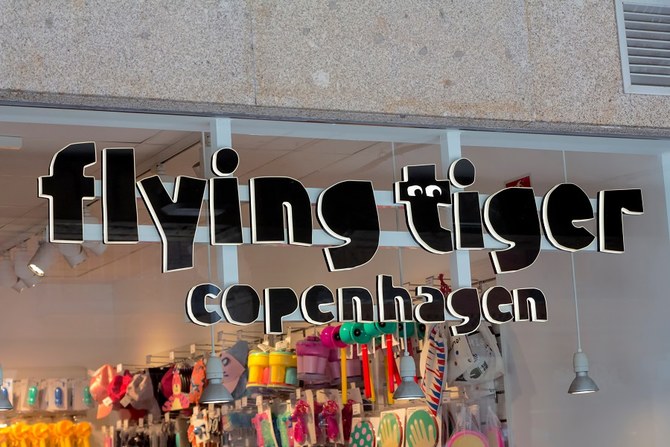
Alhokair to bring Flying Tiger and Alo Yoga to Saudi Arabia

Saudi Arabia’s retail sector is one of the Kingdom’s priority areas as it seeks to reduce its reliance on oil. (Shutterstock)
Short Url
Updated 25 May 2021
Follow

Alhokair to bring Flying Tiger and Alo Yoga to Saudi Arabia

  • It is part of a wider strategy to expand its retail portfolio and move into new lifestyle categories

DUBAI: Saudi retail giant Alhokair is bringing Flying Tiger and Alo Yoga to the Kingdom.

The arrival of American leisure brand Alo Yoga and Danish variety retailer Flying Tiger Copenhagen comes as Fawaz Abdulaziz Alhokair Co. looks to expand its offering after a tough year for the retail sector. It is part of a wider strategy to expand its retail portfolio and move into new lifestyle categories, according to a bourse filing on Monday. 

Alo Yoga, which sells a collection of yoga clothing and accessories, will open in the Kingdom Center in Riyadh — its first outlet outside the US.

Alhokair is planning to open 45 Flying Tiger stores in five years, with nine outlets and an online store operational in the first year.

The Danish retailer currently has around 900 stores in 27 countries.

Saudi Arabia’s retail sector is one of the Kingdom’s priority areas as it seeks to reduce its reliance on oil.

Alhokair is moving forward with an ambitious expansion plan, aiming to open around 57 food and beverage outlets in the next 12 to 16 months, and at least another 50 retail stores in the fashion, cosmetics, beauty and sports sectors, the company’s CEO told Arab News.

“We are always exploring every interesting brand that has a future potential,” Marwan Moukarzel, CEO of Alhokair, said in March.

“We are always exploring every interesting brand that has a future potential, ‘omni-chanellable,’ ‘Instagramable,’ and has a potential in the Saudi market,” Marwan Moukarzel, CEO of Alhokair, said in March.

Alhokair is also moving into the digital sector and in March announced it had partnered with shopping center operator Arabian Centers Company (ACC) to acquire a majority stake in UK-based e-commerce platform Vogacloset, in a deal worth SR68.85 million ($18.36 million).

Its online business has seen strong growth and in its full year report for 2020, it reported a 311 percent surge in online activity in the first quarter of 2021, compared to the fourth quarter of 2020.

Formed in 1990, Alhokair operates 1,580 stores across around 100 shopping malls in 13 countries, employing more than 10,000 people and representing 81 brands, spanning womenswear, menswear, kids and baby, department stores, shoes and accessories, cosmetics and coffee shops.


Dubai’s luxury residential market sees record $9bn sales in 2025: Knight Frank 

Updated 4 sec ago
Follow

Dubai’s luxury residential market sees record $9bn sales in 2025: Knight Frank 

RIYADH: Dubai’s luxury residential market hit a record in 2025, with sales of homes priced above $10 million rising 27.7 percent from a year earlier to $9.05 billion, according to Knight Frank. 

A total of 500 homes worth more than $10 million changed hands during the year, up from just 30 such deals recorded in 2020. Within that segment, 68 properties were sold for more than $25 million, marking a 45 percent year-on-year increase, the property consultancy said. 

The findings underscore Dubai’s growing status as a global hub for high-net-worth individuals, who are increasingly viewing the emirate not just as a part-time business base but as a full-time home. 

In November, a separate analysis by Savills found that Dubai topped the rankings as the leading destination for HNWIs globally, surpassing New York and Singapore. 

Commenting on the latest report, Faisal Durrani, partner and head of research for the Middle East and North Africa at Knight Frank, said: “Dubai’s meteoric rise as the world’s busiest market for $10 million+ homes, having increased from just 30 sales in 2020 to 500 by the end of 2025, is best reflected in the emirate’s growing reputation as a magnet for the global elite.” 

The final quarter of 2025 recorded 143 sales transactions for properties valued at more than $10 million, representing a 39 percent increase compared to the previous quarter. 

The report added that demand for luxury residential properties remains highly concentrated in destination communities that combine waterfront living, security and amenities into self-contained ecosystems. 

Palm Jumeirah led fourth-quarter sales in the $10 million-plus segment with 28 transactions, followed by Palm Jebel Ali with 22. La Mer, Jumeirah 2 and Tilal Al Ghaf also ranked among the most active neighborhoods at the top end of the market. 

“Dubai’s residential market has differentiated itself from regional cities and many other global gateway locations through the creation of destination communities that integrate leisure, safety and convenience into self-contained ecosystems,” said Will Mckintosh, regional partner, Knight Frank’s head of Residential at MENA. 

Mckintosh added: “At 50 percent larger than its established neighbor Palm Jumeirah, Palm Jebel Ali remains a destination to watch. While it will obviously take time to reach the maturity of other established communities, the 2025 sales figures are a welcome indication of its high potential and the growing demand from the wealthiest buyers for prime waterfront property and the luxury Dubai lifestyle.” 

The most expensive individual purchase in the fourth quarter was in the Business Bay community, where a six-bedroom apartment in Bugatti Residences by Binghatti sold for $149.7 million. 

Knight Frank said Dubai’s real estate market is moving beyond its “emerging” phase to become an “emerged” market, marked by greater stability. 

“Historical patterns of sharp market cycles, largely fueled by speculative investment, have receded and, while natural market cycles will persist, we believe the volatility associated with previous speculative booms is less likely in this new era of established residency,” said Durrani. 

He added: “As the market extends past its five-year property price rally, the rate of price rises across the mainstream market is starting to slow, albeit they continue to rise. After growing by 194 percent since the fourth quarter of 2020, we believe prime values will expand by a further 3 percent during 2026.”