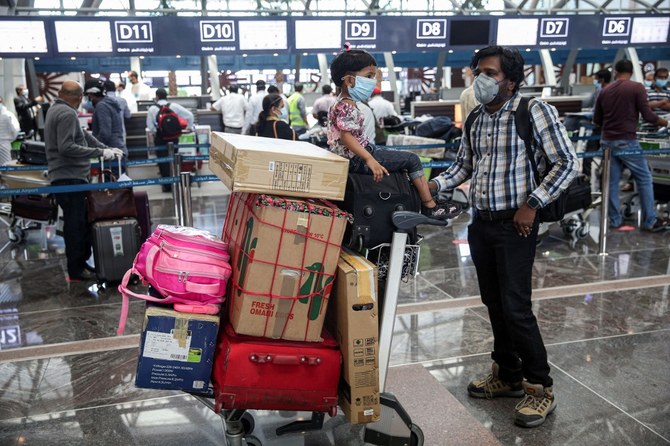
DUBAI: Oman’s labor policy to employ nationals both in the private and public sectors led to a decline in expatriate workers over the course of a year.
The bringing in of more Omanis into the labor force is part of the ministry’s efforts to step up its Omanisation plans for the private and public sectors, according to Basem bin Mohammed Al-Balushi, a senior official at the Sultanate’s labor ministry, in a report from Times of Oman.
About 218,000 foreign workers left the Gulf country during the 12-month period to March, mostly affected by government initiatives and decisions to take in more Omanis and increase their participation in the labor force.
The coronavirus pandemic was also a factor in the departure of foreign workers, as the decline in businesses activities – particularly tourism-related ones – led to closure of some commercial entities.
“This is due to the current economic condition, and owing to internal policies adopted by the ministry to resettle its national workforce, and accommodate them in the labor market,” according to Al-Balushi.
Omanisation in some sectors, such as air, land and sea transport, have reached as high as 70 percent while it is lagging in other economic activities including tourism at 10.9 percent and food service at 5 percent.

Oman’s nationalization policy leads to decline in expatriate workers
https://arab.news/9cdtx
Oman’s nationalization policy leads to decline in expatriate workers
- The coronavirus pandemic was also a factor in the departure of foreign workers
Iraqi army fully takes over key base following US withdrawal
BAGHDAD: US forces have fully withdrawn from an air base in western Iraq in implementation of an agreement with the Iraqi government, Iraqi officials said Saturday.
Washington and Baghdad agreed in 2024 to wind down a US-led coalition fighting the Daesh group in Iraq by September 2025, with US forces departing bases where they had been stationed.
However, a small unit of US military advisers and support personnel remained. Iraqi Prime Minister Mohammed Shia Al-Sudani in October told journalists that the agreement originally stipulated a full pullout of US forces from the Ain Al-Asad air base in western Iraq by September. But “developments in Syria” since then required maintaining a “small unit” of between 250 and 350 advisers and security personnel at the base.
Now all US personnel have departed.
Iraqi Army Chief of Staff Lt. Gen. Abdul Amir Rashid Yarallah oversaw the assignment of tasks and duties to various military units at the base on Saturday following the withdrawal of US forces and the Iraqi Army’s full assumption of control over the base, the military said in a statement.
The statement added that Yarallah “instructed relevant authorities to intensify efforts, enhance joint work, and coordinate between all units stationed at the base, while making full use of its capabilities and strategic location.”
A Ministry of Defense official who spoke on condition of anonymity because he was not authorized to comment publicly confirmed that all US forces had departed the base and had also removed all American equipment from it.
There was no statement from the US military on the withdrawal.
US forces have retained a presence in the semi-autonomous Kurdish region in northern Iraq and in neighboring Syria.
The departure of US forces may strengthen the hand of the government in discussions around disarmament of non-state armed groups in the country, some of which have used the presence of US troops as justification for keeping their own weapons.
Al-Sudani said in a July interview with The Associated Press that once the coalition withdrawal is complete, “there will be no need or no justification for any group to carry weapons outside the scope of the state.”



