

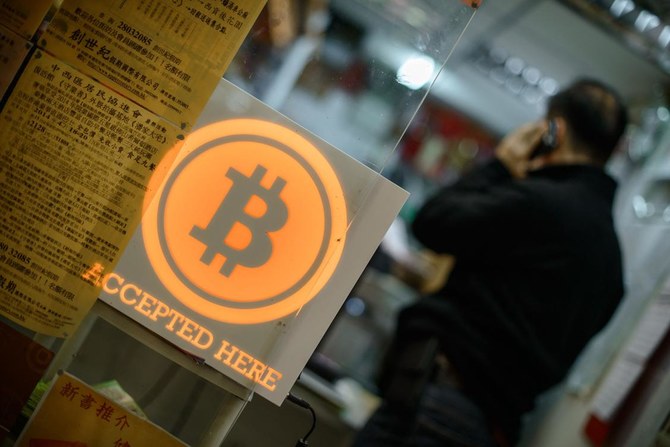

Washington: First he loved them, then he doubted them, but is he manipulating them? Tesla boss Elon Musk’s tweets about cryptocurrencies like bitcoin are annoying their devotees and raising eyebrows among market watchers.
The saga started in February when Musk’s company Tesla announced it would buy $1.5 billion worth of bitcoin and later said it would accept the virtual currency as payment for its electric cars.
But in mid-May, he broke hearts with tweets questioning the digital asset, particularly its vast consumption of electricity produced from polluting substances like coal.
That sent bitcoin on a downward spiral causing it to plunge to $30,000 from nearly double that 10 days earlier. It later regained some strength, climbing to about $37,000 as of Friday.
“The fact that more people aren’t outraged at #ElonMusk for purposefully crashing the cryptos is astonishing. Stop worshipping him,” one Twitter user said.
The post, typical of the backlash the flamboyant executive has caused, included a hashtag combining an unprintable insult with his surname — and another Musk detractor went as far as to start a cryptocurrency using the hashtag.
Musk, who is most vocal on Twitter, continues to support dogecoin, another virtual currency that was created as a joke but has grown in popularity.
However, his tweets and their influence on prices are drawing increasing attention from analysts.
“You have to prove that his tweets has actually moved the market and it certainly seems that way. It does raise a host of issues,” Todd Cipperman of Cipperman Compliance Services told AFP.
’How much is that Doge in the window?’
Days after his online missives caused trouble for bitcoin, Musk on Thursday made the value of dogecoin jump by tweeting “how much is that Doge in the window ?“
“I lost everything because of your crypto tweets and today I live under a bridge,” on Twitter user replied. “I hope you are proud.”
Kristin Boggiano, president of digital asset investment firm CrossTower, said the problems facing cryptocurrency are bigger than just tweets of one electric car executive.
But she said “there is clearly a conflict of interest” regarding Musk’s role the market.
“He’s been advising dogecoin, and clearly has an interest in dogecoin and he is making comments about bitcoin,” she said.
Still, though Musk “may influence retail, I don’t think he has the ability to influence institutional clients,” she said.
The risk to bitcoin, the most popular digital asset, is from overseas, Boggiano said.
This week, around $8.5 billion in bitcoin was liquidated in 24 hours on Wednesday after several Chinese banking federations warned against cryptocurrency speculation.
“A lot of volatility in bitcoin is coming from offshore,” Boggiano said, adding that to Chinese business leaders, the digital assets “are not supported by real value.”
Cipperman described the regulatory climate in the United States as “the wild west.”
The US Securities and Exchange Commission (SEC), the country’s stock market regulator, thus far has shrugged off the crypto turbulence, and Cipperman calls that “a mistake.”
“The crypto market would benefit substantially if it was more regulated,” he said. “It would give people a lot of comfort that this is not a dangerous manipulation, it’s a financial asset like others.”
CTFC interest
It remains to be seen if the SEC or the Commodity Futures Trading Commission (CFTC), which oversees derivatives, will take a more active role in regulating digital money.
The Internal Revenue Service tax authority has started asking taxpayers to declare their holdings of these assets, and President Joe Biden’s government has proposed expanding tax reporting of digital asset transfers between businesses.
Another bill in Congress would have the SEC and CFTC create a group with industry professionals to look at regulation of the sector.
Meanwhile, the Federal Reserve this week said it is exploring its options when it comes to digital payments and even issuing an official, central bank-backed virtual currency.
Aaron Klein, an expert in financial technology at the Brookings Institution, cautioned that “It’s not the place for the government to regulate the value of bitcoin anymore that it should regulate the value of an Amazon stock or the price of gold.”
Instead, “The goal is to make the market transparent and honest and protect the investors, not to focus on the price of the asset.”


