

Saudi Arabia’s historic Hisma range reveals signposts to ancient past

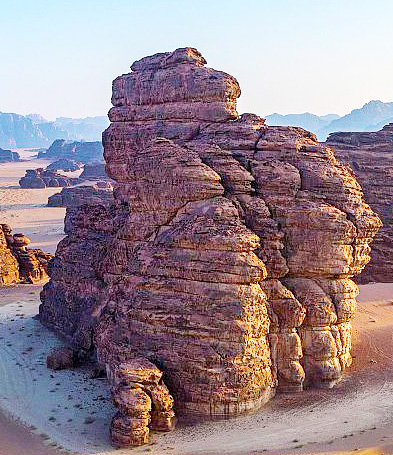
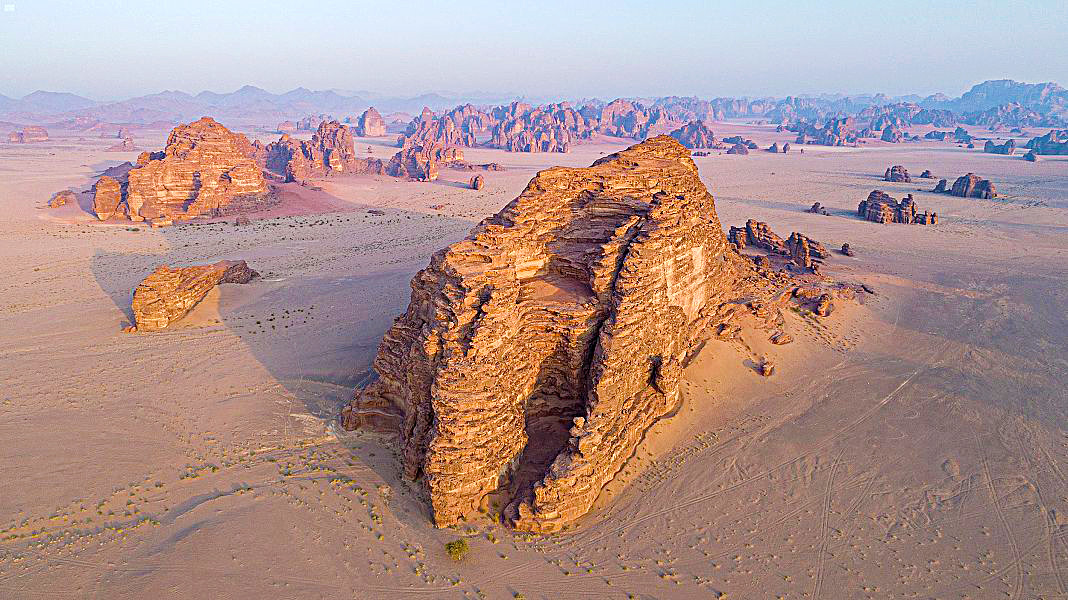
The mountains are about 1,000 meters above sea level, and are located east of the Hijaz range. (Article photos/Twitter: Wael Al-Khalid)
Short Url
Updated 21 May 2021
Follow

Saudi Arabia’s historic Hisma range reveals signposts to ancient past

  • Archaeological remnants are common in mountains, which formed part of trading route for camel convoys

MAKKAH: The Hisma mountains, west of Tabuk in northern Saudi Arabia, are home to Arab inscriptions carved by the Thamud and other ancient tribes dating back more than 2,600 years.
Archaeological remnants are common in the mountains, which formed part of a trading route for camel convoys and were well known among traders because of their ship-like formation.
Salma Hawsawi, a professor of ancient history at King Saud University, told Arab News that the Kingdom is rich in archaeological evidence of ancient civilizations that prospered in the varied geography and climate offered by various regions.
“Saudi Arabia includes plains that narrow and expand, mountain heights, and plateaux and deserts with oases,” she said.
The region’s geographic and climatic differences led to a diversity of civilizations, Hawsawi added.
At various times the Hisma mountains also have been known as the Hisma Sandy mountains, the Hisma plateau and the “Ship” mountains.
These mountains are about 1,000 meters above sea level, and are located east of the Hijaz range, and are bordered by Al-Sharat mountains to the north, Wadi Araba to the northwest and Harrat Al-Rahat to the south.
“The area was distinguished by features that encourage human settlement such as the abundance of water, fertile ground, favorable climate and trade routes,” Hawsawi said.
“It was one of the most important areas where people settled since the dawn of time,” she added.
“The Thamud people inhabited the area, and it was said that it was the home of the Shuaib people who were mentioned in the Qur’an. The area was also linked to the Babylonian civilization in Mesopotamia.”
According to Hawsawi, the Tabuk region was mentioned in classical sources by the first-century Roman astronomer and geographer Ptolemy, who compiled lists of cities and countries known at that time, determined their borders, and documented important information about their people and relationships with each other.
The region was mentioned in Yaqut Al-Hamawi’s “Mu’jam Al-Buldan,” as well as in fifth and sixth-century poetry.
Hawsawi said that the Hisma mountains are home to Thamudic inscriptions dating back 2,600 years and Arab inscriptions that pre-date the Islamic period.
“There is hardly any area without Thamudic inscriptions, as well as inscriptions in the Hasami dialect, an Arabic dialect similar to the Nabataean dialect which is the first Arabic writing whereby the letters are attached to each other,” she said.
“These inscriptions abound, and we mostly find proper names or prayers documented by people who passed through the area, which was a station for trade convoys and travelers. The old trading route goes from south to north to the Levant.”
The Hisma mountains have become part of the history and civilization of the peoples who lived there, and the diverse inscriptions in the region reveal a historical heritage and shed light on an important aspect of the Arabian Peninsula’s past, Hawsawi said.

Ithra celebrates Founding Day with family-friendly Ramadan festivities

Updated 21 February 2026
Follow

Ithra celebrates Founding Day with family-friendly Ramadan festivities

DHAHRAN: The King Abdulaziz Center for World Culture, known as Ithra, is celebrating Saudi Arabia’s Founding Day as part of a multi-night Ramadan cultural experience from Feb. 20-22.

As it has done annually since the launch of Founding Day in 2022, Ithra’s indoor and outdoor spaces weave together history, arts and community engagement, offering a wide range of experiences inspired by the beginnings of the first Saudi state across the center’s facilities.

Visitors are welcomed into a festive, family-friendly Ramadan atmosphere through a rich array of 30 programs, activities and events honoring the Kingdom’s heritage and the achievements of the country’s founders 300 years ago.

Riyadh-based Tiger Lee, who is from China, drove several hours from the capital to Dhahran and was delighted to experience the celebratory energy.

“Today is a holiday and we have three days of vacation (for Founding Day), so we just visited this city — it is our first time,” he told Arab News as his two friends, also Chinese, looked on.

“This city is so beautiful; it has a beautiful beach, different from Riyadh — that’s a beautiful city also,” Lee said.

“I have been in Riyadh for four years, but this is my first time in Dhahran. You know, the Chinese are always working, very busy. And it’s the Chinese New Year and also Ramadan, so it’s a very, very special time,” he said.

Lee was eager to enter the Ithra Cinema and watch one of the films being screened.

“We will enter to watch a film in half an hour, I don’t know what it is about, I still did not watch, but I want to understand how this country is building, what is this history of this country?”

He was also excited to explore the country more broadly.

“Saudi Arabia is a very, very important country in the Middle East. We also have a good friendship between China and this country,” Lee added. “I feel so good. I’m saying thank you, thank you very much, Saudi Arabia — from my heart.”

As always, entry to the center is free, and visitors of all nationalities are welcome.

There are plenty of culinary experiences for snacking and dining within the center’s premises. Nosh, Cantina, Tobby’s, Baking Up, Brunswick, Salil, Origo, Roboresso, Fast 2, and, of course, Pattis, an Ithra staple for years, are among the options available for food and drinks.

Outdoor offerings include the souq, featuring local vendors selling traditional goods; the Henna: From Mothers to Daughters henna station; traditional sadu weaving sessions; and more.

The nearby Energy Exhibit offers activations such as Minted History, which delves into the Kingdom’s old paper currency, the Najdi Majlis Experience, and Heritage of Our Ancestors.

The Plaza will be hosting three main events: Holy Qur’an: The Manuscripts, Katatib Journey, and the Takhleed mini art exhibition titled “Timeless Sacrifices.”

The cinema, which Lee and his friends attended, is showcasing three films. Screenings are free of charge but require tickets, which can be secured at the box office desk.

The Ithra Museum, as well as the library, are holding special storytelling experiences for the young and young at heart.

The only part of Ithra’s Founding Day festivities that requires purchasing tickets is the Children’s Museum. With so many interactive spaces and activities, the admission price of SR20 ($5) may be worth it.

Since the Founding Day celebrations coincide with the holy month of Ramadan, Ithra has also arranged Taraweeh prayers on the premises for those who wish to join.

The center will be open from 8:30 p.m. until 1:00 a.m. for the duration of the Founding Day celebrations. Visit Ithra’s website or social media channels for exact timings of each activity.