

Al-Ahsa’s fabled pottery industry stands test of time

1 / 5
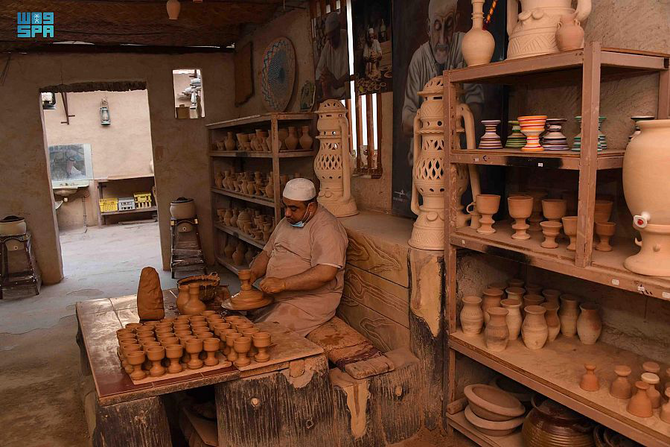
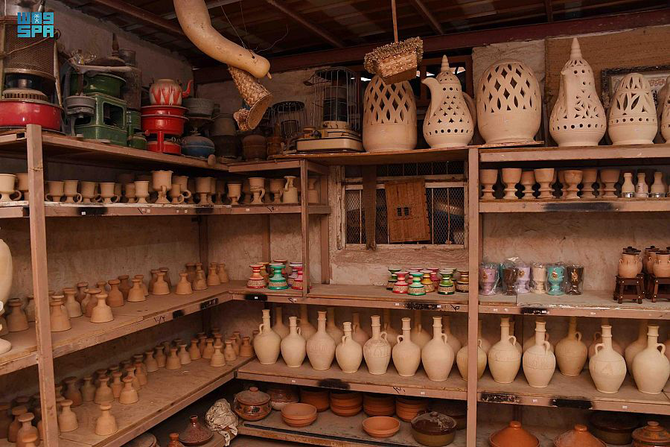
Among the most prominent pottery site in Al-Ahsa is Dogha Al-Gharash, located west of Al-Qarah Mountain. It was founded more than 150 years ago. (SPA)
2 / 5
Among the most prominent pottery site in Al-Ahsa is Dogha Al-Gharash, located west of Al-Qarah Mountain. It was founded more than 150 years ago. (SPA)
3 / 5
Among the most prominent pottery site in Al-Ahsa is Dogha Al-Gharash, located west of Al-Qarah Mountain. It was founded more than 150 years ago. (SPA)
4 / 5
Among the most prominent pottery site in Al-Ahsa is Dogha Al-Gharash, located west of Al-Qarah Mountain. It was founded more than 150 years ago. (SPA)
5 / 5
Among the most prominent pottery site in Al-Ahsa is Dogha Al-Gharash, located west of Al-Qarah Mountain. It was founded more than 150 years ago. (SPA)
Short Url
Updated 16 May 2021
Follow

Al-Ahsa’s fabled pottery industry stands test of time

  • Among the most prominent pottery site in Al-Ahsa is Dogha Al-Gharash, located west of Al-Qarah Mountain

AL-AHSA: Al-Ahsa’s pottery markets and factories, which have operated for centuries, see a surge in business during the holy month of Ramadan. Many Saudis buy pottery products to prepare and decorate their Ramadan and Eid tables, as part of local customs and traditions.

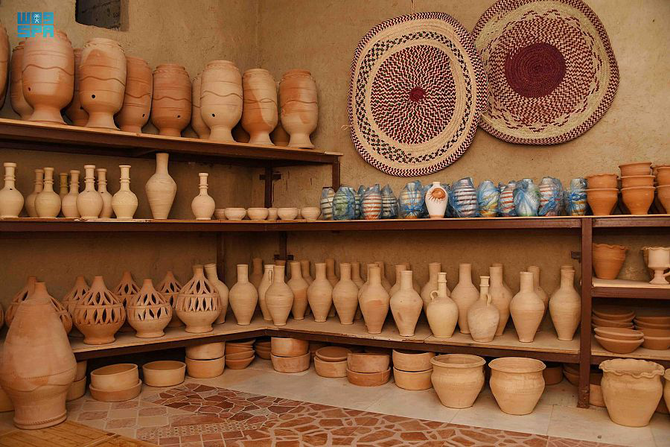
Pottery vessels have a range of shapes and uses, including utensil and food containers, pots for preserving and cooling water, and antiques for decorating tables, including incense burners, vases and piggy banks. These are considered part of local heritage and folklore across the Kingdom.

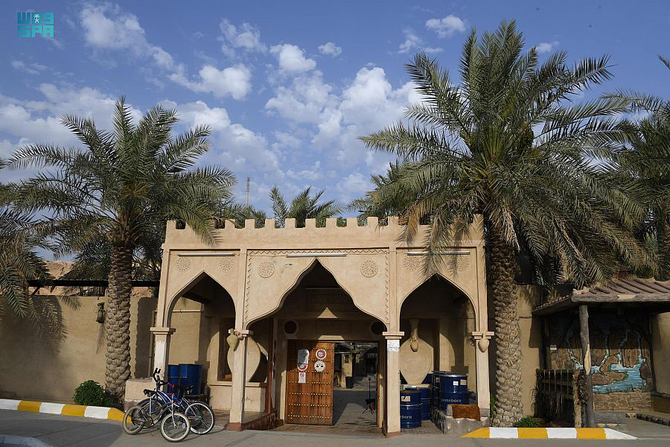
Among the most prominent pottery site in Al-Ahsa is Dogha Al-Gharash, located west of Al-Qarah Mountain. This factory was founded more than 150 years ago and has become one of the main tourist and heritage sites in the region.

The chief craftsman in Al-Ahsa, Wassil Ali Al-Gharash, who supervises the factory, said that the pottery market during Ramadan sees “remarkable activity” in terms of manufacturing and sales.

“This is because of its uses and forms that overlap and suit Ramadan and Eid tables, in addition to the special aesthetic atmosphere that pottery adds, bringing back memories of past decades,” he added.

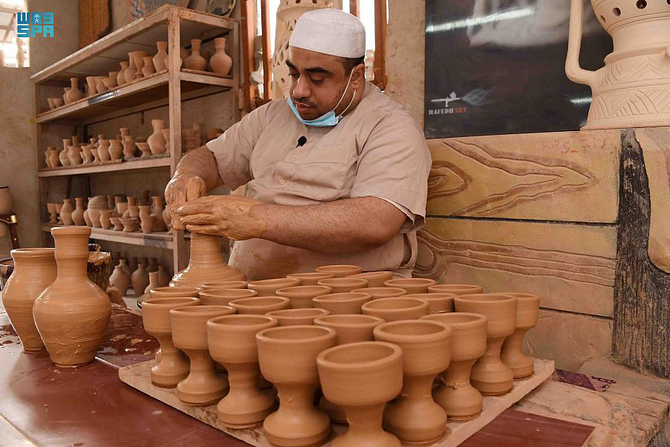
Al-Gharash said that pottery, a technique that has been honed for millennia in the Arabian Gulf, involves several steps. The first is the choosing of appropriate clay, the main material, which is then cleaned and formed.

Clay is then used to shape a vessel by hand or through molds and pottery wheels. The shaped clay is then left in a suitable place to dry. In the final step, the shaped clay is cooked in special ovens, thus becoming a high-quality product ready for sale and use.

Al-Gharash said that pottery is an art that requires patience, accuracy, skill and an experienced hand with a special touch.

Hassan Ali Al-Shomali, a young pottery maker, said that clay used in pottery vessels is sourced from Al-Qarah Mountain and its surroundings, and is of three types: Red, green and yellow, all of which are mixed in certain proportions with water to form a paste.

He added that pottery has preserved its place in households due to its many advantages, including low costs and its ability to bear heat when used to cook foods.

The pottery industry remains one of the most important parts of Al-Ahsa’s allure. A segment of the local community has managed to maintain a robust handmade pottery market despite modern developments in manufacturing and production.

Pottery producers also receive the attention and care of authorities concerned with preserving heritage, legacies, and social traditions as well as supporting professions and folk crafts.


Economic growth and resilience at heart of 2nd AlUla Emerging Market Economies Conference

Updated 03 February 2026
Follow

Economic growth and resilience at heart of 2nd AlUla Emerging Market Economies Conference

  • Event on Feb. 8 and 9 will bring together ministers, governors of central banks, policymakers, economic experts and international financial institutions
  • Emerging-market economies a ‘pivotal element’ in global economic system due to effect they have on growth and stability, says Saudi Finance Minister Mohammed Al-Jadaan

RIYADH: The second annual AlUla Conference for Emerging Market Economies, which Saudi Arabia will host next week, offers a platform to exchange views on global developments and discuss policies and reforms that support inclusive growth and strengthen economic resilience, the Kingdom’s finance minister said.

The event on Feb. 8 and 9 will bring together finance ministers, governors of central banks and policymakers, alongside economic experts and representatives of international financial institutions.

Organized by the Saudi Ministry of Finance in partnership with the International Monetary Fund, it takes place as emerging-market economies face mounting challenges amid rapid global economic change.

Finance Minister Mohammed Al-Jadaan said the decision to host the conference reflects Saudi Arabia’s ongoing commitment to efforts that support global financial and economic stability, and highlights the growing influence of emerging economies on worldwide growth.

Emerging-market economies represent a “pivotal element” in the global economic system due to the direct impact they have on economic growth and stability, he added.

“The AlUla Conference for Emerging Market Economies provides a unique platform for exchanging views on global economic developments, and discussing policies and reforms that will support inclusive growth and enhance economic resilience, in light of broader international cooperation that contributes to confronting common challenges,” Al-Jadaan said.

Kristalina Georgieva, managing director of the IMF, said the event would help emerging economies deal with growing uncertainty driven by technological change, demographic shifts and geopolitical tensions.

“The AlUla conference provides a vital platform for emerging economies to discuss how they can navigate the risks and embrace the opportunities ahead,” she said.

“In these times of sweeping transformations in the global economy, policymakers face a more challenging and uncertain environment. Countries should work together to strengthen resilience through sound macroeconomic and financial policies.”