

Pakistan exports record volume of kinnow as sales in Gulf countries increase by 29 percent

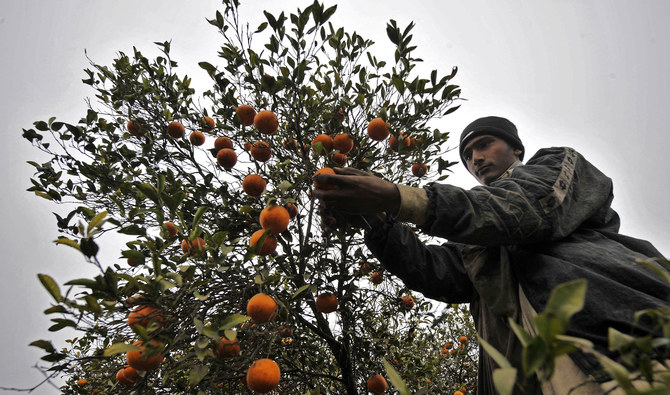
A Pakistani worker picking kinnow (mandarin oranges) from a tree at an orchard in the agricultural town of Bhalwal, Pakistan, on January 18, 2010. (AFP/File)
Short Url
Updated 02 August 2021
Follow

Pakistan exports record volume of kinnow as sales in Gulf countries increase by 29 percent

  • The country earned a revenue of $253 million by exporting 460,000 tons of the fruit during the latest season
  • Despite significant sales volume, exporters say they suffered significant losses due to exchange rate fluctuations 

KARACHI: Pakistan has earned a sizeable revenue of $253 million by exporting 460,000 tons of kinnow during the latest season, said a representative of the business community involved in the trade on Saturday, adding that the country mainly benefited from the robust demand for the fruit in the Middle Eastern markets. 

Initially, Pakistani traders had set an export target of 350,000 tons of the fruit with an expected earning of $210 million, but they ended up shipping the highest ever export volume in the country’s history toward the end of the 2020-21 season. 

“The demand for kinnow underwent a significant surge across the world due to the COVID-19 pandemic since citrus fruits play a vital role in strengthening our immunity system and protect us from deadly diseases,” Waheed Ahmed, patron-in-chief of the All Pakistan Exporters, Importers and Merchants Association, said. 

During the export season that concluded in April 2021, Pakistan’s international kinnow sales surged by 30 percent as compared to the preceding period when it sold 353,000 tons. 

According to the exporters of the fruit, the country’s aromatic kinnow sold quite well in the Middle East where its export grew by 29 percent due to its unique flavor. 
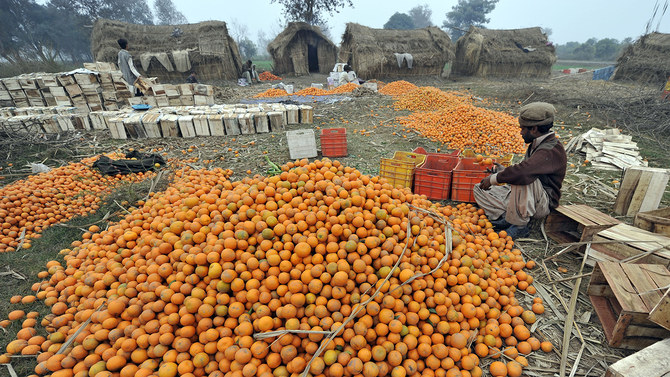


This file photo shows a Pakistani worker sorting kinnow (mandarin oranges) at an orchard in the agricultural town of Bhalwal on Jan. 18, 2010. (AFP/File)

Pakistan exported about 43,998 tons of kinnow to the United Arab Emirates which was 38 percent higher than its sales in the previous season.

The country’s export of the fruit to Saudi Arabia also increased by about 9 percent where it sold a quantum of about 21,970 tons.

Pakistan also shipped about 66,700 tons of kinnow to other gulf countries, including Oman, Qatar and Iraq.

“Due to the commendable efforts and extensive assistance of the government, the country managed to export a much greater volume of the fruit than anticipated,” Ahmed said. 

However, he added that individual Pakistani exporters sustained huge financial losses despite selling more kinnow due to the dollar-rupee exchange rate fluctuations.

“The export orders materialized when the exchange rate stood at Rs168,” he said. “By the time the payments were made, the Pakistani rupee had acquired greater stability and the exchange rate was at Rs153.”

He also thought that the commodity did not get its fair price in the international market since the freight cost disproportionately increased due to international lockdowns, and local exporters suffered their highest losses in the Russian market. 


Pakistan says $50 million meat export deal with Tajikistan nearing finalization

Updated 09 December 2025
Follow

Pakistan says $50 million meat export deal with Tajikistan nearing finalization

  • Islamabad expects to finalize agreement soon after Dushanbe signals demand for 100,000 tons
  • Pakistan is seeking to expand agricultural trade beyond rice, citrus and mango exports

ISLAMABAD: Tajikistan has expressed interest in importing 100,000 tons of Pakistani meat worth more than $50 million, with both governments expected to finalize a supply agreement soon, Pakistan’s food security ministry said on Tuesday.

Pakistan is trying to grow agriculture-based exports as it seeks regional markets for livestock and food commodities, while Tajikistan, a landlocked Central Asian state, has been expanding food imports to support domestic demand. Pakistan currently exports rice, citrus and mangoes to Dushanbe, though volumes remain small compared to national production, according to official figures.

The development came during a meeting in Islamabad between Pakistan’s Federal Minister for National Food Security and Research Rana Tanveer Hussain and Ambassador of Tajikistan Yusuf Sharifzoda, where agricultural trade, livestock supply and food-security cooperation were discussed.

“Tajikistan intends to purchase 100,000 tons of meat from Pakistan, an import valued at over USD 50 million,” the ambassador said, according to the ministry’s statement, assuring full facilitation and that Islamabad was prepared to meet the demand.

The statement said the two sides agreed to expand cooperation in meat and livestock, fresh fruit, vegetables, staple crops, agricultural research, pest management and standards compliance. Pakistan also proposed strengthening coordination on phytosanitary rules and establishing pest-free production zones to support long-term exports.

Pakistan and Tajikistan have long maintained political ties but bilateral food trade remains below potential: Pakistan produces 1.8 million tons of mangoes annually but exported just 0.7 metric tons to Tajikistan in 2024, while rice exports amounted to only 240 metric tons in 2022 out of national output of 9.3 million tons. Pakistan imports mainly ginned cotton from Tajikistan.