

Interview: CNN’s Caroline Faraj talks journalism in a digital world

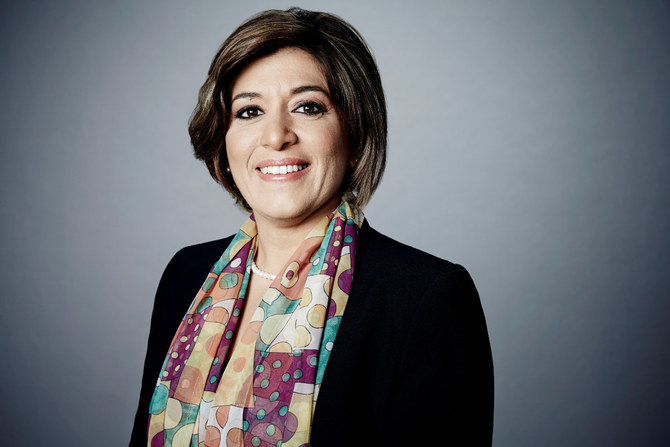
Caroline Faraj, vice president for Arabic Services at CNN. (Supplied)
Short Url
Updated 10 May 2021
Follow

Interview: CNN’s Caroline Faraj talks journalism in a digital world

  • Caroline Faraj, Vice President for Arabic Services at CNN, shares the news channel’s growth and strategy

DUBAI: With more and more people consuming news online, it has become increasingly important for news outlets — print or TV — to digitize their offerings.

CNN, one of the biggest news outlets in the world, broke all records last year with CNN Digital reaching its largest and most engaged global audience. In the region, CNN Arabic registered its highest year on record for average monthly unique visitors, which was up 34 percent from 2019 largely driven by record-high levels of mobile consumption which grew by 24 percent from 2019.

Arab News spoke to Caroline Faraj, vice president for Arabic Services at CNN, to learn more about the growth story and future strategy of CNN Arabic.

Can you share how much of the traffic is organic, versus from other sources such as social media?

It is a significant strength and differentiator that the vast majority of CNN Digital and CNN Arabic’s traffic comes to us directly. CNN is one of the few remaining destinations on the Internet where people seek out our home page or coverage of a particular story as they associate us with trusted news and information. While it is important for us to have a social presence, we are much less reliant on traffic referral from those platforms than other media due to the strength of our brand, both globally and with CNN Arabic.

What is the strategy to drive growth?

CNN Arabic is the Middle East’s leading independent news platform. What makes us stand out is that independence and our credible, authentic, factful reporting and the huge trust in the CNN brand which has tremendous value for our audience. We offer a global perspective, both on international news and on stories that are more regionally relevant or focused.

Being part of the world’s largest news network, with journalists working on stories from every continent, is an enormous asset in terms of the renowned quality of our journalism, the resources and wealth of talent in our teams and the recognition and confidence that the audience has in us. As we’ve seen with the record audience numbers, CNN is more essential than ever before in providing trusted news.

Our audience is powerful; the caliber of our audience differentiates us from other news media. Political leaders, CEOs, celebrities and people at the top of their industry, actively share, reference and act upon our reporting. We reach these audiences at scale including opinion-formers, change-makers, high-spenders, travelers and business decision-makers.

Having an impact, creating change and being an essential trusted news source is key to maintaining and driving growth among our influential audience and reaching new and younger audiences.

Analysis from a recent brand study that we conducted showed that with the news events of 2020 and the outlook for 2021, 91 percent of consumers from the Middle East and Africa region feel the role of international news media is now more important than ever.

Our strategy is based on constant innovation and responding to the audience and their consumption habits, the formats and the stories that they’re engaging with. The closer we are to our audience the better we are in offering and curating the content they are interested in.

Underpinning everything is a data-led approach that analyzes audience trends and behavior to give insight on where we can grow and serve our audience even better in the future. For example, our analysis shows that our Arabic audience expands well beyond the region and there are growth opportunities with Arabic speakers in the US. Along with breaking news, we know that business, technology, travel, sports and entertainment are key areas of interest for our audiences.

Another area for growth is in our products such as audio and newsletters. Globally downloads of CNN audio content increased by over 75 percent in 2020 compared to 2019 and there’s been a huge demand for CNN newsletters as subscriptions grew by 90 percent in 2020 compared to 2019. We’re currently developing concepts for Arabic audiences.

How did CNN Arabic adapt to digital and mobile?

CNN Arabic has been a digital destination from the outset when we launched almost 20 years ago. As a digital-first brand, we have been well ahead of many of the competitors. Mobile has been at the core of our offering ever since the introduction of the smartphone. It will remain a focus, in line with the Middle Eastern audience’s preference, as we’re currently seeing the majority of traffic on mobile, which is at almost 90 percent in some cases.

What are your plans for the future?

We are listening to our audience’s needs and making changes as part of our commitment to them. Plans include expanding into audio and newsletters, which as I mentioned we’re seeing huge growth in globally. The product portfolio will grow, content formats will evolve and become more immersive and we’re exploring a move into events.

An area that I am very passionate about is training the next generation of journalists. For many years we’ve offered internships at CNN Arabic; we’ve had more than 120 interns from around the world and have provided training courses in the region. This has been formalized this year through the CNN Academy Abu Dhabi, which I was proud to be part of. As we look to the future, I am keen for CNN Arabic to bring this level of training for Arabic speakers that want to learn about the skills of our trade.

From a commercial perspective, we are also looking forward to working with more brands. CNN Arabic is the ideal platform if an advertiser wants to reach Arabic audiences at scale in a premium environment. We work closely with our commercial partners to develop innovative solutions and ensure that their messages cut through in sponsorships, digital advertising and audience targeting.

How has news media changed in the past few years – especially during the pandemic – both from a user consumption perspective as well as from a media owner perspective?

People can get news in numerous different ways and are surrounded by so many of sources of information. The pandemic has certainly prompted behavioral changes and accelerated the need and appreciation for factual, trustworthy and accurate reporting. With the growing prevalence of information sources, people are turning to brands they trust for news and information. We’ve seen that with our record-breaking traffic. Even though there are more sources than ever, and more platforms than ever, we had our best year on record.

We’ve also seen changes in consumption habits with round the clock engagement as audiences are regularly checking in on the latest news on their phone and we’re seeing high demand for video content.

What are your thoughts on the relationship between news media and companies such as Facebook and Google and the consequent idea of these companies compensating publishers?

We work with all the major platforms, and last year we partnered with Facebook on a campaign about maintaining community and connection during Ramadan.

When working with any of the platforms, publishers need to have a path to revenue. It’s important for us to have a presence on various platforms, but our focus is on our owned and operated platforms, such as with the move of the Go There show from Facebook onto our own website and mobile apps.


A look back at how Arab News marked its 50th anniversary

Updated 31 December 2025
Follow

A look back at how Arab News marked its 50th anniversary

  • In a year crowded with news, the paper still managed to innovate and leverage AI to become available in 50 languages
  • Golden Jubilee Gala, held at the Diplomatic Quarter in Riyadh, now available to watch on YouTube

RIYADH: In 2025, the global news agenda was crowded with headlines concerning wars, elections and rapid technological change.

Inside the newsroom of Arab News, the year carried additional weight: Saudi Arabia’s first English-language daily marked its 50th anniversary.

And with an industry going through turmoil worldwide, the challenge inside the newsroom was how to turn a midlife crisis into a midlife opportunity. 

For the newspaper’s team members, the milestone was less about nostalgia than about ensuring the publication could thrive in a rapidly changing and evolving media landscape.

“We did not want just to celebrate our past,” said Faisal J. Abbas, editor-in-chief of Arab News. “But more importantly, we were constantly thinking of how we can keep Arab News relevant for the next five decades.”

Faisal J. Abbas, editor-in-chief of Arab News. (Supplied)

The solution, he added, came down to two words: “Artificial intelligence.”

For the Arab News newsroom, AI was not a replacement for journalism but as a tool to extend it.

“It was like having three eyes at once: one on the past, one on the present, and one on the future,” said Noor Nugali, the newspaper’s deputy editor-in-chief.

Noor Nugali, deputy editor-in-chief of Arab News. (Supplied)

One of the first initiatives was the 50th anniversary commemorative edition, designed as a compact historical record of the region told through Arab News’ own reporting.

“It was meant to be like a mini history book, telling the history of the region using Arab News’ archive with a story from each year,” said Siraj Wahab, acting executive editor of the newspaper.

The issue, he added, traced events ranging from the outbreak of the Lebanese civil war in 1975 to the swearing-in of Donald Trump, while also paying homage to former editors-in-chief who shaped the newspaper’s direction over five decades.

The anniversary edition, however, was only one part of a broader strategy to signal Arab News’ focus on the future.

To that end, the paper partnered with Google to launch the region’s first AI-produced podcast using NotebookLM, an experimental tool that synthesizes reporting and archival material into audio storytelling.

The project marked a regional first in newsroom-led AI audio production.

The podcast was unveiled during a special 50th anniversary ceremony in mid-November, held on the sidelines of the Arab Media Forum, hosted by the Dubai Future Foundation. The event in the UAE’s commercial hub drew regional media leaders and officials.

Remarks at the event highlighted the project as an example of innovation in legacy media, positioning Arab News as a case study in digital reinvention rather than preservation alone.

“This is a great initiative, and I’m happy that it came from Arab News as a leading media platform, and I hope to see more such initiatives in the Arab world especially,” said Mona Al-Marri, director-general of the Government of Dubai Media Office, on the sidelines of the event.

“AI is the future, and no one should deny this. It will take over so many sectors. We have to be ready for it and be part of it and be ahead of anyone else in this interesting field.”

Behind the scenes, another long-form project was taking shape: a documentary chronicling Arab News’ origins and its transformation into a global, digital-first newsroom.

“While all this was happening, we were also working in-house on a documentary telling the origin story of Arab News and how it transformed under the current editor into a more global, more digital operation,” said Nugali.

The result was “Rewriting Arab News,” a documentary examining the paper’s digital transformation and its navigation of Saudi Arabia’s reforms between 2016 and 2018. The film charted editorial shifts, newsroom restructuring and the challenges of reporting during a period of rapid national change.

The documentary was screened at the Frontline Club in London, the European Union Embassy, Westminster University, and the World Media Congress in Bahrain. It later became available on the streaming platform Shahid and onboard Saudi Arabian Airlines.

The grand slam of the anniversary year was the Golden Jubilee of Arab News gala, held in late September in Riyadh’s Diplomatic Quarter. (AN photo)

It was also nominated for an Association for International Broadcasting award.

In early July, a special screening of the documentary took place at the EU Embassy in Riyadh. During the event, EU Ambassador to Saudi Arabia Christophe Farnaud described the film as an “embodiment” of the “incredible changes” that the Kingdom is undergoing.

“I particularly appreciate … the historical dimension, when (Arab News) was created in 1975 — that was also a project corresponding to the new role of the Kingdom,” Farnaud said. “Now the Kingdom has entered a new phase, a spectacular phase of transformation.”

Part of the documentary is narrated by Prince Turki Al-Faisal, the former Saudi ambassador to the US, who in the film delves into the paper’s origins.

Prince Turki Al-Faisal, the former Saudi ambassador to the US. (AN photo)

The grand slam of the anniversary year was the Golden Jubilee of Arab News gala, held in late September in Riyadh’s Diplomatic Quarter.

Hosted by the Dean of Diplomatic Corps in Saudi Arabia and Ambassador of Djibouti to Riyadh Dya-Eddine Said Bamakhrama, the evening featured a keynote address by Prince Turki, who spoke about Arab News’ founding under his father, the late King Faisal, and its original mission to present the Kingdom to the English-speaking world.

The Dean of Diplomatic Corps in Saudi Arabia and Ambassador of Djibouti to Riyadh Dya-Eddine Said Bamakhrama (far left). (AN photo)

Arab News was established in Jeddah in 1975 by brothers Hisham and Mohammed Ali Hafiz under the slogan to give Arabs a voice in English while documenting the major transformations taking place across the Middle East.

The two founders were honored with a special trophy presented by Prince Turki, Assistant Media Minister Abdullah Maghlouth, Editor-in-Chief Abbas, and family member and renowned columnist Talat Hafiz on behalf of the founders. 

During the gala, Abbas announced Arab News’ most ambitious expansion yet: the launch of the publication in 50 languages, unveiled later at the World Media Congress in Madrid in cooperation with Camb.AI.

The grand slam of the anniversary year was the Golden Jubilee of Arab News gala, held in late September in Riyadh’s Diplomatic Quarter. (AN photo)

The Madrid launch in October underscored Arab News’ aim to reposition itself not simply as a regional paper, but as a global platform for Saudi and Middle Eastern perspectives.

The event was attended by Princess Haifa bint Abdulaziz Al-Mogrin, the Saudi ambassador to Spain; Arab and Spanish diplomats; and senior editors and executives.

As the anniversary year concluded, Arab News released the full video of the Golden Jubilee Gala to the public for the first time, making the event accessible beyond the room in which it was held.

For a newspaper founded in an era of typewriters and wire copy, the message of its 50th year was clear: longevity alone is not enough. Relevance, the newsroom concluded, now depends on how well journalism adapts without losing sight of its past.