

Occupancy rate of Makkah hotels sees over 30% rise in second half of Ramadan

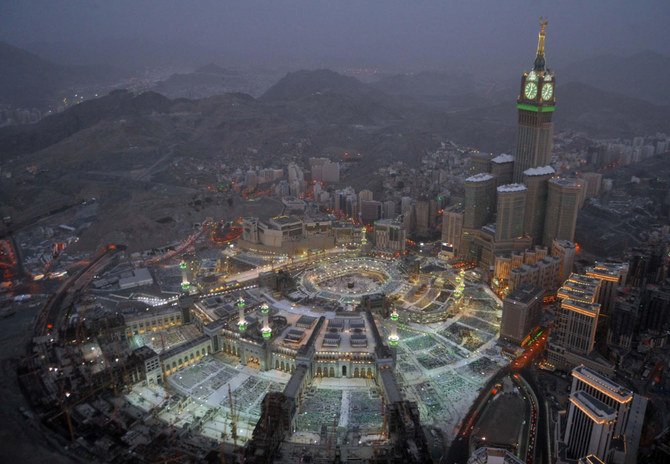
Saudis and expatriates used to spend the last 10 days of the holy month in Makkah for worship, but many of them put the habit on hold since the pandemic started. (Shutterstock)
Short Url
Updated 06 May 2021
Follow

Occupancy rate of Makkah hotels sees over 30% rise in second half of Ramadan

  • Makkah is the main artery of hotels in Saudi Arabia, alone accounting for more than 64 percent of the sector

JEDDAH/MAKKAH: The occupancy rate at the beginning of the holy month of Ramadan varied between 10 and 20 percent, while in the second half it rose to 30-38 percent, Rayan bin Osama Filali, chairman of the Hotel Committee, an affiliate of the Makkah Chamber of Commerce and Industry told Arab News.

Filali explained that for the first time, a relatively mild increase in the prices during the last days of Ramadan was witnessed — an unprecedented occurrence, as prices often increase by 300 percent during the last 10 days of Ramadan, compared with the rest days of the month.

“The size and impact of the pandemic caused the cancellation of offers promoted by hotels in the last 10 days of Ramadan,” Filali noted. The fact that only a small percentage of hotels was able to operate “showed the extent of the damage to the sector due to the coronavirus disease (COVID-19), which disrupted the entire system, causing losses that are likely to cast a shadow for years to come.”

The chairman of the Hotel Committee said that the pandemic had directly disrupted much of the hotel sector’s dynamism, as it is one of the most productive, stimulating and job-creating market sectors.

He also said that only 26 hotels in Makkah’s central region are operating this Ramadan season with average prices dropping by 55 percent.

Makkah is the main artery of hotels in Saudi Arabia, alone accounting for more than 64 percent of the sector, which, according to Filali, needs at least four years to recover from the present crisis.

He also noted that the economic implications on the 1,200 hotels were extreme and that most hotels suspended their activities completely, closing their facilities and sending thousands of workers home.

“These workers are still waiting for hotels to open their doors after the end of the pandemic or the completion of the inoculation campaign of the entire community,” he added.

According to Filali, the hotel sector generates huge financial returns for all the countries of the world, and the holy capital depends mainly on the permanence of an industry that creates thousands of jobs annually.

Filali remarked that the sector was awaiting a major expansionary boom but that the virus threatened the industry despite the efforts of the Saudi leadership to maintain the salaries of its employees for several months with the unemployment insurance program “Saned.”

“The lack of demand on bookings and the high operating volume and cost of food have paralyzed the tourism sector, which has led many hotels to suspend their operations until the pandemic ends,” said Filali.

READ MORE

Hotels surrounding the courtyards of the Grand Mosque in Makkah were on Tuesday authorized to issue Umrah permits to guests during Ramadan as part of an initiative to help revive the holy city’s struggling hospitality sector. Click here for more.
Bassam Khanfar, general manager of the Shaza Makkah Hotel, told Arab News that over 17,000 rooms remained vacant due to the pandemic.

He said that a gradual resumption of operations and purchasing power must be taken into account so that the sector can recover with the least possible losses.

He noted out that the average price of a room in the first 20 days of Ramadan was SR 1,300, increasing to an average of SR 1,900 in the last 10 days of the holy month.

Khanfar’s hotel offered a discount of 50 percent to health practitioners in recognition of their great efforts in fighting the virus — efforts echoed in the performance of the Kingdom as a whole in addressing the pandemic.

Saudis and expatriates used to spend the last 10 days of the holy month in Makkah for worship, but many of them put the habit on hold since the pandemic started.

Ahmed Al-Ghamdi, a Jeddah cafe owner, told Arab News: “Before the pandemic, I was keen to perform Umrah in the last 10 days of every Ramadan, especially on the 27th night, which is when Laylat Al-Qadr (Night of Power) is believed to have occurred.”

He added that the Grand Mosque normally would see hundreds of thousands of worshippers during the last 10 days of Ramadan, in pre-COVID-19 times.

“Unluckily, I can’t perform Umrah this time because I have not yet received the first dose of the vaccine despite my attempts to get vaccinated. But it’s to be expected, as millions are trying to register for the vaccine,” he said.

Al-Ghamdi’s friend, retired army officer Salem bin Saleh, said he was lucky to get the first doses and is planning to perform Umrah in the few coming days.

“Performing Umrah in the last 10 days of Ramadan has been one of my habits for over 30 years,” Saleh told Arab News.

He said that performing Umrah in Ramadan is equal in reward to performing Hajj, as Prophet Muhammad said.

“The feeling you get during and after performing Umrah in Ramadan is indescribable,” Saleh added.


Saudi Arabia sets global benchmark in AI modernization

Updated 15 January 2026
Follow

Saudi Arabia sets global benchmark in AI modernization

  • Executives hail the Kingdom’s robust infrastructure and strategic workforce programs

RIYADH: Saudi Arabia is emerging as a global leader in artificial intelligence, according to executives from OpenText, one of the world’s largest enterprise information management companies. 

With 22 years of international AI experience, Harald Adams, OpenText’s senior vice president of sales for international markets, said the Kingdom’s modernization efforts are now setting a global standard.

“From my perspective, Saudi Arabia is not only leading the modernization towards artificial intelligence in the Middle East, I think it is even not leading it only in the MENA region. I think it is leading it globally,” Adams told Arab News.

In an interview, Adams and George Schembri, vice president and general manager for the Middle East at OpenText, discussed the Kingdom’s significant investments in AI during the inauguration of OpenText’s new regional headquarters in Riyadh.

“So for us (OpenText), from our perspective, it was a strategic decision to move our MENA headquarters to Saudi Arabia because we believe that we will see here a lot of innovation coming out of the country, we can replicate not only to the MENA region, maybe even further to the global level,” Adams said.

The new headquarters, located in the King Abdullah Financial District, will serve as a central hub for OpenText customers and partners across the Middle East. Its opening reflects a broader trend of tech giants relocating to Riyadh, signaling the Kingdom’s rise as a hub for global AI innovation.

Adams attributed Saudi Arabia’s lead in AI modernization to a combination of substantial financial backing, a unified national strategy, and a remarkable pace of execution.

“I mean, a couple of things, because the ingredients in Saudi Arabia are of course, quite interesting. On the one hand side, Saudi Arabia has deep pockets and great ambitions. And they are, I mean, and they are executing fast, yeah,” he said.
“So from that perspective, at the moment, what we see is that there are, especially on the government side, I can’t see any other government organizations globally moving faster into that direction than it is happening in Saudi Arabia. Not in the region, not even on a global level, they are leading the game,” he underlined.

Schembri added, “Saudi’s AI vision is one of the most ambitious in the world, and AI on a national scale is not good without trusted, secured, and governed, and this is where OpenText helps to enable the Saudi organizations to be able to deliver on the 2030 Vision.”

“The Kingdom’s focus on AI and digital transformation creates a powerful opportunity for organizations to unlock value from their information,” Schembri stated.
“With OpenText on the ground in Riyadh, our customers gain direct access to trusted global expertise combined with local insight — enabling them to manage information securely, scale AI with confidence, and compete on a global stage,” he added.

DID YOU KNOW?

• Saudi Arabia ranks 5th globally and 1st in the region for AI growth under the 2025 Global AI Index.

• The Kingdom is also 3rd globally in advanced AI model development, trailing only the US and China.

• AI is projected to contribute $235.2 billion — or 12.4 percent — to Saudi Arabia’s GDP by 2030.

The inauguration of OpenText’s new regional headquarters was attended by Canada’s Minister of International Trade and Economic Development, Maninder Sidhu, and Jean-Philippe Linteau, Canada’s ambassador to Saudi Arabia. 

Sidhu emphasized the alignment of Saudi Vision 2030 with Canada’s economic and innovation goals.

“His Highness (Crown Prince Mohammed bin Salman) and Vision 2030, there is a lot of alignment with Canada, as you know, with the economic collaboration, with his vision around mining, around education, tourism, healthcare, you look at AI and tech, there’s a lot of alignment here at OpenText Grand opening their regional headquarters,” Sidhu told Arab News.

Saudi Arabia’s AI ambitions are projected to contribute $235.2 billion — or 12.4 percent — to its GDP by 2030, according to PwC. The Saudi Data and AI Authority, established by a royal decree in 2019, drives the Kingdom’s national data and AI strategy.

One flagship initiative, Humain, chaired by Crown Prince Mohammed bin Salman, was launched in May 2025 under the Public Investment Fund. It aims to build a full AI stack — from data centers and cloud infrastructure to models and applications — positioning Saudi Arabia as a globally competitive AI hub. The project plans to establish a data center capacity of 1.8 GW by 2030 and 100 GW of AI compute capacity by 2026.

Saudi Arabia is also expanding international partnerships. In May 2025, Humain signed a $5 billion agreement with Amazon Web Services to accelerate AI adoption domestically and globally, focusing on infrastructure, services, and talent development.

The Kingdom ranked fifth globally and first in the Arab region for AI sector growth under the 2025 Global AI Index, and third worldwide in advanced AI model development, behind only the US and China, according to the Stanford University AI Index 2025.

Education is another pillar of Saudi AI strategy. Starting in the 2025-26 academic year, AI will be taught as a core subject across all public school grades, reaching roughly 6.7 million students. The curriculum will cover algorithmic thinking, data literacy, and AI ethics.

OpenText executives emphasized their commitment to supporting Vision 2030 and the national AI strategy through workforce development.

“OpenText has put a lot of investment in the Kingdom, right. We brought cloud to the Kingdom, we’ve opened our headquarters in the Kingdom, we’ve basically hiring Saudis in the Kingdom, We basically building, if you like, an ecosystem to support the Kingdom. And on top of that, what we’re doing is we’re putting a plan together, if you like, a program to look at how we can educate, if you like, the students at universities,” Schembri said.
“So this is something that we are looking into, we are basically investigating and to see how we can support the Saudi nationals when they come into the workplace. And I’m really excited. I have Harry who is, our leadership who’s supporting this program.”
“It’s something that we are putting together. It’ll take some effort. So it’s still in play because we want to make sure what we put it basically delivers on what we're trying to achieve based on the vision of Saudi,” he added.

“The younger generation is sooner or later either working for us or maybe for a partner or for maybe for a customer. So that’s why we are to 100 percent committed to enable all of that,” Adams said.