

Pakistan announces Eid Al-Fitr holidays from May 10 to 15

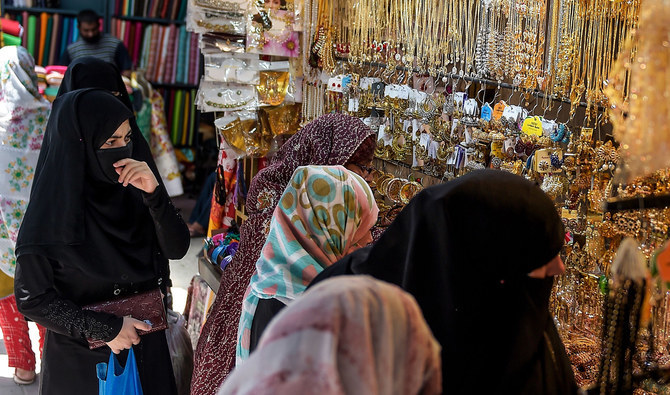
People gather to shop at the Raja Bazar ahead of the Muslim Eid al-Fitr festival in Rawalpindi on May 20, 2020. (AFP/File)
Short Url
Updated 04 May 2021
Follow

Pakistan announces Eid Al-Fitr holidays from May 10 to 15

  • The weeklong break is part of the government’s ‘Stay Home Stay Safe Strategy’ amid the third wave of the coronavirus pandemic
  • Pakistan has already announced a ban on tourism and intercity movement through public transportation from May 8 to 16

ISLAMABAD: People across Pakistan will observe Eid Al-Fitr holidays from May 10 to 15, the country’s interior ministry announced in a notification on Monday.
The weeklong break is part of the government’s “Stay Home Stay Safe Strategy” amid a third wave of the coronavirus pandemic and a surge in COVID-19 cases.
“It is notified for general information that 10th to 15th (Monday-Saturday) May, 2021 shall be public holidays on the occasion of Holy Festival of Eid Al-Fitr,” the interior ministry said. 
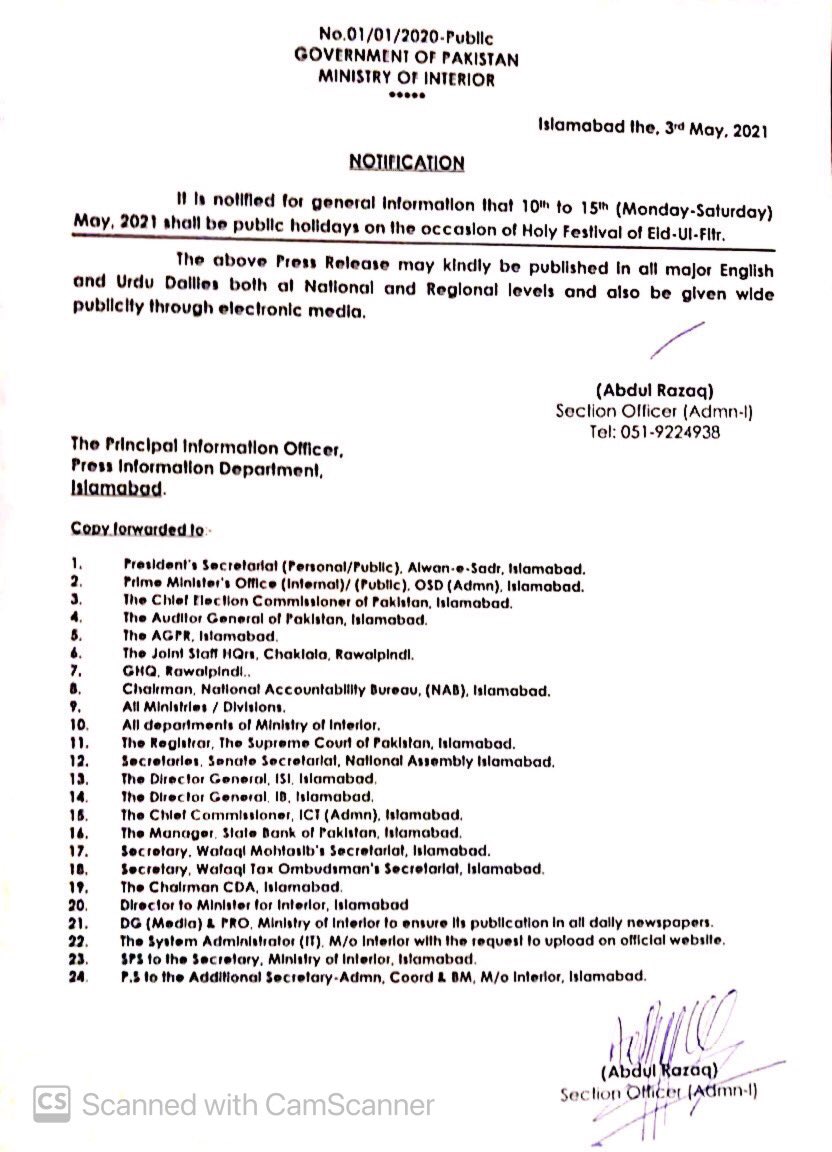


Notification to observe Eid Al-Fitr holidays from May 10 to 15 in Pakistan issued by country’s interior ministry on May 3, 2021. (Courtesy: Interior Ministry of Pakistan)

Last week, the interior ministry also announced a ban on tourism and intercity movement through public transportation from May 8 to 16 to curb the rising number of infections in the country.
All markets, including Eid bazaars, businesses, and shops will also remain closed except for those providing essential services such as grocery stores and pharmacies.
Pakistan’s National Command and Operation Center (NCOC), which oversees the country’s pandemic response, has also ordered airlines to cut the number of inbound flights to Pakistan between May 5 and 20.
As hospitals run out of space, the country’s planning minister Asad Umar informed in a series of tweets last Friday that the government had decided to import 6,000 tons of oxygen, though he added that the measure was part of the administration’s “proactive decision making” that also allowed it to enhance the capacity of its health sector by increasing oxygen production and the number of hospital beds.
Pakistan reported 3,377 new coronavirus cases and 161 related deaths in the last 24 hours. The country also performed 37,587 tests during the same period and has 5,326 critical cases.


Pakistan eyes collaboration with Saudi Arabia, Indonesia, China for local vaccine production

Updated 11 February 2026
Follow

Pakistan eyes collaboration with Saudi Arabia, Indonesia, China for local vaccine production

  • Pakistan last week held talks with a visiting Saudi delegation on partnering to manufacture vaccines locally
  • Government working on “war footing” to ensure local production of vaccines by 2030, says health minister

ISLAMABAD: Pakistan is eyeing collaboration with Saudi Arabia, Indonesia and China to produce vaccines locally, Health Minister Syed Mustafa Kamal said on Thursday, adding that Islamabad was exploring both government-to-government and business-to-business opportunities in this regard. 

Kamal told Arab News last week that Islamabad was “very close” to an agreement with Saudi Arabia that would enable Pakistan to manufacture vaccines locally. The development took place as a Saudi delegation, led by the Kingdom’s senior adviser to the minister of industry Nizar Al-Hariri, arrived in Pakistan last week and held talks with health officials on a partnership with Pakistan which would enable it to manufacture vaccines locally. 

The efforts take place amid Pakistan’s push to strengthen its health security and industrial capacity. The country of more than 240 million currently imports all vaccines used in its national immunization campaigns, relying heavily on international partners to help cover the costs.

“Mustafa Kamal said Pakistan is exploring collaboration with Saudi Arabia, Indonesia and China for local production of these vaccines,” state broadcaster Radio Pakistan reported. 

Kamal said the government is working on a “war footing” to ensure the local production of vaccines before 2030. 

The health minister reiterated that Pakistan has the potential to locally produce raw materials of the 13 vaccines that it provides free of cost. He added that the government will also export vaccines once it starts producing them at home. 

“Mustafa Kamal said the government is exploring both government-to-government and business-to-business collaboration to achieve our objectives in vaccine production,” Radio Pakistan said. 

Pakistan’s health ministry has said it imports all 13 vaccines that it provides masses for free at an annual cost of about $400 million.

International partners currently cover 49 percent of these costs, with the remainder borne by the Pakistani government. This external support, Kamal has warned, is expected to end after 2030.