

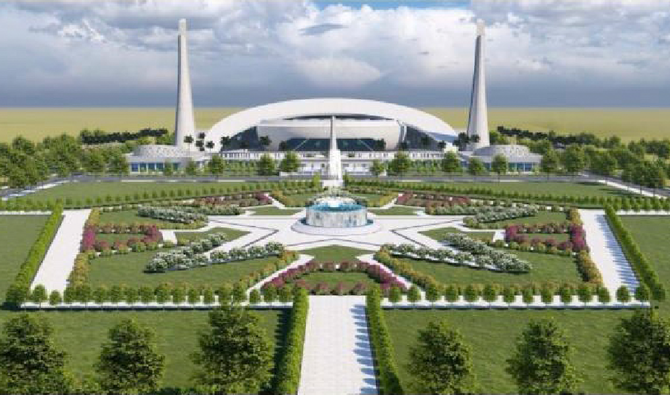
Saudi Arabia to build King Salman bin Abdulaziz mosque at Islamabad’s Islamic university

This undated photo shows the proposed design of the King Salman bin Abdulaziz Mosque that Saudi Arabia will build at the International Islamic University in Islamabad. (Photo courtesy: International Islamic University, Islamabad)
Short Url
Updated 04 May 2021
Follow

Saudi Arabia to build King Salman bin Abdulaziz mosque at Islamabad’s Islamic university

  • The mosque will be able to accommodate 12,000 worshipers and have a research and cultural center
  • The rector of the International Islamic University says the center will focus on Arabic language, Islamic culture and heritage

ISLAMABAD: Saudi Arabia will build the King Salman bin Abdulaziz Mosque along with a research and cultural center at the new campus of the International Islamic University (IIU) in Islamabad, the institute’s rector told Arab News on Saturday.
“The Custodian of the Two Holy Mosques has decided to build the King Salman bin Abdulaziz Mosque with a capacity of 12,000 worshippers at the new campus of the International Islamic University,” Dr. Masoom Yasinzai said.
“This is not just going to be a mosque but will have a huge complex with a research and cultural center for scholars and students,” he continued, adding that there would also be a library and museum along with an auditorium named after Crown Prince Mohamed bin Salman.
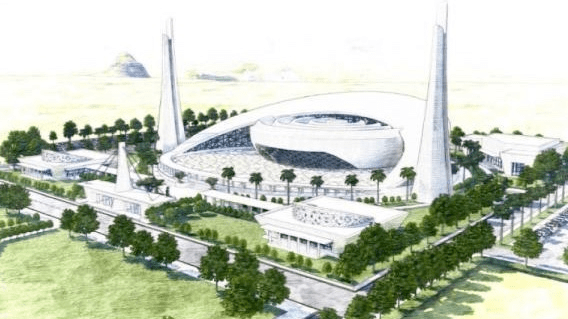


This undated photo shows the proposed design of the King Salman bin Abdulaziz Mosque that Saudi Arabia will build at the International Islamic University in Islamabad. (Photo courtesy: International Islamic University, Islamabad) 

Yasinzai said the project was another evidence of the strong Saudi-Pakistan relationship.
“The research center will focus on Arabic language, Islamic culture and heritage. The center will be equipped with digital technology to provide online Arabic courses from Islamabad to the whole world,” the IIU rector said.
He also informed that researchers from other Muslim countries would also make intellectual contributions to the center.
“Initially, the construction of the mosque was going to cost Rs500 million,” Yasinzai said. “But now the research and cultural center has also been included in the project which will raise its cost.”
He added that the proposed model of the mosque was an exceptional representation of Islamic art and architecture.
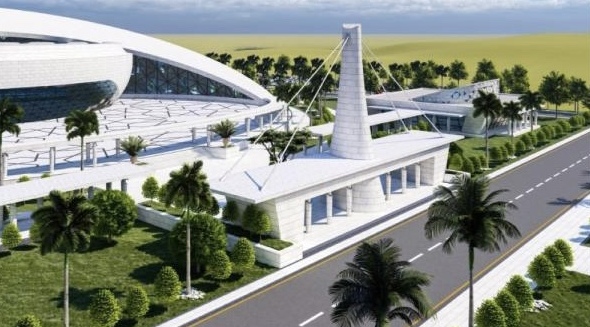


This undated photo shows the proposed design of the King Salman bin Abdulaziz Mosque that Saudi Arabia will build at the International Islamic University in Islamabad. (Photo courtesy: International Islamic University, Islamabad) 

In addition to that, the IIU official said Saudi Arabia would send 15 professors from some of the top universities in the kingdom to teach Arabic, Shariah and other Islamic subjects.
“They will come to Islamabad on deputation and will be financed by the Saudi government,” he continued. “The Saudi authorities have also announced 250 fully funded scholarships for needy students in Pakistan.”
Prime Minister Imran Khan’s adviser on religious harmony Hafiz Tahir Ashrafi said that people of Pakistan were thankful to the Saudi government for deciding to build the mosque.
“This grand mosque will have the capacity to accommodate 10,000 men and 2,000 women,” he told Arab News. “It will be yet another monument of the Saudi-Pak friendship and lead to better progress in the bilateral relations of the two countries.”


Pakistan’s Mahnoor Omer named among TIME’s ‘Women of the Year’ for 2026

Updated 01 March 2026
Follow

Pakistan’s Mahnoor Omer named among TIME’s ‘Women of the Year’ for 2026

  • Omer moved a Pakistani court against the so-called ‘period tax’ in Sept. 2025 which has since sparked a national debate
  • Taxes on sanitary pads in Pakistan can add up to 40 percent to retail price, UNICEF says only around 12 percent women use such products

ISLAMABAD: Pakistani women’s rights activist Mahnoor Omer, who fought against taxes on menstrual products, has been named among the TIME magazine’s ‘Women of the Year’ for 2026.

Omer’s efforts have been recognized alongside 16 activists, artists, athletes and businesswomen in the TIME’s Women of the Year 2026 list, including Olympic gold medalist Sydney McLaughlin-Levrone and Oscar-nominated filmmaker Chloe Zhao.

Dissatisfied with the efforts to educate Pakistani girls about sexual violence, Omer founded the Noor Foundation at the age of 14 and held her own workshops with village girls about everything from climate change to menstruation, according to the TIME magazine.

Two years later, a conversation with a domestic worker about the price of pads made her realize that not everyone could afford these essentials. She moved a court against the so-called “period tax” in Sept. 2025 and the case has sparked a national debate on the subject, considered a taboo by many in Pakistan, since its first hearing late last year.

“A decade and one law degree after her interest in activism was sparked, Omer, now 25, is putting her passion and expertise to work in the name of gender equity,” TIME wrote about Omer on its website.

Taxes imposed on sanitary products in Pakistan can add up to 40 percent to the retail price. UNICEF estimates just 12 percent of women in the country use commercially produced pads or tampons. The alternative, using cloth, risks health impacts including rashes and infections, and can make it impossible for girls to attend school while menstruating.

Omer’s suit, which awaits the government response, has sparked a national discussion. She says she spoke about menstruation to her father and male cousins, who thanked her for standing up for their daughters.
The 25-year-old, who is currently enrolled in a master’s degree in gender, peace, and security at the London School of Economics, sees this case as just the first of many.

“I’m not free until every woman is free,” she was quoted as saying by TIME. “I want to leave no stones unturned in terms of what I can do with the next few decades, as a lawyer for the women in my country and gender minorities in general.”