JERUSALEM: An Israeli cabinet minister sharpened his country’s warnings against what it would deem a bad new nuclear deal between Iran and world powers, saying war with Tehran would be sure to follow.
As President Joe Biden explores a possible US return to the 2015 deal to contain Iran’s nuclear program that his predecessor Donald Trump abandoned, Israel has stepped up calls for more sweeping curbs to be imposed on sensitive Iranian technologies and projects.
Iran, which this week resumed indirect talks with US envoys in Vienna on reversing its retaliatory violations of the deal in exchange for the removal of sanctions reimposed by Trump, has ruled out any further limitations on Iranian actions.
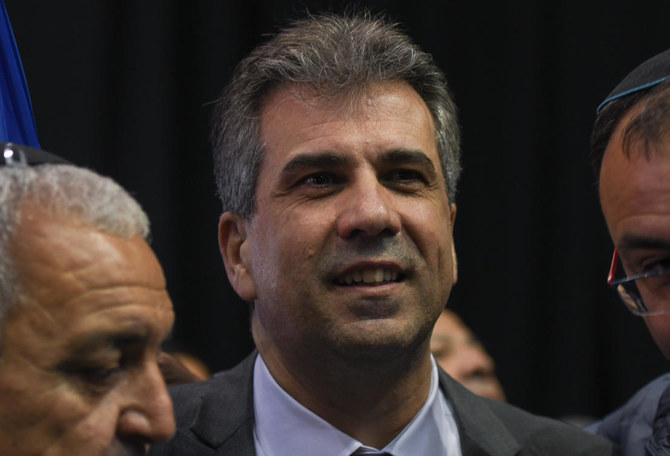
Reiterating Israel’s position that it does not consider itself bound by the diplomacy, Intelligence Minister Eli Cohen said: “A bad deal will send the region spiralling into war.”
“Anyone seeking short-term benefits should be mindful of the longer-term,” he told Reuters. “Israel will not allow Iran to attain nuclear arms. Iran has no immunity anywhere. Our planes can reach everywhere in the Middle East — and certainly Iran.”
Iran says its nuclear ambitions are peaceful.
Cohen said that in addition to denying Iran the means of enriching uranium and developing ballistic missiles, world powers should make it stop “destabilising other countries” and funding militants.
The Vienna talks have been overshadowed by what appeared to be mutual sabotage attacks on Israeli and Iranian ships, as well as an explosion at Iran’s Natanz enrichment plant that Tehran blamed on Israel.
Cohen, in keeping with Israeli policy, declined all comment.
Israel sent senior delegates to Washington this week to discuss Iran with US counterparts. The White House said the allies agreed on the “significant threat” posed by Iran’s regional behavior.
The Israeli ambassador to the United States, Gilad Erdan, said the Biden administration would consult with Israel about any new nuclear deal — the prospects for which he deemed hazy.
“We assess, to our regret, that the Iranians will refuse such a discussion,” he told Israel’s public radio station Kan, alluding to Iran’s insistence on restoring the original deal, which Trump called too limited in scope and duration.
“But if it emerges that we were mistaken, and the Americans succeed in securing a discussion of a different, better deal, we will certainly be part of that discussion. We made that clear and the (Biden) administration welcomes this, of course.”


![]()

Our warplanes can reach Iran, Israeli minister warns amid nuclear talks
Short Url
https://arab.news/pzzey
Our warplanes can reach Iran, Israeli minister warns amid nuclear talks
- Intelligence Minister Eli Cohen said: “A bad deal will send the region spiralling into war”
- “Israel will not allow Iran to attain nuclear arms. Iran has no immunity anywhere. Our planes can reach everywhere in the Middle East — and certainly Iran,” he said


Latest updates




© 2026 SAUDI RESEARCH & PUBLISHING COMPANY, All Rights Reserved And subject to Terms of Use Agreement.