



LAHORE: On April 10, a man was arrested by police in the eastern city of Lahore for selling kites and strings online, considered illegal since a 2005 ban was imposed on celebrating the boisterous spring festival of Basant.
After being released on bail the next day, the retailer, identified by police only by his first name, Salamat, said his ecommerce business had been “thriving” despite the ban.
“I receive orders online, sometimes on the phone, from many circles, and the business keeps on thriving despite the ban on kite flying,” the suspect was quoted by investigators as saying. “The list of my customers ranges from shopkeepers to some elite people.”
Kite-flying has long been a passion in South Asia and for decades, the Basant celebration would transform Pakistan’s skies into a glittery kaleidoscope of hundreds of thousands of kites to commemorate the advent of spring. But in 2005, the Supreme Court banned the celebration after 19 people died from decapitation by stray strings. In that year alone, kites and string worth over Rs1 billion were sold on Basant day just in the eastern city of Lahore, whose ancient walled enclave is the epicenter of the festival.
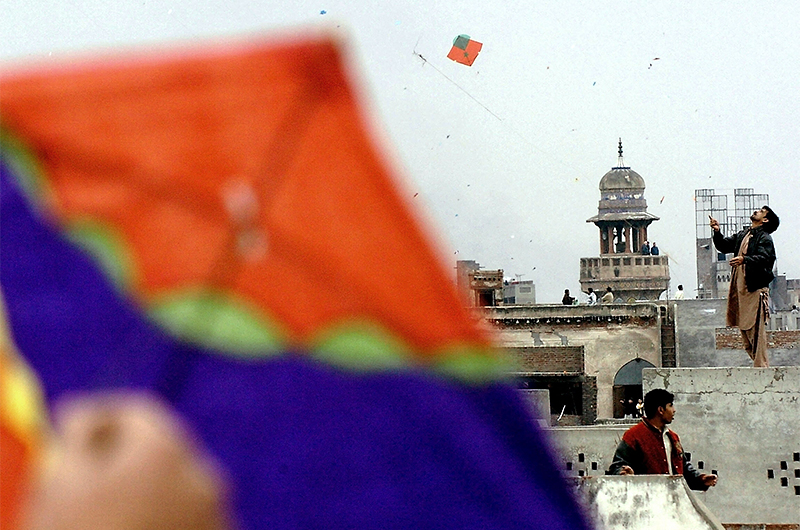
Pakistani youths enjoy flying kites during the Basant or kite flying festival in Lahore, Pakistan, on February 6, 2005. (AFP)
The problem, authorities say, arises when kite-flyers indulge in duels, flying with thick strings or razor-sharp wires reinforced with glass and chemicals so they can better attack opponents’ kites and slice their strings. Stray strings have been known to knock out power lines and, in some cases, tangle around a human neck or limb, and cut it.
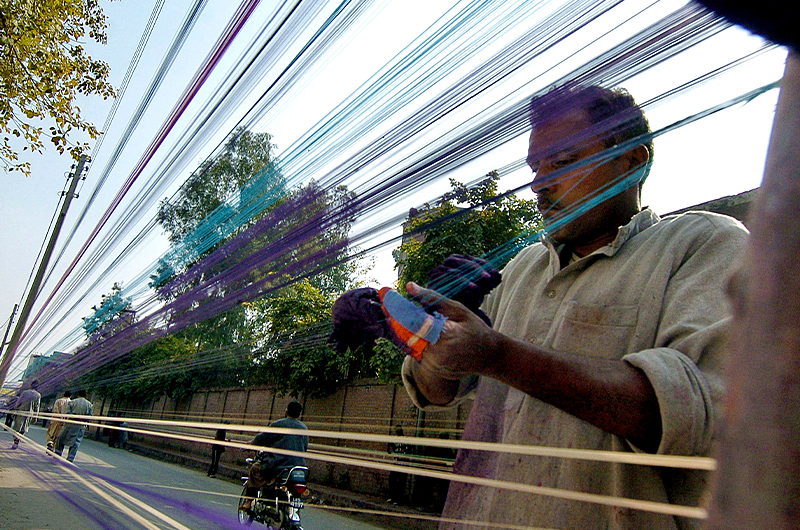
A Pakistani professional kite flyer prepares special thread used in kite flying on a roadside in Lahore, Pakistan, on January 31, 2005, on the eve of annual kite flying festival 'Basant'. (AFP)
The ban has been lifted several times over the years for the period of Basant, but the sport still caused deaths as kite fliers continued to use wire or modified strings.
So, as selling kites remains illegal and police continue to crack down on manufacturers and sellers, much of the business has moved online, industry insiders and authorities say, with the Internet offering substantial impunity.
Police say they are “hopeless” in the absence of clear laws to tackle online kite selling.
A cybercrime director at the Federal Investigation Authority (FIA), Abdur Rab Chaudhry, told Arab News, the cybercrime wing should “technically and legally” be looking into cases of online kite-selling, but for now, the Kite Flying Act came under police jurisdiction.
“This is electronic forgery and crime, but unfortunately it’s not on the schedule of FIA,” Chaudhry said. “This offense should be extended to the Prevention of Electronic Crimes Act.”
Meanwhile, the online kite business has grown to be worth billions of rupees, according to the president of the Kite Flying Association, Sheikh Saleem, who said both shopkeepers and those involved in online retail were together generating up to Rs20 million per season, despite the Basant ban.
“This business, if allowed, can run into billions,” Saleem told Arab News. “In fact, people had been making billions when there was no ban.”
Basant could still generate Rs100 billion annually if the ban were lifted, he said.
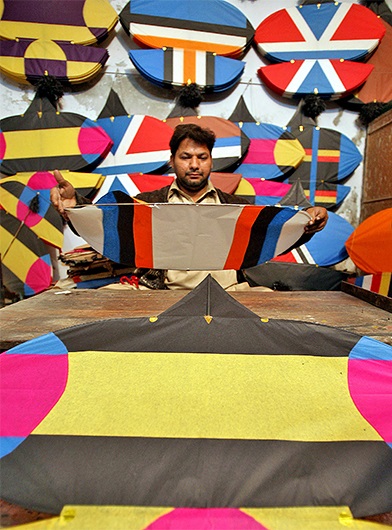
A Pakistani shopkeeper makes new kites at a kite shop in Lahore, Pakistan, on February 18, 2007. (AFP)
“The government should have come out with a viable strategy to stop incidents due to metallic wire used in kite flying, instead of shutting down the whole industry,” Saleem lamented.
For now, there are no plans to bring Basant back, Punjab Culture Minister Khayal Kastro told Arab News, citing five deaths due to kite-flying duels in March alone.
“That’s true, the government has failed to net the culprits who turned this festival into a deadly entertainment,” he said, adding that “this is not solely the government’s responsibility alone.”
“We want to bring back this festival,” Kastro said, “but all stakeholders need to share responsibility for human lives, which mean more than entertainment.”


