

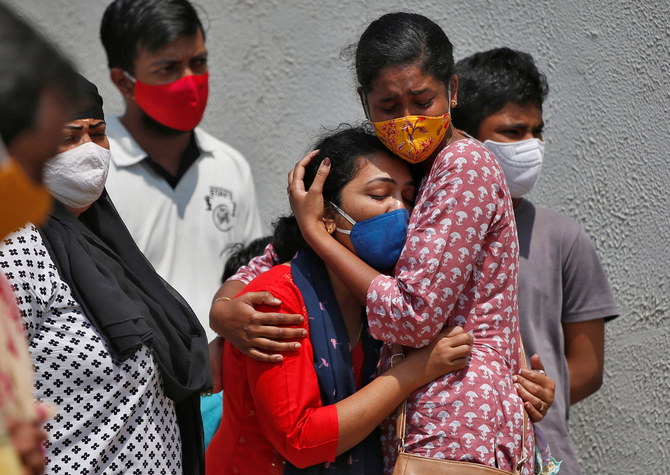

ISLAMABAD: Pakistani Prime Minister Imran Khan and other top leaders expressed solidarity with India on Saturday as the archrival neighbor is facing a catastrophic surge in coronavirus infections and a critical shortage of oxygen to treat the ill.
India reported over 340,000 new cases in the past 24 hours, for a third day recording the world’s highest daily tally of coronavirus. Daily coronavirus deaths jumped to a record 2,624.
For the past few days, officials across India have been warning that most health facilities were full and running out of oxygen. TV channels showed footage of people with empty oxygen cylinders lining up outside refilling facilities and hospitals across India, hoping to save critically ill relatives.
“I want to express our solidarity with the people of India as they battle a dangerous wave of COVID-19,” Khan said in a tweet. “Our prayers for a speedy recovery go to all those suffering from the pandemic in our neighborhood & the world.”
I want to express our solidarity with the people of India as they battle a dangerous wave of COVID-19. Our prayers for a speedy recovery go to all those suffering from the pandemic in our neighbourhood & the world. We must fight this global challenge confronting humanity together
— Imran Khan (@ImranKhanPTI) April 24, 2021
Foreign Minister Shah Mahmood Qureshi also expressed support on Twitter.
“On behalf of the people of Pakistan, I extend our heartfelt sympathies to the affected families in #India,” he said.
We express our support to the people of India in the wake of the current wave of #COVID19 infections, that has hit our region hard. On behalf of the people of Pakistan, I extend our heartfelt sympathies to the affected families in #India.
— Shah Mahmood Qureshi (@SMQureshiPTI) April 24, 2021
Information Minister Fawad Chaudhry said he prayed for the difficult times faced by India to be over soon.
“In these difficult times our prayers are with people of #India may God be kind and may these difficult times get over soon,” he tweeted.
In these difficult times our prayers are with people of #India may God be kind and may these difficult times gets over soon. #coronavirus
— Ch Fawad Hussain (@fawadchaudhry) April 24, 2021
The expressions of solidarity follow a campaign by Pakistani social media users who called for Khan’s government to help its archrival southern neighbor.
The campaign, #IndiaNeedsOxygen, since Friday remains a top trend.
Also on Friday, Pakistan’s leading social welfare organization, Edhi Foundation, offered to send at least 50 ambulances and other medical assistance to India to help with the crisis.


