

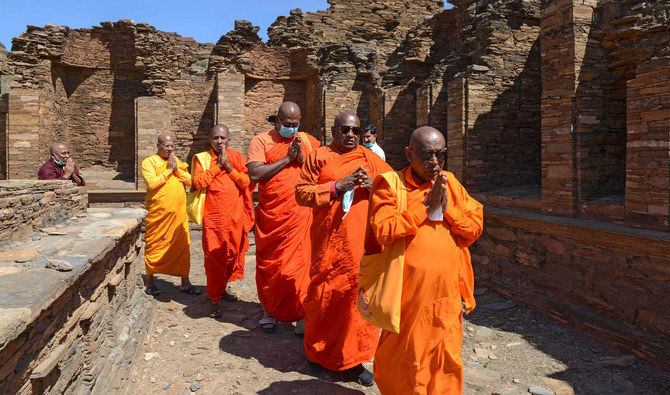
Buddhist monks visiting Pakistan from Sri Lanka experience Gandhara’s magnificence

Sri Lankan Buddhist monks visit the Buddhist monastic complex of Takhi-i-Bahi (Throne of Origins) in Mardan district of Pakistan's Khyber Pakhtunkhwa province on April 23, 2021. (AFP)
Short Url
Updated 24 April 2021
Follow

Buddhist monks visiting Pakistan from Sri Lanka experience Gandhara’s magnificence

  • The 14-member delegation urge other followers of their faith to explore the revered sites in Pakistan
  • Pakistan has decided to form a working group with Sri Lankan monks to develop and promote sacred Buddhist sites 

JAULIAN/HARIPUR: A 14-member delegation of visiting Buddhist monks from Sri Lanka said on Thursday that Pakistan was home to one of the most exotic Buddhist civilizations of the past, and hoped other followers of their faith would explore the prolific religious heritage in the country. 

Led by Dr. Walpola Piyananda, adviser to the Sri Lankan president and chief monk in the United States, the Buddhist delegation is on a week-long pilgrimage to holy sites in Pakistan. 

“The current visit of Sri Lankan monks is part of our initiative to promote religious tourism which has tremendous economic potential. We are trying to develop and preserve 22 sacred religious sites to attract religious tourists from across the world,” Dr. Abdul Samad, Khyber Pakhtunkhwa’s director archaeology and museums said while talking to Arab News, and added that Prime Minister Imran Khan had invited the monks to tour the heritage sites in Pakistan during his visit to Sri Lanka earlier this year. 
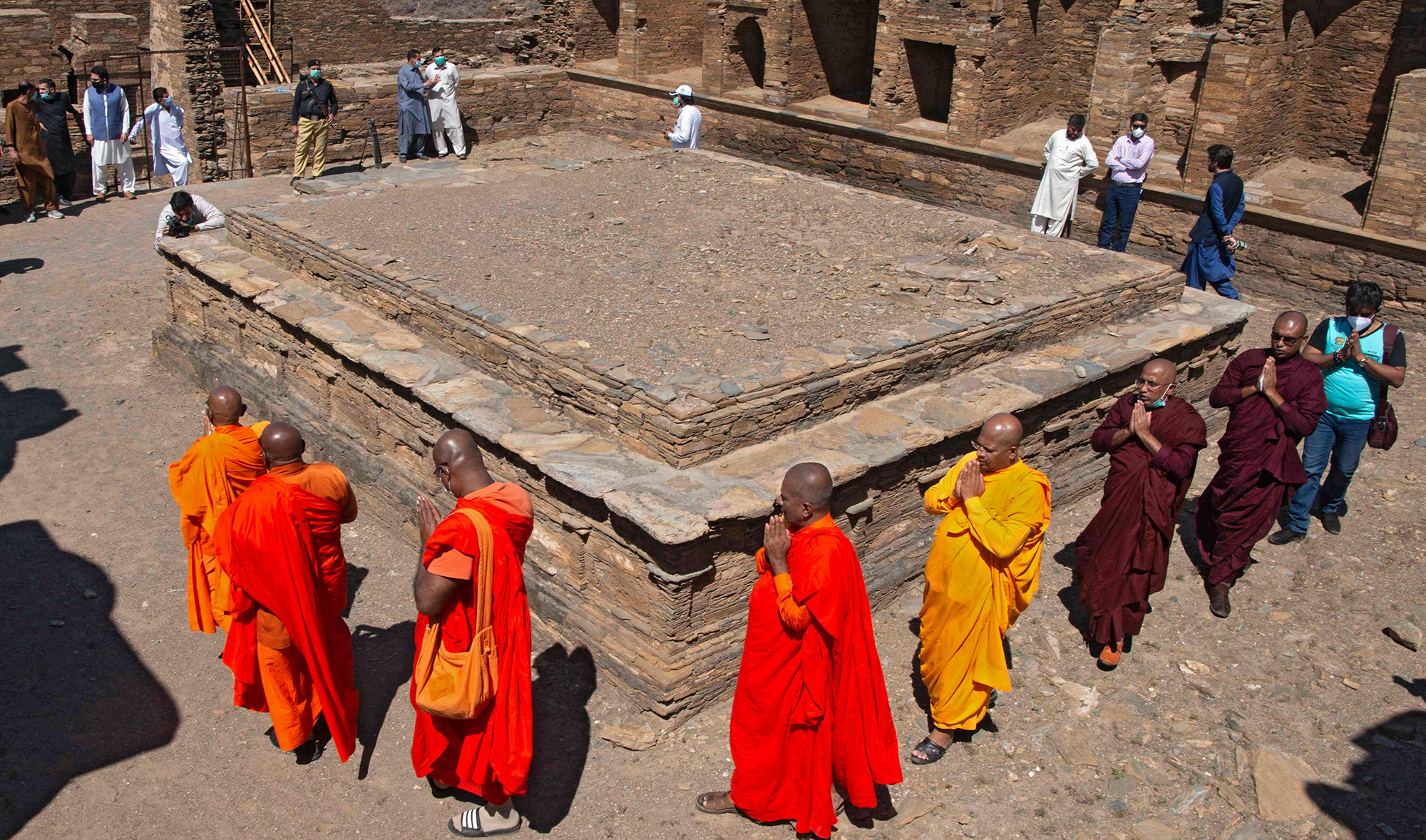


Sri Lankan Buddhist monks visit the Buddhist monastic complex of Takhi-i-Bahi (Throne of Origins) in Mardan district of Pakistan's Khyber Pakhtunkhwa province on April 23, 2021. (AFP)

“This Theravada delegation came from Sri Lanka to visit their holy places here in Pakistan,” Piyananda told Arab News in a brief conversation, mentioning the name of his monastic order. “Buddhists practice their faith in different ways, but we all are one in aspiring for peace, harmony and wisdom.” 

Another senior monk, R. Rathanasira, said Pakistan could attract a significant number of Buddhist tourists if the sacred archaeological sites were well managed.

“During my childhood, I only heard about the Gandhara Civilization,” he recalled. “With so many resources related to Buddhist culture and civilization, Pakistan can draw a huge number of people from Buddhist countries if it preserves these sites well.” 
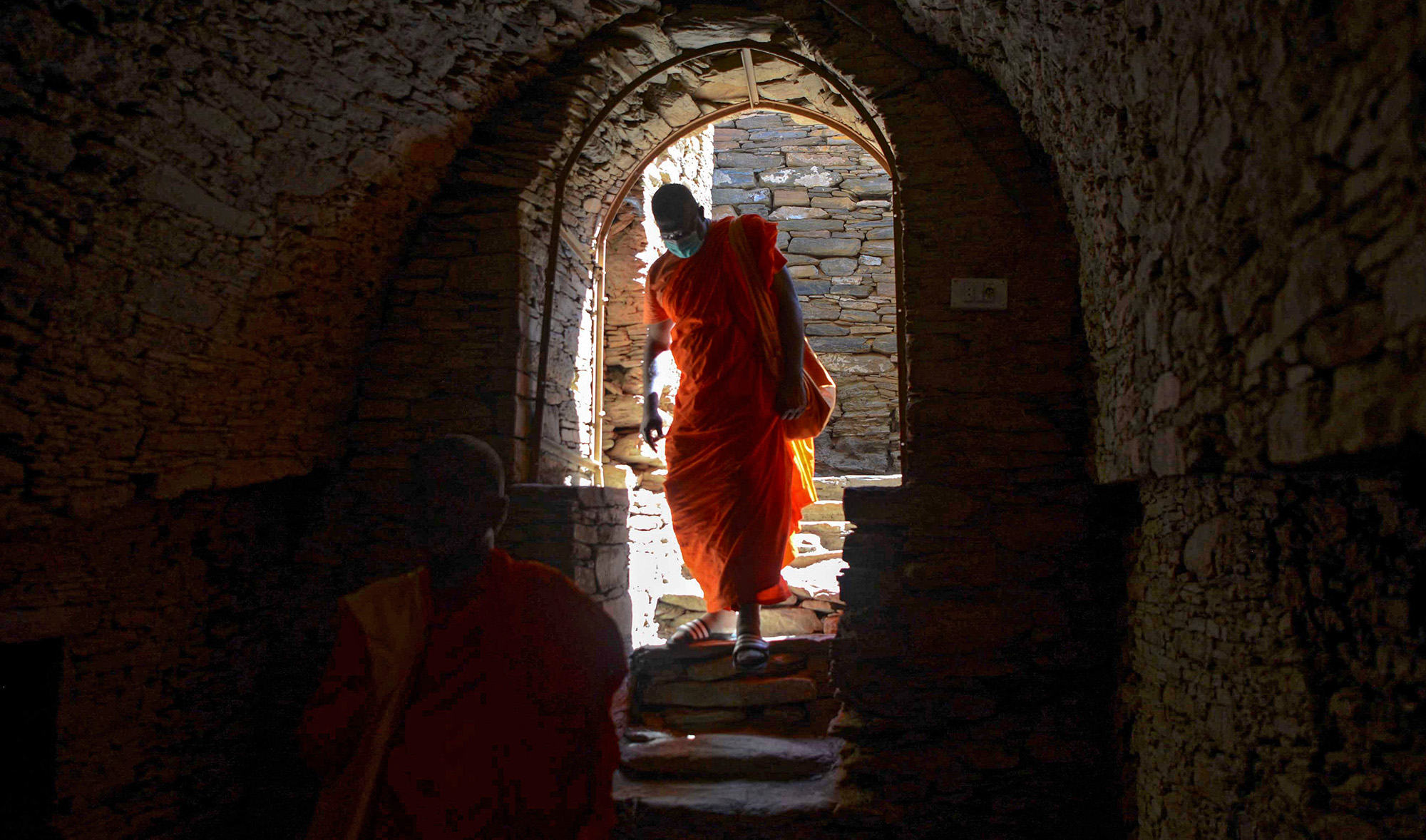


Sri Lankan Buddhist monks visit the Buddhist monastic complex of Takhi-i-Bahi (Throne of Origins) in Mardan district of Pakistan's Khyber Pakhtunkhwa province on April 23, 2021. (AFP)

The monks on Thursday visited Jaulian in Khyber Pakhtunkhwa’s Khanpur district that once boasted of stupas and monasteries. 

The place which was designated as a UNESCO World Heritage Site in 1980 is believed to be the cradle of the Gandhara kingdom. 

Briefing the monks, Dr. Samad said Jaulian was one of the most prominent centers of Buddhist learning between the 2nd and 7th centuries AD. 

“This visit is extremely important,” he told Arab News, “since these places are as sacred to Buddhists as Islam’s holy sites are to Muslims.” 

The visiting monks met Pakistan’s religious affairs minister Noorul Haq Qadri in Islamabad on Wednesday during which the two sides decided to form a working group to develop and promote religious sites related to Buddhism in the country. 

According to a statement issued by the ministry after the meeting, the Sri Lankan side proposed institutionalizing Buddhist scholarships for international students to create greater awareness about their religion. 

The Sri Lankan delegation is also scheduled to meet Prime Minister Imran Khan before wrapping up their visit to Pakistan. 


IMF hails Pakistan privatization drive, calls PIA sale a ‘milestone’

Updated 10 January 2026
Follow

IMF hails Pakistan privatization drive, calls PIA sale a ‘milestone’

  • Fund backs sale of national airline as key step in divesting loss-making state firms
  • IMF has long urged Islamabad to reduce fiscal burden posed by state-owned entities

KARACHI: The International Monetary Fund (IMF) on Saturday welcomed Pakistan’s privatization efforts, describing the sale of the country’s national airline to a private consortium last month as a milestone that could help advance the divestment of loss-making state-owned enterprises (SOEs).

The comments follow the government’s sale of a 75 percent stake in Pakistan International Airlines (PIA) to a consortium led by the Arif Habib Group for Rs 135 billion ($486 million) after several rounds of bidding in a competitive process, marking Islamabad’s second attempt to privatize the carrier after a failed effort a year earlier.

Between the two privatization attempts, PIA resumed flight operations to several international destinations after aviation authorities in the European Union and Britain lifted restrictions nearly five years after the airline was grounded following a deadly Airbus A320 crash in Karachi in 2020 that killed 97 people.

“We welcome the authorities’ privatization efforts and the completion of the PIA privatization process, which was a commitment under the EFF,” Mahir Binici, the IMF’s resident representative in Pakistan, said in response to an Arab News query, referring to the $7 billion Extended Fund Facility.

“This privatization represents a milestone within the authorities’ reform agenda, aimed at decreasing governmental involvement in commercial sectors and attracting investments to promote economic growth in Pakistan,” he added.

The IMF has long urged Islamabad to reduce the fiscal burden posed by loss-making state firms, which have weighed public finances for years and required repeated government bailouts. Beyond PIA, the government has signaled plans to restructure or sell stakes in additional SOEs as part of broader reforms under the IMF program.

Privatization also remains politically sensitive in Pakistan, with critics warning of job losses and concerns over national assets, while supporters argue private sector management could improve efficiency and service delivery in chronically underperforming entities.

Pakistan’s Cabinet Committee on State-Owned Enterprises said on Friday that SOEs recorded a net loss of Rs 122.9 billion ($442 million) in the 2024–25 fiscal year, compared with a net loss of Rs 30.6 billion ($110 million) in the previous year.