


JEDDAH: The Kingdom has banned the import and transit of fruit and vegetables from Lebanon after authorities on Friday foiled two drug smuggling attempts.
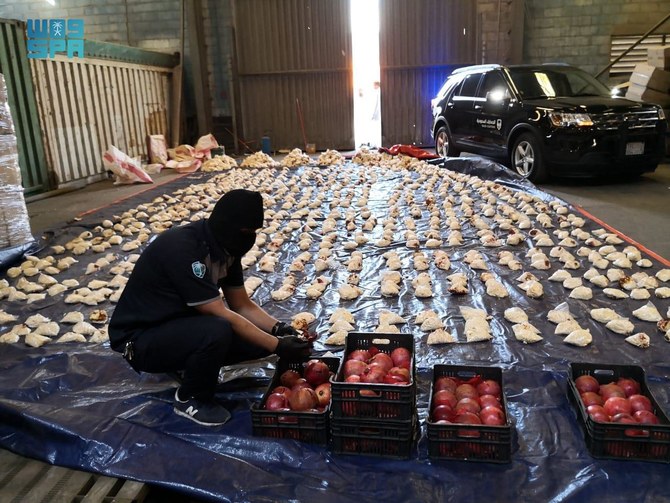
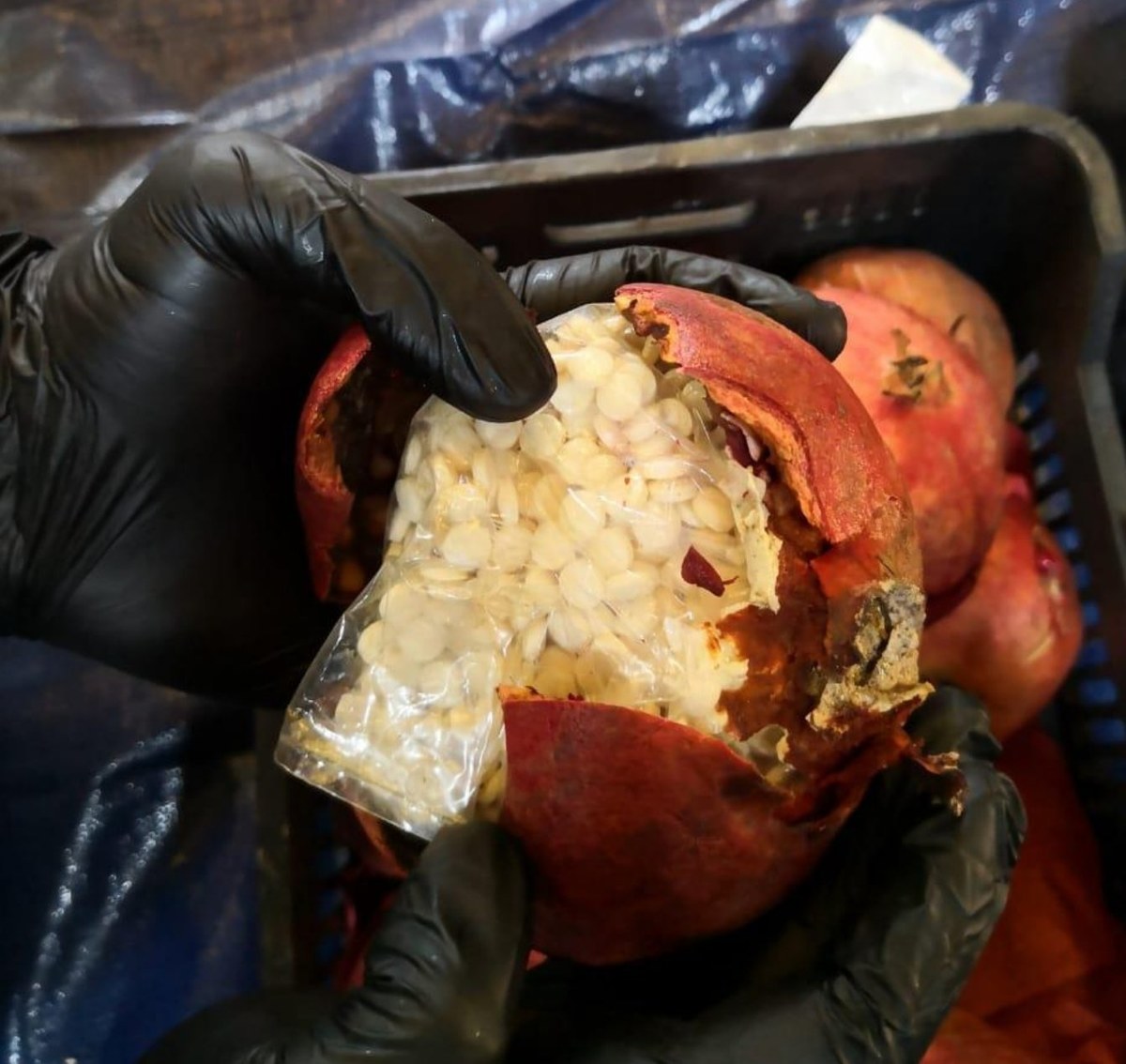
Customs at Jeddah Islamic Port seized more than 5.3 million Captagon pills that were hidden in a pomegranate consignment, the Saudi Press Agency (SPA) reported.
“A consignment was seized upon its arrival from Lebanon and they managed to find 5,383,400 Captagon pills skillfully hidden inside pomegranates,” said Mohammed bin Ali Al-Nuaim, deputy for security affairs at the Saudi Customs Authority.
The entire consignment and the person who was supposed to receive it were caught in cooperation with the General Directorate of Narcotics Control.
Al-Nuaim said that customs employees would continue their efforts to protect the country from drug smuggling.
HIGHLIGHT
The ban will stay in place until Lebanese authorities provide guarantees that they will take the necessary measures to stop such operations.
Narcotic control teams, in cooperation with customs, also foiled an attempt to smuggle over 2,466,563 amphetamine pills. These came from Lebanon and were also hidden in pomegranates.
“Lebanese products are being used to smuggle drugs into the Kingdom’s territory, either through consignments intended for Saudi markets or those that transit through the Kingdom on their way to neighboring countries,” SPA reported, adding that the most common products used to smuggle drugs were fruit and vegetables.
The ban will stay in place until Lebanese authorities provide guarantees that they will take the necessary measures to stop such operations. The Ministry of Interior will follow up and monitor consignments of other products coming from Lebanon to see whether similar measures need to be taken against them.
Interior Minister Prince Abdul Aziz bin Saud bin Naif warned that the Kingdom’s security was “a red line.” According to Al-Arabiya English, Lebanese officials quickly pledged to do more to combat drug smuggling following the ban.
Reuters news agency reported Lebanese Agriculture Minister Abbas Mortada as saying that the issue was very serious, especially if it negatively affected the rest of the Gulf states that could take similar or stringent measures.
Mortada said that Lebanon’s fruit and vegetable trade with Saudi Arabia was worth around $24 million per year.
A Twitter hashtag denouncing drug smuggling from Lebanon into the Kingdom has been trending since the ban was announced, with many posts accusing Hezbollah of being behind the criminal activity.




