GAZA CITY: Many Christians in the Gaza Strip participate in the customs and rituals of Ramadan, Sanaa Tarazi, secretary of the Supreme Presidential Committee for Churches Affairs, told Arab News. She stressed that Christians in Gaza are “an integral part of the Palestinian people.”
According to church statistics, there are 390 Christian families, with an estimated 1,313 members, living in Gaza among roughly 2 million Muslims.
“No one can distinguish a Muslim from a Christian, for we are all close neighbors, having a bond of love and affection between us,” Tarazi said.
Tarazi grew up in her family’s home in the heart of old Gaza. Ramadan, she said, is a month of “beautiful childhood memories” when she and her friends from the neighborhood would play with lanterns and fireworks in the streets, transforming night into day.
She has passed that love on to her two children, who are currently studying abroad, decorating the house with lanterns and other ornaments every Ramadan.
“Our eating and drinking habits change greatly during Ramadan,” she said, “Many days, we will (forego) lunch and eat at the Maghrib (evening) prayer call.” She added that she is careful to delay cooking her family’s food so that the smell will not disturb her Muslim neighbors when they are fasting.
As is the prevailing custom among Gazans, Tarazi said she traditionally cooks Mulukhiya on the first day of Ramadan, in anticipation of a good and blessed year.
She and her neighbors exchange Ramadan food and sweets. Tarazi said she makes Qatayef at home to distribute to her Muslim and Christian neighbors throughout Ramadan.
Tarazi’s husband, Majed — leader of the Arab Orthodox Scouts in Gaza, shares her love for the Muslim holy month. He told Arab News that Ramadan nights out with friends are a “special experience” and that this year, because of the COVID-19 pandemic, he is missing a number of the usual Ramadan rituals with his many Muslim friends.
The scouts are often deployed on Gaza’s streets during Ramadan to distribute water and dates to those returning home late after work before iftar, he explained. The scouts also normally host an iftar at the Greek Orthodox Church in Gaza, but it has been canceled this month, for the second year in a row. “We host that iftar at the church to express tolerance and show the depth of the relations with Muslims that bind us in Gaza,” he said.
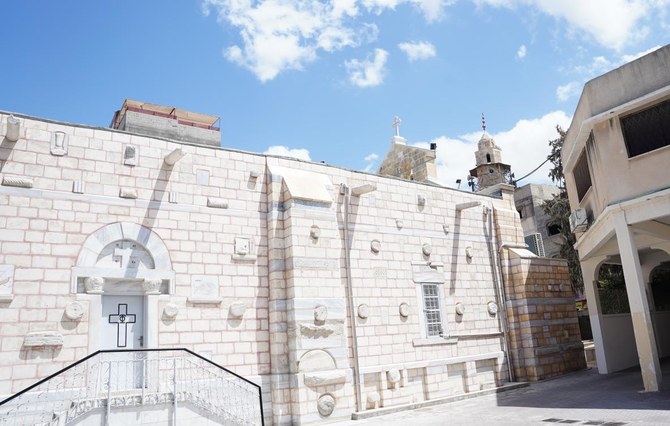
He pointed to the historic minaret of the Kateb Wilaya mosque, which dates back to the early 14th century CE and overlooks the church. “This is our relationship: Loving neighbors, partners in the homeland, sharing a common destiny,” he said.
“Just as our Muslim brothers congratulate us on our religious occasions, and they share our joys and sorrows, we exchange love and respect with them, and we appreciate the holiness of their rituals and religious occasions,” he added.


![]()
![]()

In Gaza, Christians share in the spirit of Ramadan

Short Url
https://arab.news/2vyy2
In Gaza, Christians share in the spirit of Ramadan
- According to church statistics, there are 390 Christian families living in Gaza among roughly 2 million Muslims
- As is the prevailing custom among Gazans, Tarazi said she traditionally cooks Mulukhiya on the first day of Ramadan


Latest updates


Recommended


© 2026 SAUDI RESEARCH & PUBLISHING COMPANY, All Rights Reserved And subject to Terms of Use Agreement.