

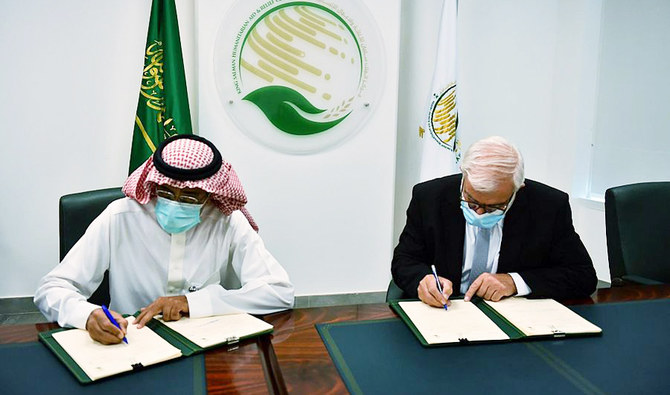



RIYADH: The King Salman Humanitarian Aid and Relief Center (KSrelief) on Monday signed two agreements with the International War and Disaster Victims Protection Association (IPV) designed to help people in need in Yemen.
Ahmed Al-Beez, KSrelief’s assistant general supervisor for operations and programs, signed the accords at the center’s headquarters in Riyadh.
Abdullah Saleh Al-Moallem, director of KSrelief’s Health and Environmental Aid Department, said the first agreement will enhance primary healthcare services and the management of malnutrition in Yemen. Worth $5.5 million, it will benefit almost 2.5 million people in the governorates of Mahra Abyan, Al-Dhale, Shabwah, Aden, Taiz and Hadramout.
He added that the agreement “aims to provide basic health and nutrition services within the necessary health services package in case of emergencies.”
It includes nutritional surveys and assessments for children under the age of five years old, and for pregnant and lactating women. It also includes participation in routine vaccination campaigns, medical diagnosis and treatment for all age groups and nationalities in the target communities, localization of services, and the training of new national cadres.
The second agreement, Al-Moallem said, includes phase six of a center for artificial limbs and rehabilitation in Marib governorate. The deal, which is worth $1.7 million and will benefit 3,549 patients, aims to provide physical rehabilitation services for people with special needs, develop individual treatment plans for each patient, fit all types of artificial limbs, provide a functional rehabilitation service for users of prostheses, raise the professional and scientific capabilities of medical staff, prepare them to deal with specific cases, and limit the migration of specialized medical and technical personnel.
Also on Monday, KSrelief signed a separate agreement with IPV to enhance healthcare services for Syrian refugees and their host community in Arsal, in Lebanon’s Baalbek governorate. Worth $972,000, it will benefit 65,000 people.
Al-Moallem said this agreement will provide “healthcare services, psycho-social and nutritional support, and medicines to Syrian refugees in the Arsal region and its countryside and to Lebanese citizens free of charge.”
In addition it will help to develop the national health information system and data management, and support existing national programs, such as those that target tuberculosis, sexually transmitted infections and HIV.
The agreement also includes participation in routine vaccination campaigns approved by the World Health Organization and the Lebanese Ministry of Health, as well as health and nutritional education and awareness initiatives, the promotion of personal and general hygiene, efforts to limit the spread of epidemiological, infectious and communicable diseases, and the promotion of healthy eating.
It will survey the weights and heights of children, to help with efforts to address cases of dwarfism, and provide nutritional and psychological support for refugees and the host community in general, and children with motor and sensory disabilities in particular. It will also improve access to specialized medical centers.
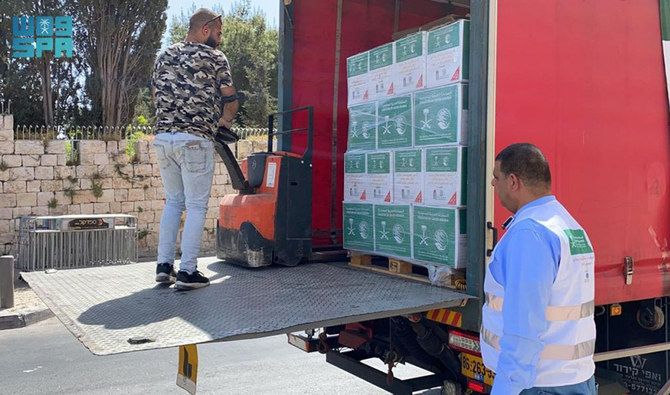
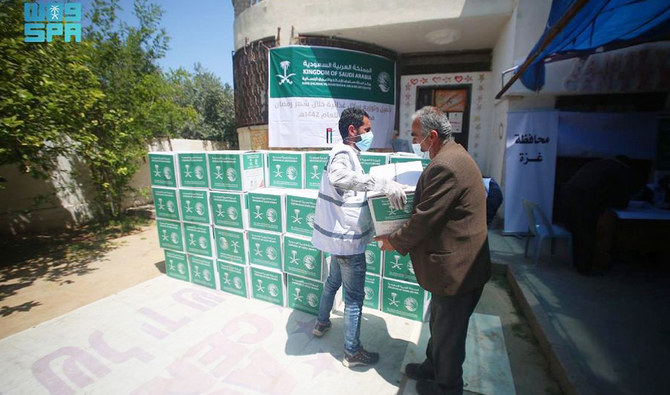
Elsewhere, KSrelief has provided 1,420 Ramadan food baskets for people in Bethlehem, the West Bank and the Gaza Strip, benefiting 1,420 families — a total of 7,100 people.
Palestinian Prime Minister Mohammed Shtayyeh thanked KSrelief for the assistance it has provided to the Palestinian people during Ramadan. Speaking during a cabinet meeting, he said the Ramadan food baskets will be distributed in the coming days through zakat committees.
The Palestinian Ministry of Awqaf and Religious Affairs launched the project to provide Ramadan food baskets for needy families, orphans and those who care for Al-Aqsa mosque, through funding from KSrelief and in coordination with the Jordanian Hashemite Charitable Organization.
The Saudi center has also distributed 2,950 food baskets in Jerusalem, benefiting 2,950 families and a total of 14,750 people, and 1,000 food baskets to needy families in Lebanon’s Chouf region.
The initiatives fall within the framework of the center’s project to secure and distribute food baskets to needy families in Islamic nations during the holy month.


