

Saudi Arabia’s historic Hail mosque reopens to worshippers

1 / 5
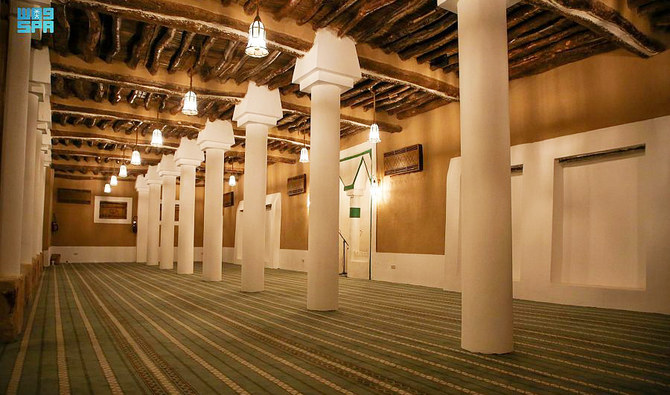
The building’s unique style originates in its construction from mud and stone. (SPA)
2 / 5
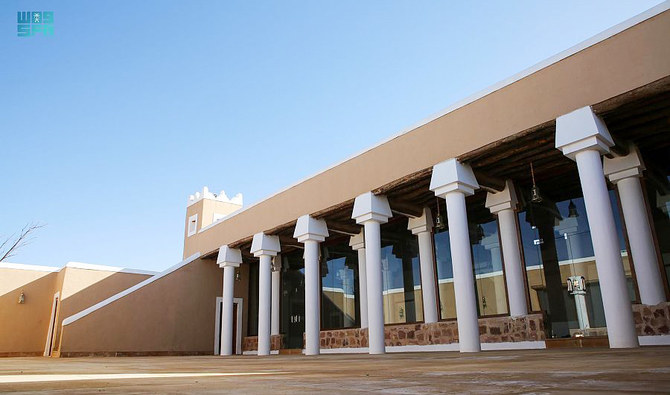
The building’s unique style originates in its construction from mud and stone. (SPA)
3 / 5
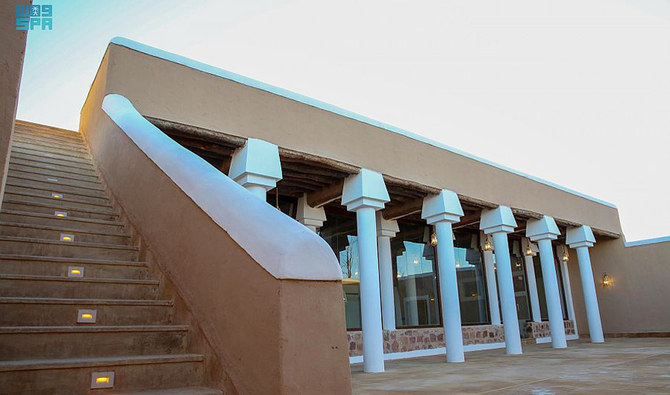
The building’s unique style originates in its construction from mud and stone. (SPA)
4 / 5
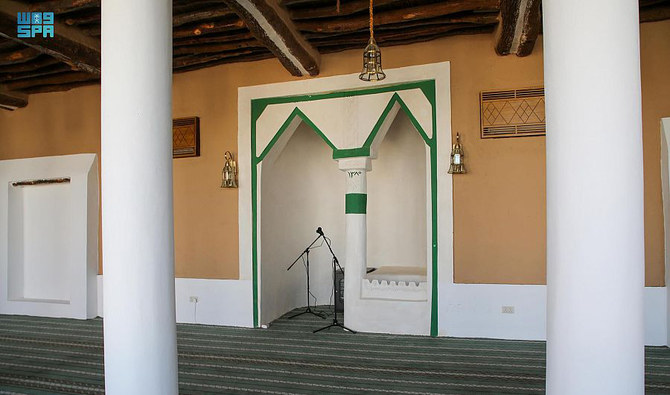
The building’s unique style originates in its construction from mud and stone. (SPA)
5 / 5
The building’s unique style originates in its construction from mud and stone. (SPA)
Short Url
Updated 18 April 2021
Follow

Saudi Arabia’s historic Hail mosque reopens to worshippers

  • The mosque used to host Friday prayers when worshippers traveled from neighboring villages to pray

HAIL: Several famous mosques in the Hail region, including the Qafar Mosque, have been rehabilitated as part of the Mohammed bin Salman Project for Historical Mosques Renovation, through which 30 religious sites in 10 regions will be restored.

The construction of the Qafar Mosque dates back to between 1334 AH and 1445 AH when Ruqayya bint Abdullah founded the site following the death of her husband. It was renovated in 1385 AH, according to the pillar of the mihrab.

The mosque used to host Friday prayers when worshippers traveled from neighboring villages to pray. A modern prayer house was built inside the mosque’s campus in 1412 AH. Today, the mosque is open to worshippers for the five daily prayers and Friday prayer.

Qafar Mosque is located in the old town of Qafar near the road linking Hail and AlUla, about 20 kilometers southwest of Hail.

The building’s unique style originates in its construction from mud and stone, with a wooden roof built from tamarix and palm fronds.

Qafar mosque covers an area of 687 square meters and can accommodate 170 worshippers.

The mosque features the Al-Saha courtyard, which houses two depots and a rectangular eight-meter minaret.

After the mosque’s restoration, it now contains a prayer house, the upgraded Al-Saha courtyard, a prayer area for women, toilets and ablution facilities for both men and women. It can now house more than 400 worshippers.


Fragrance artisans weave heritage into Jazan Festival experience

Updated 02 January 2026
Follow

Fragrance artisans weave heritage into Jazan Festival experience

Riyadh: Perfumes are emerging as living connections to ancestral memory at the Jazan Festival 2026, which opened on Friday, the Saudi Press Agency reported.

A narrative rooted in botanical origins is unfolding as veteran craftswomen showcase decades of accumulated wisdom, transforming the contents of native plants into small vessels that distill the human bond with terrain.

Aromas wafting through the space suggest imagery of regional ecosystems — fragrant vegetation cultivated across highland and lowland zones, harvested during optimal periods, then subjected to extended drying and distillation processes before materializing as perfumes and essences embodying geographical character, the Saudi Press Agency reported.

Arranged fragrance containers resemble nature’s output, composed by skilled practitioners versed in harvest timing, plant dormancy requirements and scent extraction methods, yielding products preserving organic integrity and territorial identity.

Craftswoman Fatima bint Mohammed Al-Faifi has dedicated two decades to perfume production, characterizing regional practice as social custom interwoven throughout daily existence — deployed in guest reception, featured at celebrations, accompanying community gathering — elevating scent to cultural signature, the Saudi Press Agency reported.

Festival attendees are discovering aromatic botanicals, absorbing production methodology explanations and discerning nuanced olfactory distinctions, demonstrating how craftsmanship blends persistence with expertise, tradition with innovation.

Perfume artisan involvement aligns with Jazan Festival’s initiative repositioning traditional crafts as dynamic, evolving culture while spotlighting women’s contributions safeguarding regional inheritance and expressing this through modern methods, the Saudi Press Agency reported.