

Saudi Aramco part of $50 million funding for US software firm

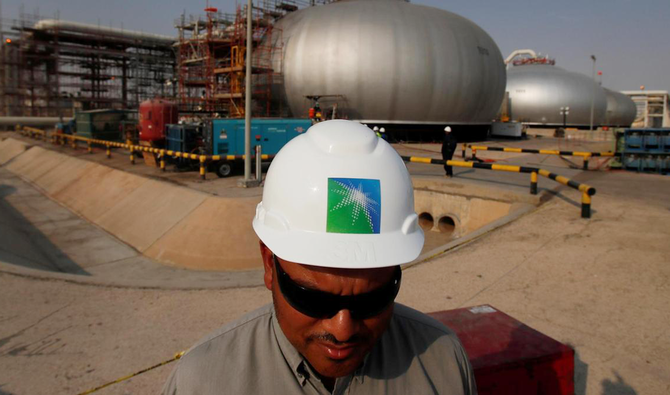
A Saudi Aramco employee is seen at its oil facility in Abqaiq, Saudi Arabia. (Reuters)
Short Url
Updated 17 April 2021
Follow

Saudi Aramco part of $50 million funding for US software firm

  • The extra $50 million brings Seeq’s total funding since its launch in 2013 to around $115 million

RIYADH: Saudi Aramco’s investment arm was among a group of investors who awarded SR187.5 million ($50 million) to a Seattle-based manufacturing and technology software company.

Seeq Corp. said it had raised the new funds as part of a Series C funding round as the group of investors backing the financing were Altira Group, Chevron Technology Ventures, Cisco Investments, Second Avenue Partners and Saudi Aramco Energy Ventures (SAEV).

The extra $50 million brings Seeq’s total funding since its launch in 2013 to around $115 million. While the breakdown of figures was not given, Seeq did say that SAEV was already an existing investor from previous funding rounds. Seeq enables engineers and scientists to rapidly analyze, predict, collaborate, and share insights to improve production and business outcomes for its products. It operates across many sectors, including oil and gas, pharmaceutical, chemical, energy and mining.

The Seattle-based company aims to use the new funds to develop its sales and marketing resources and expand its presence into international markets.

“By leveraging big data, machine learning and computer science innovations, Seeq is enabling a new generation of software-led insights,” Steve Sliwa, the CEO and co-founder of Seeq, said in a press statement.

According to its website, SAEV is described as the strategic technology venturing program of Saudi Aramco. Its mission is to invest globally into startup and high-growth companies with technologies of strategic importance to Aramco, to accelerate its development and its deployment in the company.


MEA to see $3tn real estate, infrastructure pipeline by 2030, JLL says 

Updated 5 sec ago
Follow

MEA to see $3tn real estate, infrastructure pipeline by 2030, JLL says 

RIYADH: The Middle East and Africa region is set to see a $3 trillion pipeline of real estate and infrastructure projects between 2026 and 2030, driven by tight occupancy levels and strong investor demand, an analysis showed. 

In its latest report, professional services firm JLL said low vacancy and strong absorption rates are among the key drivers accelerating the sector’s transformation in the region, easing supply constraints and supporting rental and sales growth. 

The steady momentum in the region’s real estate and infrastructure sectors underscores the ongoing economic diversification efforts pursued by countries across the region.

In July, real estate consultancy Knight Frank said the Kingdom’s construction output value is expected to reach $191 billion by 2029, representing a 29.05 percent increase from 2024, driven by residential development, ongoing giga-projects and rising demand for office space. 

James Allan, CEO, UAE, Egypt and Africa at JLL, said: “Strong market fundamentals boosted the Middle East and Africa real estate market in 2025, setting the momentum for sustained performance across asset classes in 2026.” 

He added: “We saw record residential transactions, double-digit growth in industrial and logistics rents, and an exceptionally tight 1 percent office vacancy rate in 2025, driven by professional talent migration, substantial private investment, and strategic infrastructure development.” 

According to the report, the delivery of key infrastructure projects in the region will further catalyze new real estate developments and attract increased private sector participation. 

In the evolving capital landscape, cross-border capital and alternative financing mechanisms are projected to play an increasingly central role, particularly in greenfield developments where investment stock remains limited. 

The report added that improved market transparency across the region, driven by regulatory changes, is also expected to bolster investor confidence in the Middle East and Africa markets. 

JLL said the UAE remains central to this growth trajectory, with projected project cash flows of $795 billion from 2026 to 2030, including $470 billion allocated to real estate development. 

In November, CBRE echoed similar views on the region’s real estate sector, saying Saudi Arabia’s ongoing economic diversification push is energizing its property market, with office rents in Riyadh climbing 15 percent year on year and occupancy reaching 98 percent by the end of the third quarter of 2025. 

CBRE added that the strong performance in Saudi Arabia’s office sector is buoyed by the Kingdom’s non-oil economic expansion and an influx of multinational companies relocating regional headquarters to Riyadh.