

Oman becomes fourth GCC country to introduce VAT

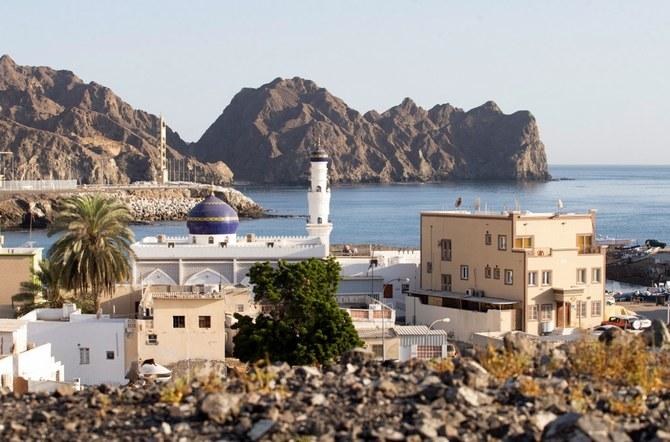
A partial view of the area of Haramil in the Omani capital Muscat on September 18, 2020. (AFP)
Short Url
Updated 16 April 2021
Follow

Oman becomes fourth GCC country to introduce VAT

  • Tax starts April 16 at 5%
  • Zero-rated items include essential foodstuffs

OMAN: Oman introduced a 5 percent value-added tax (VAT) on Friday, the fourth Gulf Cooperation Council country to implement a so-called consumption tax.

It followed the UAE, Saudi Arabia and Bahrain. Saudi Arabia tripled its VAT rate to 15 percent last July to help fund its coronavirus relief efforts.

Oman has predicted it will raise OMR400 million ($1.04 billion) from the tax this year, equivalent to 1.5 percent of GDP, as it looks to narrow a widening fiscal deficit.

In June 2016, all six GCC states signed the Common VAT Agreement, pledging to introduce a 5% VAT rate. Kuwait’s parliament has pushed back the implementation date several times but the International Monetary Fund said last year that it expects it to be introduced by 2022. Qatar is expected to go ahead with VAT in the second or third quarter of this year and is said to be close to finalizing its tax administration system, Dhareeba.

Omanis had 6 months to prepare for the introduction of VAT, which may be followed by the Gulf’s first income tax in the coming years.

Goods and services exempt from VAT include financial services, health care, education, local passenger transport, bare land, resale of residential real estate and residential rents. Zero-rated goods and services include all exports, basic foodstuffs, medicine and medical equipment, investment in gold, silver and platinum, crude oil and derivatives and natural gas, among certain transport goods.


QatarEnergy announces force majeure following Iran attacks: statement

Updated 04 March 2026
Follow

QatarEnergy announces force majeure following Iran attacks: statement

DOHA: Qatar’s state-run energy firm on Wednesday declared force majeure following attacks on two of its main facilities that halted liquefied natural gas production and as Iran pressed missile and drone attacks across the Gulf.

“Further to the announcement by QatarEnergy to stop production of liquefied natural gas and associated products, QatarEnergy has declared Force Majeure to its affected buyers,” the company said in a statement.

QatarEnergy invoked the clause, which shields it from penalties and potential breach of contract claims from clients, after stopping LNG production on Monday.

Iranian drones attacked two of the company’s main production hubs in Ras Laffan Industrial City, 80 km north of Doha and in Mesaieed 40 km south of the Qatari capital, Doha’s ministry of defense said at the time.

The Gulf state is one of the world’s top liquefied natural gas producers, alongside the US, Australia and Russia.

On Tuesday, QatarEnergy said it would halt some downstream production of some products including urea, polymers, methanol, aluminum and others.

Qatar shares the world’s largest natural gas reservoir with Iran.

QatarEnergy estimates the Gulf state’s portion of the reservoir, the North Field, holds about 10 percent of the world’s known natural gas reserves.

In recent years, Qatar has inked a series of long-term LNG deals with France’s Total, Britain’s Shell, India’s Petronet, China’s Sinopec and Italy’s Eni, among others.