



MITHI, SINDH: Last year, two cousins who wanted to marry each other in a town hemmed in the rolling dunes of Pakistan’s Thar desert took their own lives by hanging themselves from a tree because they did not have the money to arrange their wedding. Just a few years earlier, the girl’s father had also killed himself due to financial troubles.
Earlier this month, at a bus stop near the multi-billion dollar Thar Coal Power Project, Amru Kohli, the couple’s 60-year-old grandmother waited in the scorching heat for the next bus to arrive, hoping to collect some charity — her only source of income in a region where climate-change driven poverty is increasingly pushing people to suicide.
“With no livelihood available and family in debt of over Rs100,000, I have no option but to beg,” Kohli told Arab News.
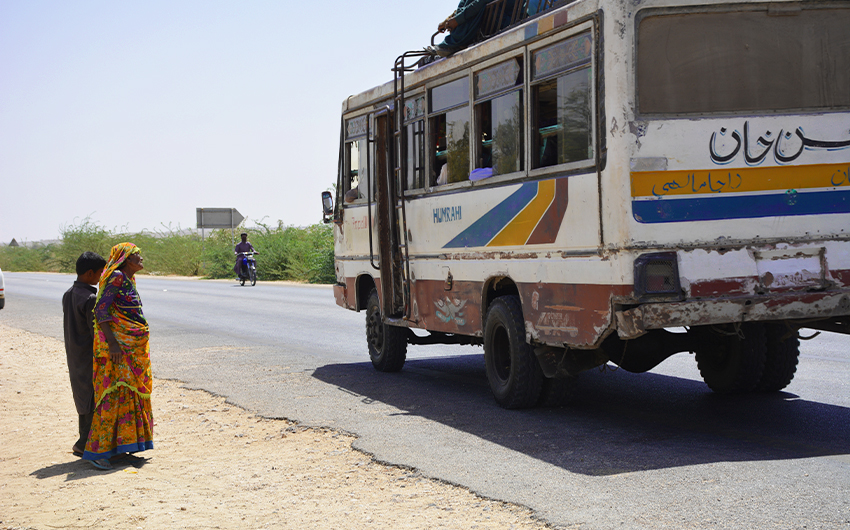
Amru Kohli, 60, collects alms on a highway in the Islamkot area, Tharpakar district, Pakistan, on April 2, 2021. (AN photo by Zulfiqar Kunbhar)
Six people in her village had committed suicide in the last two years, she said: “The main reason was extreme poverty.”
The UNDP’s Multidimensional Poverty Index for Pakistan reports that 87% of the population in Thar lives in poverty. Climate change is now driving locals into more deprivation.
Between 2016 to 2020, the Sindh Mental Health Authority (SMHA), an arm of the provincial government, said 767 suicides were recorded in Sindh, out of which the highest number, 79 cases, occurred in Tharparkar district in the Thar desert and another 64 cases were recorded in the desert’s Umerkot district. With a total of 143 cases reported in Thar, one in every five suicides in Sindh occurs in the desert region, SMHA said.
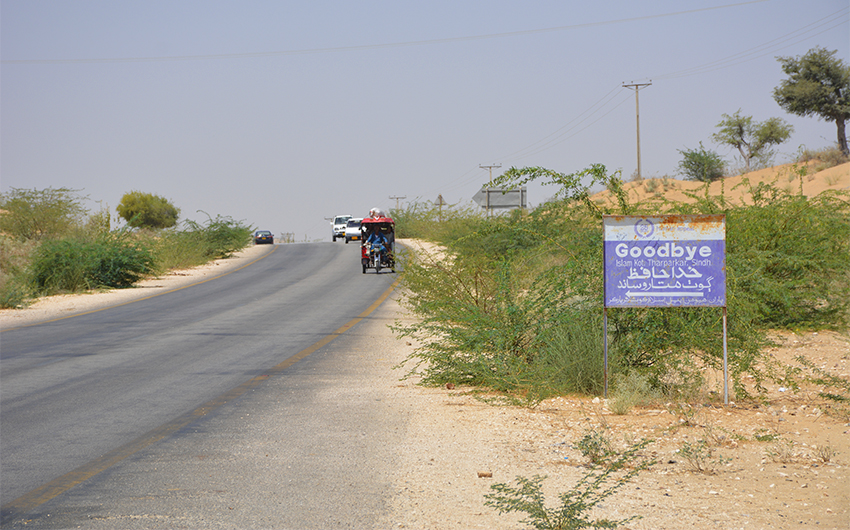
A signboard marks Mataro Saand village next to a highway near Islamkot area in Tharpakar district, Pakistan, on April 2, 2021. (AN photo by Zulfiqar Kunbhar)
The non-governmental organization, the Association for Water, Applied Education and Renewable Energy (AWARE), put total deaths by suicide in Thar at 348 between 2016-2020.
“With every day passing, suicide cases are rising in the desert,” Ali Akbar Rahimoo, AWARE executive director, told Arab News. “In the first three months of 2021, suicide cases in Tharparkar district reported in mainstream media were 20 cases, out of which 13 were women.”
While the SMHA report cites mental illness, domestic issues, and poverty as the main reasons for suicides across the province, researchers link the spike in suicide rates in the Thar region to climate change-driven droughts.
“After the 1970s, the area has witnessed prolonged droughts and famine coming more frequently than in the past,” Rahimoo said. “Nowadays, even if there are rains, they are erratic and delayed, which reduces their effects on the area whose economic cycle and agriculture is solely dependent upon rainfalls. Each drought takes locals five years back.”
Dr. Lakesh Khatri, a Mirpurkhas-based psychiatrist who has worked in Thar, said mental health issues linked to droughts and their effect on household incomes were contributing to rising suicide rates in the desert.
“Thar’s economy is dependent on rainfall as there is no comprehensive river water supply in the desert or any other major livelihood source,” the psychiatrist said. “Prolonged droughts shrink available means of income. Hence lack of livelihood opportunities and inaccessibility to resources triggers inhabitants toward depression, ultimately [to] taking their own lives.”
Locals have also protested Chinese-funded projects like the Thar Coal Power Project, with its estimated 175 billion tons of coal, saying the project will pollute their water and threaten their ancestral lands. But construction has continued.
“Locals don’t see any trickle-down effect coming to them from the mega projects built on natural sources they are the owners of,” Rahimoo said.
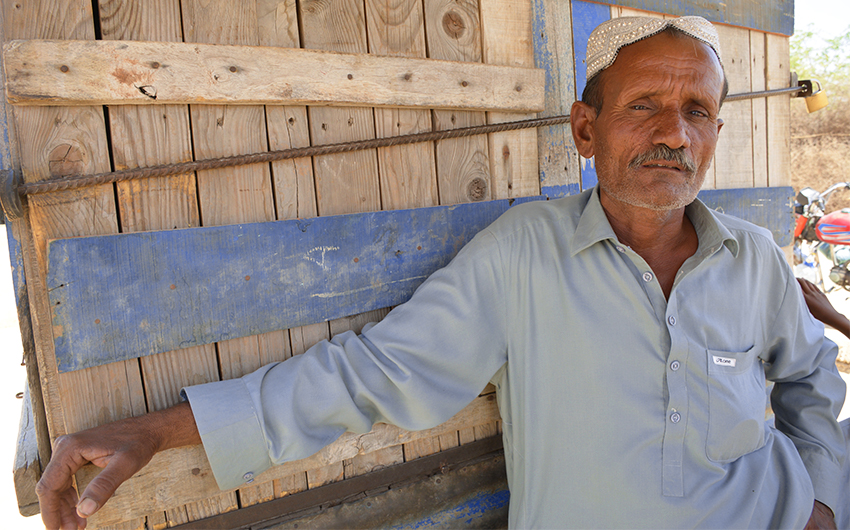
A villager poses for a photograph in Mataro Saand, Tharpakar district, Pakistan, on April 2, 2021. (AN photo by Zulfiqar Kunbhar)
Marium Shabbir, a researcher at the Islamabad-based Sustainable Development Policy Institute (SDPI), said climate-change driven poverty was a new addition to the impoverished regions problems, with “extreme weather patterns” increasing people’s vulnerability.
“It could be handled through pre-policy making,” Shabbir told Arab News. “If this is not addressed, it could turn into a political, social, and economic disaster of international scale.”


