


BEIRUT: Samir, a 10-year-old boy, excitedly accompanied his father into a sweet shop to buy Ramadan treats for iftar in Beirut.
Yet his excitement soon turned to disappointment after his father checked the prices and told him “we cannot afford kellaj today.”
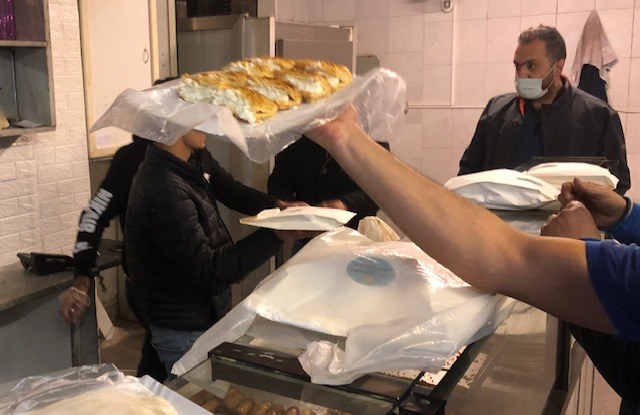
A famous, traditional Ramadan sweet, kellaj are phyllo pastry sheets stuffed with cheese or cream, fried, dipped in sugar syrup and served after breaking fast at sunset.
Despite being an Iftar favorite, Lebanese have been left unable to afford the traditional sweets this year due to skyrocketing prices amid Lebanon’s economic disintegration.
Kellaj, along with other famous sweets like kunafa, shu’aybeyyat baklawa and qatayef usually decorate every home’s Ramadan table. This year, however, they are absent.
When asked why he looked sad outside the shop in Aiche Bakkar district on Tuesday, Samir said he was looking forward to having kellaj but his father would not buy any.
“I couldn’t earn much today,” Samir’s father, Ramez, a taxi driver, told Arab News. “I only bought four pieces of qatayef for my family.”
The father had promised his children kellaj, but the new price was 48,000 Lebanese pounds for 12. Qatayef were cheaper, so he bought four pieces for 10,000 Lebanese pounds.
The Lebanese currency has lost more than 85 percent of its value on the informal market since 2019.
The currency keeps hitting new lows against the dollar on the black market as Lebanon remains gripped by political deadlock and a worsening economic crisis.
Positioned at Beirut’s busy junction of Karakon Drouz, Al Shami Sweets’ manager Khaled Al-Imad told Arab News that sweet prices have “soared nearly 60 percent due to the dollar increase.”
Eventually that led to a “frightening plunge” in the number of clients by around 40-50 percent.
“We sold kellaj last year for 36,000 Lebanese pounds per dozen … this year we are selling it at 84,000,” Al-Imad said.
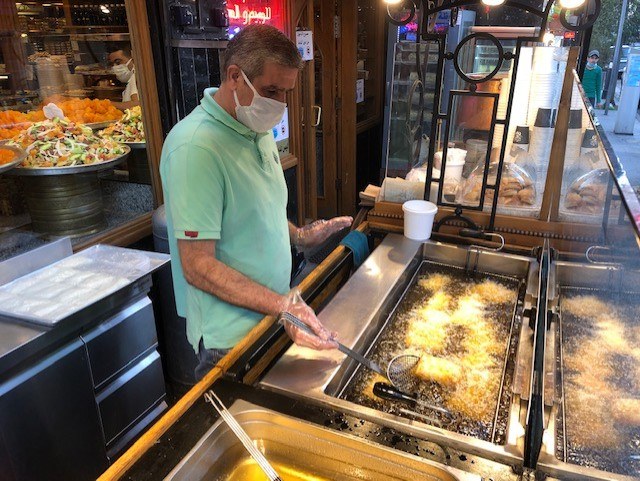
Al Shami’s staffer in charge of frying the kellaj said in past years he used to fry over 15 dozen per day. During this Ramadan, he just fries a few pieces every hour.
“The price of shu’aybeyyat has doubled from 30,000 pounds last Ramadan to 60,000 pounds this year,” Al-Imad said.
As he walked out of another small sweetshop, Beirut resident Mahmoud told Arab News: “Iftar tables look almost abandoned without traditional Ramadan sweets decorating them.”
A block away from Al Shami sits one of Mar Elias Street’s oldest sweetshops — Mekari and Sherkawi. Owner Ahmad Sherkawi said the demand for Ramadan sweets has declined dramatically this year.
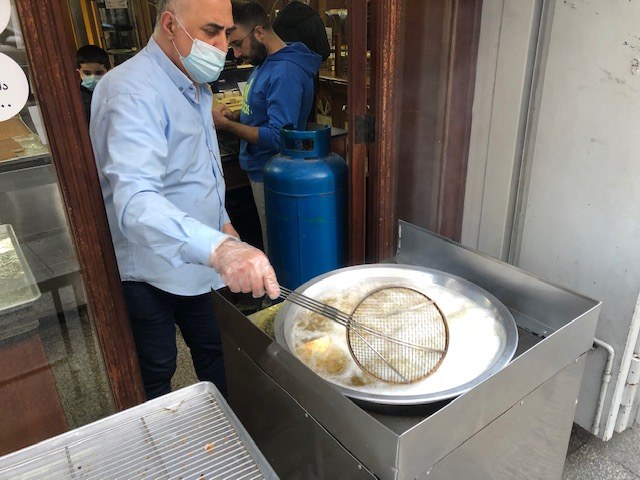
“Our clients are only purchasing one piece per family member,” he said, as he plunged a dozen kellaj into the fryer. He estimated that the number of customers had dropped by 70 percent.
The steep rise in the dollar against the pound has forced Sherkawi, like many other sweetshop owners, to increase prices.
Sweet suppliers refuse to deliver the items except in exchange for dollar payments. But since banks were ordered not to allow dollar withdrawals, the currency is in short supply.
“Ramadan is a special occasion that families decorate their iftar meals with special sweets. We were expecting an increase in orders but unfortunately the demand wasn’t as high,” Sherkawi added.
Storekeeper and father of four Abu Mazen said he did not enter the sweetshop after reading the price list posted at the door.
“What a pity. My kids love kellaj and qatayef but I cannot afford it,” he said. “I will buy some cheaper cookies.”
Wissam Karout, owner of famous El-Karout Sweets in Zaydaneyye, said prices had tripled this Ramadan compared to last year.
“Our production went down and so did our profits,” he said.




