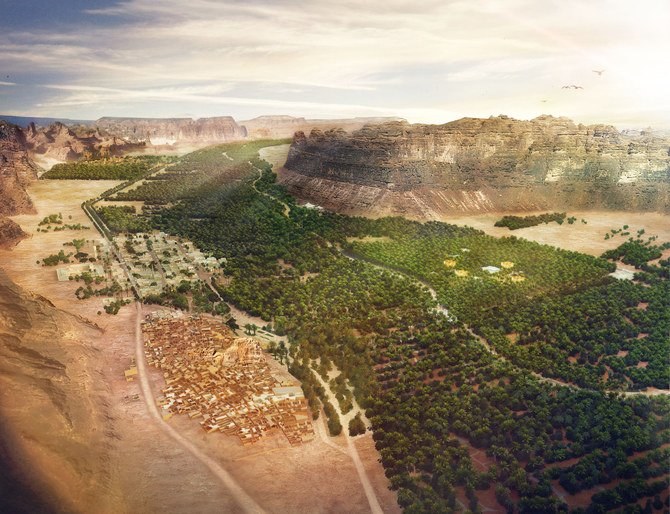

DUBAI: A living museum. That is hardly a phrase usually heard to describe an ancient site whose history stretches back some 2,000 years to the time of the Nabataeans, an enigmatic people whose trading empire carved out this mysterious hidden gem in the Saudi desert, known today as AlUla.
The site will soon enjoy a second chance at glory thanks to The Journey Through Time, a master plan developed under the leadership of Saudi Arabia’s Crown Prince Mohammed bin Salman, chairman of the Royal Commission for AlUla (RCU), and the guidance of Prince Badr bin Abdullah bin Farhan, the Saudi minister of culture and governor of the RCU.
The plan, announced on April 7, falls under Saudi Arabia’s broader Vision 2030 strategy to radically diversify its economy away from oil and embrace the tourism, leisure and hospitality sectors and a host of other cultural and creative industries as it opens up to the world.
It signals a new chapter in the life of AlUla, sustainably developing the heritage site into a place of education, nature, art and leisure — the essence of a “living museum.” The idea is to allow visitors to literally “journey through time” and relive a bygone era along the region’s ancient incense route.
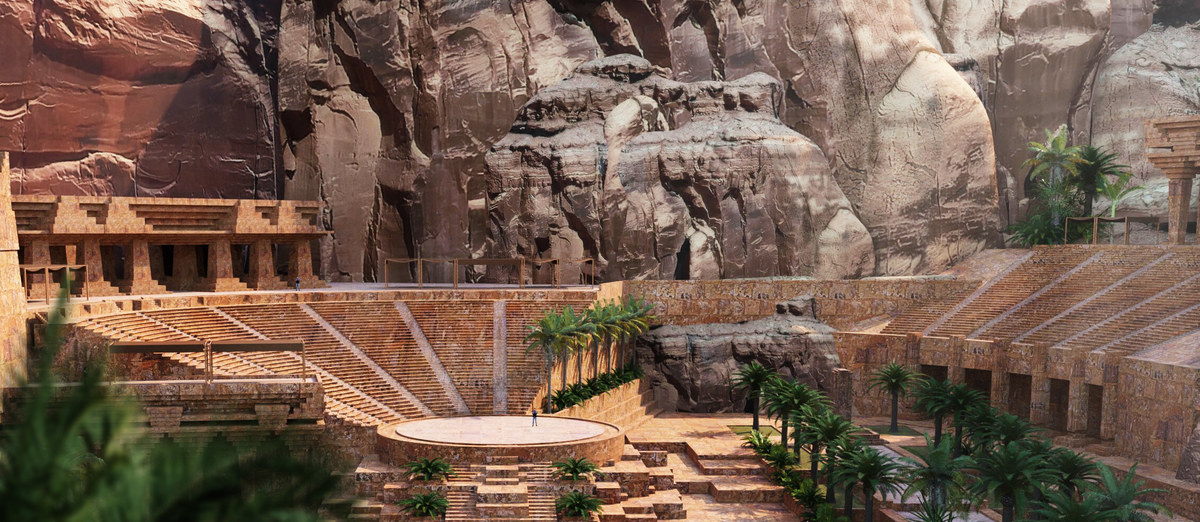
Nabataean Theatre
Visitors will begin their journey at AlUla Old Town in the south before moving north into Dadan, Jabal Ikmah and the Nabataean Horizon, before concluding at Hegra Historical City, home of Saudi Arabia’s first UNESCO World Heritage site. Each district will be shaped around its specific natural and cultural heritage.
As AlUla is spread across 22,500 square km — an area roughly the size of the US state of New Jersey — a major mobility plan is in the works to allow visitors to move freely between districts without undue harm to the environment.
A 46-km low-carbon tram line will connect AlUla International Airport to the five districts and a scenic roadway will allow visitors to travel by car or, if they prefer another immersive option, on foot, by bicycle, or even on horseback.
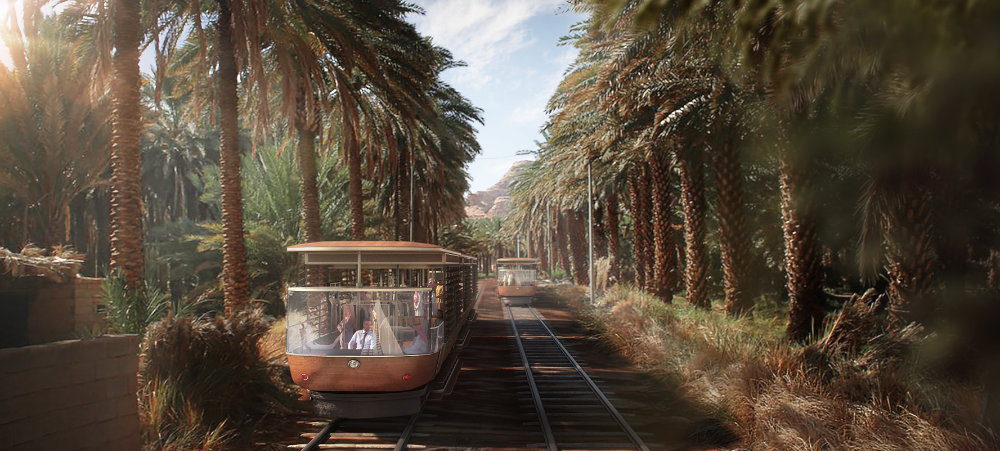
AlUla's experimental low-carbon tram line. (Supplied)
Sustainable mobility solutions are built into the plan, “notably the AlUla experiential tram, Wadi Path and Hejaz Railway bike trail, all of which unobtrusively traverse an ancient landscape,” Phillip J. Jones, the RCU’s chief destination marketing and management officer, told Arab News.
To accommodate the expected flood of visitors, planners will provide 5,000 additional rooms to the overall target of 9,400 by 2035. These will range from luxury hotels to eco-tourism lodges.
“Hospitality is ingrained in the culture of AlUla. For millennia, AlUla has served as a vital waystation and meeting point for people from different cultures and civilizations,” Jones said.
And in addition to the site’s many ancient wonders, 15 new cultural assets will be opened along the route. “Each of our districts act as urban centers, with museums, gardens, galleries and villages, resorts, eco-lodges, riding and walking trails, as well as wellness and agriculture experiences,” Jones said.
“Through our efforts, we hope to responsibly grow the tourism industry in AlUla, develop economic prospects and contribute to the Kingdom’s Vision 2030 goals.”
A flagship component of the master plan is the Kingdoms Institute, a global hub for archaeological learning and research dedicated to cultures and civilizations that have inhabited the area for more than 7,000 years. These include the ancient kingdoms of Lihyan and Dadan as well as the Nabataeans.
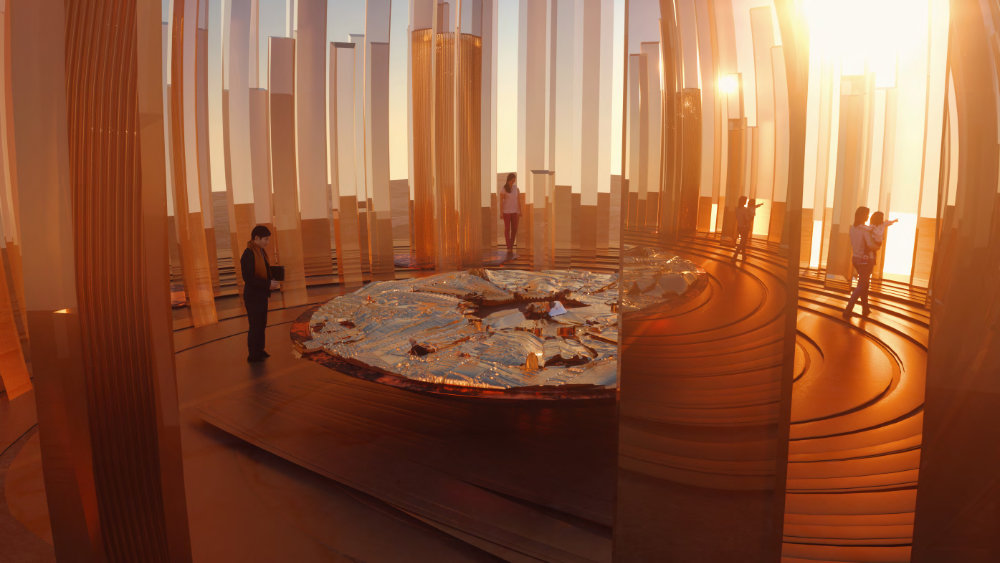
Jabal Ikmah interpretive center
“AlUla has a rich legacy of creativity and culture, and we are committed to preserving, protecting and uplifting its unique cultural landscape,” Nora Al-Dabal, RCU arts and culture programming director, told Arab News.
“From the preservation of heritage sites, the establishment of the different cultural assets to programs designed to promote traditional arts and artisanal practices, many initiatives have been built into the masterplan to advance AlUla’s identity as a crossroads of civilizations.”
In Saudi Arabia’s drive to develop AlUla and open its treasures to the world, it is important to note that a crucial part of the Journey Through Time master plan is about empowering and educating the local population.
“We believe that empowering the community, which has been the cultural custodian of this county, will lead to a stronger tourism, cultural and agricultural economy for AlUla,” RCU spokesperson, Saad Al-Matrafi, told Arab News.
“Through these comprehensive measures, we hope to revitalize AlUla as a vibrant and thriving Saudi community.”
_________
• Twitter: @rebeccaaproctor