PARIS: A glut in global oil markets is being worked off as the world economy begins to recover from the COVID-19 pandemic and as OPEC and its allies restrain production, the IEA said Wednesday.
The International Energy Agency raised its expectations for the recovery in oil demand after the International Monetary Fund increased its forecasts for global growth this year.
“This improved outlook, along with stronger prompt indicators, has led us to revise up our 2021 global oil demand growth forecast,” said the Paris-based body with advised oil consuming nations.
It now expects world oil demand to rise by 5.7 million barrels per day (bbd) to 96.7 million bbd, following last year’s drop of 8.7 million bpd.
OPEC on Tuesday also raised its 2021 demand forecast to 96.5 million bbd.
Oil demand was hammered last year as many countries shut down swathes of their economies in a bid to slow the spread of COVID-19.
That caused a glut in supplies, but the so-called OPEC+ group that includes heavyweight producer Russia, sharply cut output last year to reduce that and counter the plunge in prices that briefly saw some turn negative as storage ran short.
That glut appears to have been largely worked off.
The IEA said preliminary data suggest that OECD oil stocks held largely steady in March, following seven consecutive months of draws, and were heading close to their five-year average.
OPEC+ has been slowly increasing output since the beginning of the year and at the beginning of April signalled it would lift output by more than 2 million bpd in the coming three months in the face of an expected rise in demand.
While the first quarter was somewhat disappointing as many European and several major emerging economies saw a resurgence of COVID-19, global growth is expected to pick up as vaccination campaigns begin to have an impact.
IEA sees the global oil market changing “dramatically in the latter half of this year as nearly 2 million bbd of extra supply may be required to meet expected demand growth.”
But with OPEC+ still having plenty of additional production capacity that it can bring back on line, the IEA does not see a supply crunch developing.
“The bloc’s monthly calibration of supply may give it the flexibility to meet incremental demand by ramping up swiftly or adjusting output lower should the demand recovery fail to keep pace,” it said.


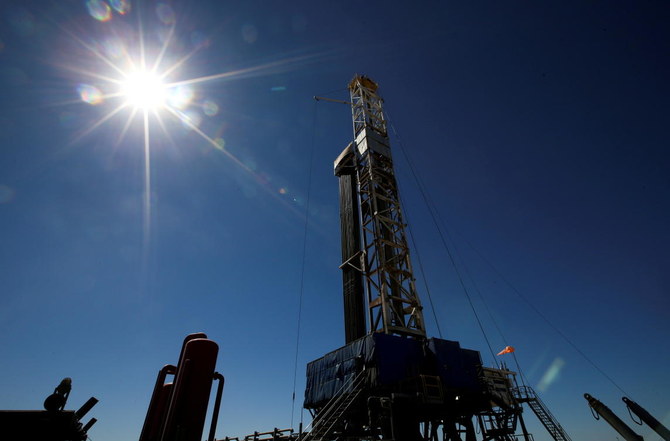
IEA: Goodbye oil glut thanks to OPEC+ and recovery
https://arab.news/g7wag
IEA: Goodbye oil glut thanks to OPEC+ and recovery

- OPEC also raised its 2021 demand forecast
- now expects oil demand to rise by 5.7 million barrels per day


Acwa signs key terms to develop 5GW of renewable energy capacity in Turkiye
JEDDAH: Saudi utility giant Acwa has signed key investment agreements with Turkiye’s Ministry of Energy and Natural Resources to develop up to 5 gigawatts of renewable energy capacity, starting with 2GW of solar power across two plants in Sivas and Taseli.
Under the investment agreement, Acwa will develop, finance, and construct, as well as commission and operate both facilities, according to a press release.
The program builds on the company’s first investment in Turkiye, the 927-megawatt Kirikkale Independent Power Plant, valued at $930 million, which offsets approximately 1.8 million tonnes of carbon dioxide annually, the statement added.
A separate power purchase agreement has been concluded with Elektrik Uretim Anonim Sirketi for the sale of electricity generated by each facility.
Turkiye aims to boost solar and wind capacity to 120GW by 2035, supported by around $80 billion in investment, while recent projects have already helped prevent 12.5 million tonnes of CO2 emissions and reduced reliance on imported natural gas.
Turkiye’s energy sector has undergone a rapid transformation in recent years, with renewable power emerging as a central pillar of its strategy.
Raad Al-Saady, vice chairman and managing director of ACWA, said: “The signing of the IA (implementation agreement) and PPA key terms marks a pivotal moment in Acwa’s partnership with Turkiye, reflecting the country’s strong potential as a clean energy leader and manufacturing powerhouse.”
He added: “Building on our long-standing presence, including the 927MW Kirikkale Power Plant commissioned in 2017, this step elevates our partnership to a new level,” Al-Saady said.
In its statement, Acwa said the 5GW renewable energy program will deliver electricity at fixed prices, enhancing predictability for grid planning and supporting long-term industrial investment.
By replacing imported fossil fuels with domestically generated clean energy, the initiative is expected to reduce Turkiye’s exposure to global energy market volatility, strengthening energy security and lowering long-term power costs.
The company added that the economic impact will extend beyond the anticipated investment of up to $5 billion in foreign direct investment, with thousands of jobs expected during the construction phase and hundreds of high-skilled roles created during operations.
The energy firm concluded that its existing progress in Turkiye reflects a strong appreciation for Turkish engineering, construction, and manufacturing capacity, adding that localization has been a strategic priority, and it has already achieved 100 percent local employment at its developments in the country.


