JEDDAH: Saudi Arabia’s first philosophy journal has been issued, with its editor-in-chief saying that the country was witnessing a “tangible philosophical renaissance.”
The Saudi Journal of Philosophical Studies (SJPS) was launched by the cultural platform Mana, which was set up two years ago.
According to its editor in chief, Sarah Al-Rajhi, the principal aim of the journal was to help researchers in the Kingdom, the Arab world and the West to publish their work without any financial cost and in line with accurate scientific standards.
“Philosophy indicates the position of knowledge within any culture,” she told Arab News. “It is no secret that Saudi Arabia is currently witnessing a tangible philosophical renaissance that should have culminated in the launch of a refereed academic philosophical journal. At Mana, we aim to train researchers in philosophical writing and create a kind of accumulation in this regard. We do this on our online platform, and more systematically in our peer-reviewed journal.”
She said that the SJPS advisory board included 12 leading thinkers and philosophers from the Arab world and the West, and that this number was appropriate because each member represented an orientation and school of thought.
The scholars were chosen on the basis of precise criteria, the most important of which were their research, their recognition by the scientific research community, their “abundant philosophical production” and their geographical distribution.
The advisory board includes members from Saudi Arabia, the US, Australia, the UK, Senegal, Egypt, Tunisia, Libya and Algeria.
Al-Rajhi said that the SJPS had received a large number of research papers in different languages from many countries since its launch.
“We subjected this research to close referees as the journal has a list of highly qualified referees. We apologized to some researchers whose research did not meet the required publishing standards, and we provided them with the referees’ reports that include important notes and instructions in order to help them address the deficiencies in their research and develop them.”
FASTFACTS
• The Saudi Journal of Philosophical Studies (SJPS) was launched by the cultural platform Mana, which was set up two years ago.
• The SJPS advisory board includes 12 leading thinkers and philosophers from the Arab world and the West.
• Among the open access articles are a paper from the US-Lebanese philosopher Raja Halwani.
• Another article is from Mohamed Mohamed Madian, philosophy professor at the University of Cairo.
Philosophers from outside the Arab world contributed to the first issue, specifically from Germany and the US.
The first edition of the SJPS was applauded by elite cultural figures and entities, including Saudi Arabia’s Minister of Culture Prince Badr bin Abdullah bin Farhan. He tweeted the issue announcement, adding: “Such a great step to enrich Saudi philosophical content.”
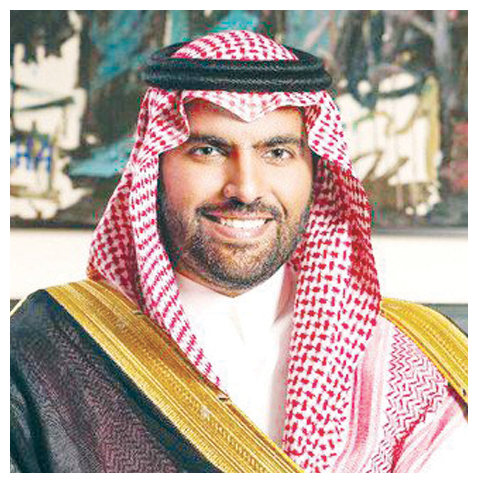
Such a great step to enrich Saudi philosophical content. Prince Badr bin Abdullah bin Farhan
Saudi culture minister
Al-Rajhi, in turn, expressed her gratitude for the support that the Saudi cultural community received from the ministry.
“With your continuing encouragement and support to the knowledge and cultural movement in Saudi Arabia, the future will even be brighter with more and more steps,” she replied.
She said that some of the journal’s articles were free to access for readers on the Mana platform and that issues would also be sent to Saudi and Arab universities.
Al-Rajhi, who is the co-founder of Mana, said the journal could contribute to strengthening the Kingdom’s philosophical movement and that the encouragement of academic publishing in the field of philosophy was the pinnacle of this movement.
“To write a philosophical paper in a systematic way that adheres to the accuracy and academic standards in writing, and for the scientific community to read what you write, is a great thing and a beginning that can be both built and expanded upon. Moreover, we believe that the international character of the SJPS allows Saudi researchers to learn about the research output of their colleagues around the world.”
Al-Rajhi explained what distinguished the SJPS from other Arab and international refereed journals. It did not just present research papers, but a variety of content.
“This content included an introductory essay on a philosophical topic, an introductory essay about a philosopher, an introduction to a research project, translations of two valuable texts from English into Arabic, and finally a statistical analysis of the publications of the most important international publishing houses in the second half of 2020.”
She said there was a clear philosophical activity in Saudi Arabia that nobody could ignore and that it was part of the country’s general cultural activity, adding that had it not been for the “official institutions’ support of this activity, it would not have appeared this way.”
The next desired step within the Saudi philosophy community was to teach the subject in the country’s universities as an independent academic discipline, she said.
“We have tried to create a kind of intersection between philosophy and academia, and we are hopeful that it will be a step that paves the way toward establishing the first departments of philosophical studies in Saudi universities.”
Among the open access articles are a paper from the US-Lebanese philosopher Raja Halwani, who is a philosophy professor at the School of the Art Institute of Chicago.
In his abstract for the “Virtue of Integrity,” Halwani writes there is a powerful argument that integrity is not a virtue because it would be a redundant virtue, or what he calls the “redundancy objection.”
He said that integrity was usually tested when the agent was under pressure or tempted to act against their values. A virtuous person was someone who had virtues, including wisdom, and was able to act properly whenever the situation called for it.
Another article is from Mohamed Mohamed Madian, philosophy professor at the University of Cairo’s Faculty of Art.
He discusses Cornel Ronald West, a prominent left-wing African-American thinker, and his writing focuses on three levels expressing the West’s philosophy: Prophetic pragmatism, the philosopher’s concept of democracy, and the problem of racial discrimination.