

Dubai sovereign wealth fund skyscraper has double-decker lifts

Standing 304 meters tall, it is connected to neighboring Tower B via a 225 meter sky bridge known as ‘The Link’. (Supplied)
Short Url
Updated 13 April 2021
Follow

Dubai sovereign wealth fund skyscraper has double-decker lifts

  • Builder ALEC Engineering and Contracting has just completed the main structural construction work on Tower A

DUBAI: Dubai’s latest skyscraper that will be home to the emirate’s sovereign wealth fund comes with double-decker lifts.

Builder ALEC Engineering and Contracting has just finished the main construction works of Tower A on Ithra Dubai’s One Za’abeel project.

“One Za’abeel was designed as a floating gateway to Dubai’s financial district," said Fadi Jabri, executive officer at Nikken Sekkei, the lead architects and engineers on the project.

Standing 304 meters tall, it is connected to neighboring Tower B via a 225 meter sky bridge known as ‘The Link’.

Elevated at just over 100 meters above ground, ‘The Link’ will place the project in the record books as the world’s longest occupied building cantilever, the contractor said.

But perhaps an equally interesting feature for people working in the building will be its double-decker lifts serving two adjacent floors simultaneously.

Designing tall buildings with enough lift capacity has been a perennial problem for architects working on the emirate's famously tall buildings since the earliest days of the construction boom years.

Some of the city's buildings have gained a reputation for congestion during peak hours such as lunchtime when lobbies can quickly become crammed with workers.
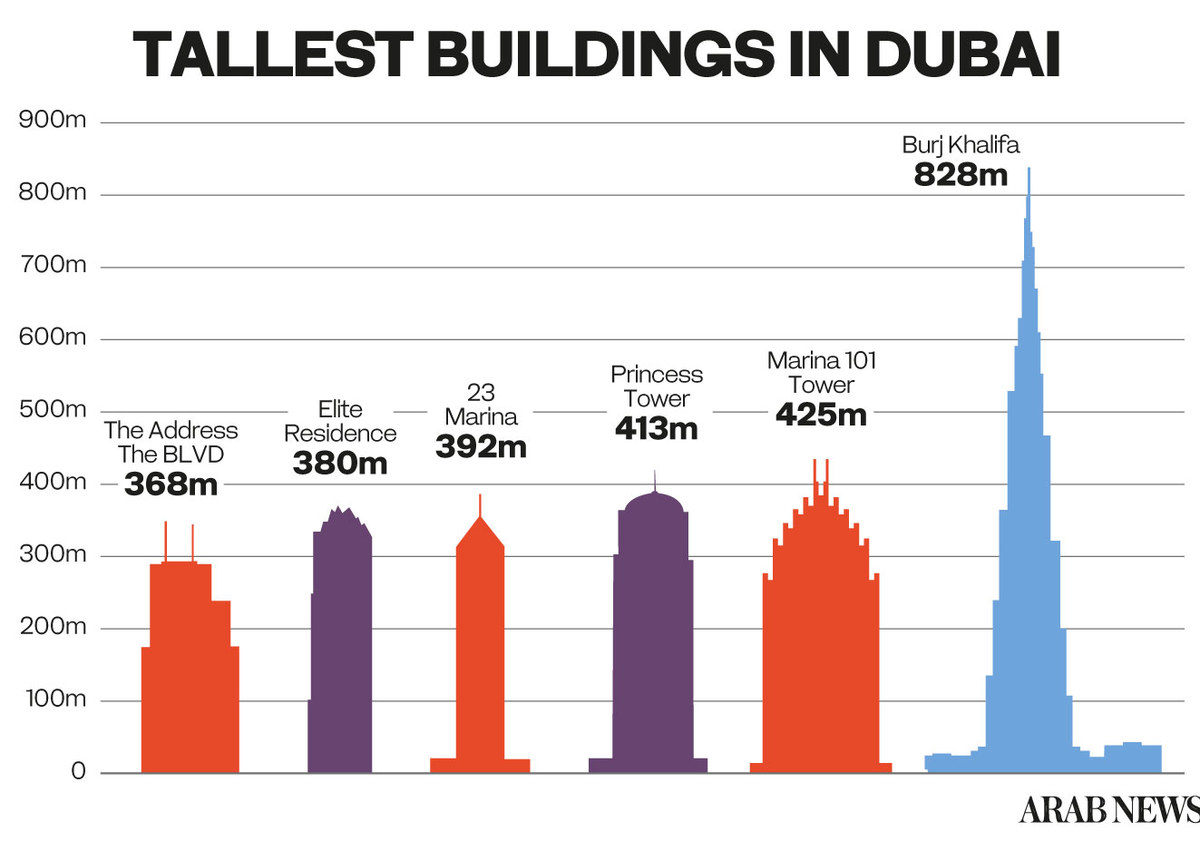
That has put elevator technology at the center of many of Dubai's super-tall buildings, with designers adding increasingly intricate features designed to get more people up and down buildings more quickly, with mixed success.

The new Tower A building will have three lifts dedicated to serving the ground and first floors to the 24th and 25th and two lifts traveling from basement one and ground floor to the 61st and 62nd floors.

It will give passengers express access to ‘The Link’ and ICD offices respectively at a speed of eight meters per second, meaning a transit time of just forty seconds from the basement and ground floor to the top, ALEC said.


Emerging markets should depend less on external funding, says Nigeria finance minister

Updated 5 sec ago
Follow

Emerging markets should depend less on external funding, says Nigeria finance minister

RIYADH: Developing economies must rely less on external financing as high global interest rates and geopolitical tensions continue to strain public finances, Nigeria’s finance minister told Al-Eqtisadiah.

Asked how Nigeria is responding to rising global interest rates and conflicts between major powers such as the US and China, Wale Edun said that current conditions require developing countries to rethink traditional financing models.

“I think what it means for countries like Nigeria, other African countries, and even other developing countries is that we have to rely less on others and more on our own resources, on our own devices,” he said on the sidelines of the AlUla Conference for Emerging Market Economies.

He added: “We have to trade more with each other, we have to cooperate and invest in each other.” 

Edun emphasized the importance of mobilizing domestic resources, particularly savings, to support investment and long-term economic development.

According to Edun, rising debt servicing costs are placing an increasing burden on developing economies, limiting their ability to fund growth and social programs.

“In an environment where developing countries as a whole — what we are paying in debt service, what we are paying in terms of interest costs and repayments of our debt — is more than we are receiving in what we call overseas development assistance, and it is more than even investments by wealthy countries in our economies,” he said.

Edun added that countries in the Global South are increasingly recognizing the need for deeper regional integration.

His comments reflect growing concern among developing nations that elevated borrowing costs and global instability are reshaping development finance, accelerating a shift toward domestic resource mobilization and stronger economic ties among emerging markets.