

Saudi Arabia mulls exporting power to neighboring countries

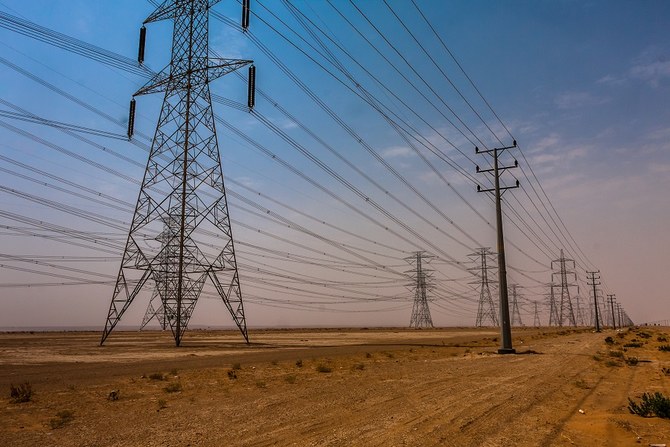
Gulf states have been exploring the idea of opening up their grids to allow them to export power within the region and even beyond to Europe. (Shutterstock)
Short Url
Updated 10 April 2021
Follow

Saudi Arabia mulls exporting power to neighboring countries

  • “Projects are ongoing to connect power grids with Jordan, Egypt, Iraq, and the GCC,” the Saudi energy minister said

DUBAI: Saudi Arabia will start exporting electricity to neighboring countries, Argaam reported citing the Kingdom’s energy minister, following the opening of the Sakaka IPP photovoltaic (PV) power plant, its first renewable energy project.

“Projects are ongoing to connect power grids with Jordan, Egypt, Iraq, and the GCC,” Prince Abulaziz bin Salman said.

Gulf states have been exploring the idea of opening up their grids to allow them to export power within the region and even beyond to Europe. Such a move allows for the possibility of exporting electricity during periods of lower demand such as during the Gulf's winter months when demand is low.

These low demand months in the region coincide with higher demand months in Europe when people use more power to heat their homes.

The minister said Saudi leadership, particularly Crown Prince Mohammed bin Salman, is closely monitoring developments in the Kingdom’s energy sector, including renewables.

His comments come just after the crown prince inaugurated the Sakaka IPP IV plant on Thursday.


IMF approves $2.3bn for Egypt amid recovery, as lender reengages with Syria’s resurgent economy

Updated 8 sec ago
Follow

IMF approves $2.3bn for Egypt amid recovery, as lender reengages with Syria’s resurgent economy

RIYADH: The International Monetary Fund has approved the disbursement of $2.3 billion to Egypt following the completion of combined reviews under its Extended Fund Facility and Resilience and Sustainability Facility.

The lender announced on Feb. 25 that the funds, comprising about $2 billion under the EFF and $273 million under the RSF, will support the country’s ongoing stabilization efforts.

The approval extends Egypt’s 46-month EFF arrangement to Dec. 15, and brings total disbursements under the program to roughly $5.2 billion.

The move will bolster the engine of the Arab world’s third-largest economy. With a population exceeding 112 million and a nominal gross domestic product of roughly $400 billion, Egypt’s economic stability is crucial for the region.

The country’s consumer market and strategic position, anchored by the Suez Canal, make its fiscal health a leader for emerging markets in the Middle East and North Africa.

According to the IMF, Egypt’s macroeconomic landscape has shown marked improvement as policy measures take hold.

Real GDP growth accelerated to 4.4 percent in fiscal year 2024-2025, driven by a broad-based recovery. Inflation has cooled significantly to 11.9 percent as of January, supported by tight monetary and fiscal policies.

Nigel Clarke, IMF deputy managing director and chair, said: “The authorities’ stabilization measures continue to take effect. However, further progress on deeper reforms, particularly in divestment in non-strategic sectors and debt management, is needed to reduce risks to attaining key program objectives.”

The external position has also strengthened considerably. The current account deficit narrowed to 4.2 percent of GDP, buoyed by robust remittances and tourism revenues.

Market confidence has rebounded, evidenced by successful international bond issuances, foreign direct investment inflows, and record non-resident investments in domestic debt markets.

This has helped swell gross international reserves to approximately $59.2 billion as of December, up from $54.9 billion a year earlier.

The IMF noted that progress on deeper structural reforms has been “uneven.” While macroeconomic stability has improved, efforts to reduce the state’s economic footprint, particularly regarding the divestment of state-owned assets, have lagged behind targets.

Clarke emphasized the need for sustained domestic revenue mobilization, maintaining exchange rate flexibility, and decisive efforts to reduce state dominance to crowd in private investment and secure durable, inclusive growth.

Separately, the Washington-based lender said Syria’s economy is “continuing to recover” following a staff visit to Damascus, signaling deeper engagement with the country.

An IMF team led by Ron van Rooden visited the Syrian capital from Feb. 15 to 19 to assess the economic situation and discuss reform priorities. It was the latest in a series of intensive engagements as Syria reintegrates regionally following years of isolation.

“Activity has picked up further in recent months, supported by improved consumer and investor sentiment, the continuing return of refugees, increased electricity provision and rainfall, and Syria’s steady regional reintegration,” Rooden said in a statement.

Preliminary data indicate the central government budget ended 2025 with a small surplus, a feat attributed to prudent spending and the Ministry of Finance refraining from central bank financing, a significant shift from previous years.

Inflation has slowed to the “low double digits” by the end of 2025, supported by a tight monetary stance.

The IMF said that Syria has prepared a 2026 budget aimed at increasing spending on healthcare, education, and infrastructure rehabilitation. It stressed that while revenue targets are ambitious, the budget includes safeguards should financing fall short.

The fund agreed to an extensive technical assistance program to support Syria’s economic rehabilitation. This includes capacity building in public financial management, revenue mobilization, and banking sector supervision.

The IMF noted that improving statistics and economic governance could help “pave the way for the resumption of Article IV consultations with Syria,” the Fund’s regular health check of member economies, which have been suspended for years.

IMF staff will continue to work together with multilateral, regional, and bilateral donors to support the authorities’ capacity building efforts, Rooden added.