

Customers, retailers in Saudi Arabia prepare for joy of Ramadan shopping

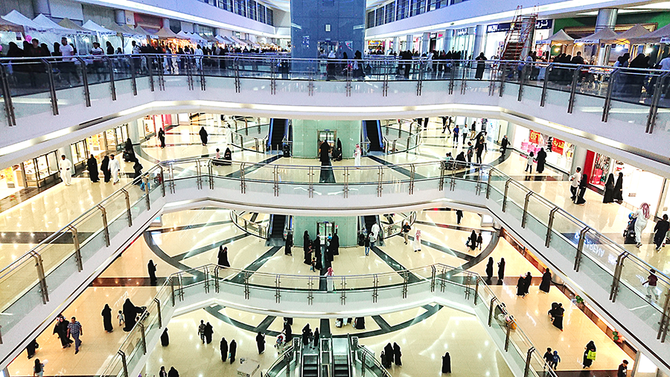
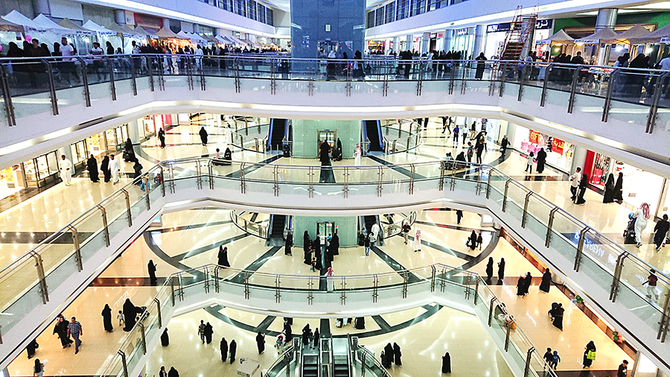
Hypermarkets and shopping malls accommodate the shopping frenzy with creative marketing schemes and displays to catch consumers’ attention before the month even begins. (Shutterstock)
Short Url
Updated 08 April 2021
Follow

Customers, retailers in Saudi Arabia prepare for joy of Ramadan shopping

  • Shopping process becomes more intense for consumers unlike any other month of the year

JEDDAH: One of the clearest signs marking the arrival of Ramadan is the shopping behavior of Saudi residents, with people flocking to supermarkets and malls to prepare their households for the upcoming holy month.

Last year’s buying sprees were different during the coronavirus disease (COVID-19) pandemic lockdown, where consumers resorted to shopping online for groceries, clothes, and necessities. 

Due to the restrictions, sales were hit hard. This year, shopping malls and hypermarkets in the Kingdom have started to recover from the economic recession.

It has become a habit to prepare for Ramadan with a feeling of newness: Households go on a cleaning frenzy, decorate the house, reorganize furniture, take away some goods to give to the poor, and of course, buy new items.

For consumers in the Kingdom, the shopping process becomes more intense unlike any other month of the year. People head to grocery stores to shop for products, sweets, new kitchen utensils, furniture, toys, and of course holy month decorations to fully enjoy the Ramadan vibe.

Hypermarkets and shopping malls accommodate the shopping frenzy with creative marketing schemes and displays to catch consumers’ attention before the month even begins.

Sellers from different markets — ranging from hypermarkets to bakeries and general goods — have provided an overview of buying behavior before and during Ramadan, with some consumer experts saying that purchasing decisions have become more prepared after the pandemic.

Raghdah Sadiq, marketing supervisor at a Saudi eCommerce platform HNAK.com, told Arab News that “by limiting the customer to only order online, the customer missed the actual experience of going to the mall and interacting with other people to buy or exchange.

“In 2021, consumers have already built a strong habit of ordering online, but for some items such as fashion, jewelry, and groceries, people would prefer to go to the stores and experience shopping offline.”

Panda Hypermarket, a Saudi Arabian retailing company and one of the Kingdom’s largest grocery store chains, buckles up for Ramadan over a month ahead of its arrival. 

“We prepare everything very early to beat the crowd. We provide all Ramadan food supplies a month and a half in advance until the end of Ramadan,” said Hussein Al-Harbi, the on-duty manager of Hyper Panda in Jeddah’s Al-Ruhaily neighborhood. “We also add more employees before and during Ramadan to accommodate the growing crowd of shoppers.”

Al-Harbi added that while some consumers are used to moderately buying the exact amount of groceries they need, many tend to go overboard with food purchases. During the lockdown, however, people had to consider what they actually needed, which made them develop smart shopping skills and an understanding of their required consumption.

Ahmad Al-Muqbil, managing director of Creative Team, a marketing company based in Saudi Arabia, told Arab News that “companies tend to come up with promotions to their products and more special offers to gain consumer loyalty.”

He added: “Despite the pandemic and the setback in 2020, everyone continued to shop through apps and websites. However, the proportion of shopping was the lowest ever over recent years.”

Essentials, desires, and advertisements

Ramadan products are promoted not only via shopping malls, hypermarkets, and ads, but also with the help of social media influencers in the Arab world.

“Building that sense of urgency completes other companies’ agendas, for example your dinner table will not be ready unless you have a certain product,” said Sadiq, adding: “Consumers have the need of not missing out on the occasion as Ramadan is mainly about gatherings in the family home.”

Mansour Turki, an employee at a local pastry shop, told Arab News that Eastern pastries and deserts such as baklava, kunafa, and basbosa are high season picks during Ramadan and customers flock to their stores on weekends. Though the lockdown did affect his sales, it is still expected to be business as usual for this coming Ramadan.

Neama Fadhel, a housewife and a mother of five children, said that she likes to plan for her Ramadan shopping for kitchen products, accessories, and clothes, as the experience brings her joy.

Fadhel also takes happiness from buying new items for her household, especially her kitchen, as it “gives me a boost for the daily cooking routine in the holy month that differs from other normal days of the year.”

She added: “This year has made a big difference in my preparation for Ramadan as there will be an opportunity for us to enjoy breakfast with family and friends.”


Saudi Arabia witnessing comprehensive cultural development, says expert

Updated 14 February 2026
Follow

Saudi Arabia witnessing comprehensive cultural development, says expert

  • Clotilde Entrecanales of Acciona hails pace of change in Kingdom

JEDDAH: Museums, exhibitions and art centers play a crucial role in the development of free and educated societies such as the one now burgeoning in Saudi Arabia, an expert has told Arab News.

Clotilde Entrecanales, the Spanish art historian and cultural executive who heads Acciona Living & Culture, a leading creator of technology-driven interactive museums, exhibits and events, said the Kingdom is making efforts to expand the role of culture development to show the world the greatest possible cultural offer.

She added that the Kingdom has quickly infused new energy into the region, and is rapidly establishing itself as a global cultural hub through massive investment in world-class museums, public art and international events, aligning with its 2030 vision.

She said: “With around 70 percent of the population under 30, cultural consumption looks very different than in Europe or the US. These spaces can’t feel like quiet, isolated institutions … they need to be fast, dynamic, brave and deeply connected to the city, blending into everyday urban life rather than sitting apart from it.”

Asked about the role of these sites in the evolving global cultural landscape, particularly in emerging cultural hubs like Saudi Arabia, Entrecanales said: “Our vision is to be a purpose-led partner for cultural and entertainment institutions, helping them be more relevant, connected, inclusive and sustainable.”

She added: “In emerging cultural hubs like Saudi Arabia, that approach feels especially relevant. The cultural transformation underway is moving fast — with major heritage and cultural destinations being developed and opened to the world.”

Speaking about her impression of the Kingdom’s approach to blending heritage with modernity face, Entrecanales said: “Others who attempt to achieve this balance often end up turning heritage into a theme, a layer of storytelling or a cultural program. What feels different about Saudi’s approach is how much pressure there is to treat heritage as the foundation, not just the surface.

“When you’re building at this speed and scale, there’s always a risk that history becomes a backdrop instead of a backbone. The projects that work best are the ones that slow down just enough to let the past set the rhythm for the present.”

Regarding opportunities and challenges, she said: “The opportunity is nothing less than positioning Saudi Arabia as a global cultural center. The challenge, as always, lies in balancing the speed and scale of that ambition with long-term sustainability and a sense of authenticity that remains credible and rooted.”

She added: “You can really feel this in places like the Islamic Arts Biennale, which shows hundreds of historical artefacts of the Islamic world, while re-framing them through contemporary scenography and designs by some of the best design studios in the world; or in AlUla, a world-class heritage site that hosts a major contemporary platform like Desert X, allowing ancient context and present-day artistic practice to coexist in a way that feels genuine.”

Under her guidance, ACCIONA Cultura aspires to create museums and cultural experiences that function as landmarks while fostering sustainable, inclusive and immersive interactions.

She elaborated on how the company is integrating technology, culture, and sustainability to preserve and promote the region’s cultural heritage: “We always start with human connection and storytelling: what’s the story, what should people leave with? Tech comes later.”

Recently, ACCIONA Cultura has been involved in significant projects in Saudi Arabia and is looking forward for more.

She said: “Right now, for example, we’re designing and curating a museum gallery where the entire space is shaped by the practice of a Saudi artist. Another example is the Net Zero exhibition at the King Abdulaziz Center for World Culture (Ithra), where we brought together Saudi and international artists to explore sustainability and our relationship with the planet, including voices like Dina Haddadin, Mohammed Al-Faraj, and Zahrah Al-Ghamdi.”

She added: “One of the projects I’m most proud of isn’t a museum, but our NEXT IN Summit, which we’ve hosted in two editions in our ACCIONA Campus in Madrid, highlighting the Kingdom’s unprecedented cultural momentum as it builds future-facing institutions with a startup mindset.”

About further collaboration with Saudi Arabia, she said: “Let’s just say … something’s definitely simmering in the kitchen.”

Commenting on being recognized among the Blooloop 50 Museum Influencers for 2025, she said: “It means a lot. More than anything, it feels like a nod to the years of teamwork and dedication behind Acciona Cultura, rather than to me personally.”