

Aging brothers in Hyderabad run last radio repair shop in southern Indian state

1 / 4
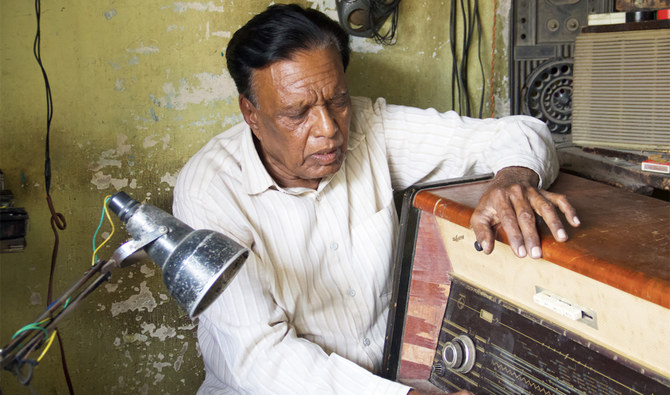
Mohammed Moinuddin, 71, repairs a radio set at Mahboob Radio Service in Hyderabad, India, March 25, 2021. (AN photo by Yunus Y. Lasania)
2 / 4
Mohammad Mujeebudin, 82, repairs a radio set at Mahboob Radio Service in Hyderabad, India, March 25, 2021. (AN photo by Yunus Y. Lasania)
3 / 4
Old radio sets are stacked at Mahboob Radio Service in Hyderabad, India, March 25, 2021. (AN photo by Yunus Y. Lasania)
4 / 4
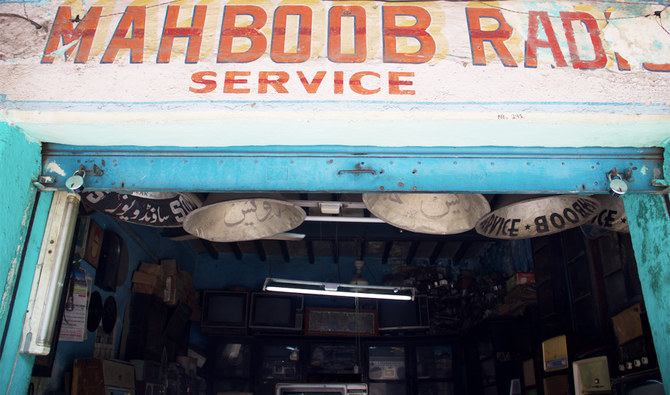
Entrance to Mahboob Radio Service in Hyderabad, India, March 25, 2021. (AN photo by Yunus Y. Lasania)
Short Url
Updated 03 April 2021
Follow

Aging brothers in Hyderabad run last radio repair shop in southern Indian state

  • Mahboob Radio Service is now the last radio repair shop in Telangana
  • Opened in 1948, it served customers as prominent as the Hyderabad Viceroy Mir Osman Ali Khan

NEW DELHI: “Mahboob Radio Service,” reads the faded panel on a small repair shop near the 16th-century Charminar mosque in the heart of the old town of Hyderabad.

The shop, which has been open since 1948, is filled with thousands of radio sets stacked in the small space where two aging brothers have been repairing radios for as long as they can remember.

The brothers, Mohammed Mujeebudin, 82, and Mohammed Moinuddin, 71, learned the craft from their father, who started selling and repairing radios in the 1920s after a trip to Bombay, where he bought his first set.

“My father started Mahboob Radio Service from Dabeerpura in Hyderabad before moving to the present location in Chatta Bazar in 1948,” Moinuddin said.

He remembered his father’s most prominent customers, such as Viceroy Mir Osman Ali Khan, who ruled Hyderabad until the princely state’s merger with India.

“He was our client, and we would repair his radios. Once the work was done, we would deliver the radio to the palace and receive some 20 or 30 rupees,” Moinuddin recalled. The sum today is equivalent to less than one US dollar. “We never dared to ask for money.”

More than seven decades later, Mahboob Radio Service is now the last radio repair shop in Hyderabad and the whole southern Indian state of Telangana.

“People from far-off places come here for repairs,” Moinuddin said. “We also get clients from Dubai, Sharjah and other Gulf countries.”

FASTFACT

Opened in 1948, it served customers as prominent as the Hyderabad Viceroy Mir Osman Ali Khan

Many more people used to come to Mahboob Radio Service in the 1970s and 1980s, not only to buy or repair a radio set but also to listen to the BBC, Voice of America and other foreign stations.

“Radio was also a luxury once upon a time,” Moinuddin said. “Some 3,000 people would gather to listen to the BBC and other stations, in the morning and evening.”

The brothers say they have all kinds of radio sets, from brands like Phillips, GEC, Johnson, Marconi and Telefunken to the iconic Murphy.  

“The oldest radio set that I have is 100 years old. It’s a Murphy radio,” Moinuddin said. “It still works fine and is up for sale to anyone who pays 20,000 rupees ($275).”

He regrets that many top brands stopped making radios in the 1980s and no longer produce parts for their once-famous sets.

“The advantage with old radios is that you can repair them by replacing damaged parts, but the same is not possible with damaged technology,” he said.

With the golden age of radio long gone, not only does the technology seem beyond fixing but also the future of Mahboob Radio Service. Neither of the brothers has taught his children the art of repair.

“Our children are educated, and they don’t want to join our profession. This business will end with us,” Moinuddin said, although he believes that better times are yet in store for the radio as a medium.

“This digital phase is not permanent,” he said. “People will return to radio.”


Thai coffee chains cut default sugar content in coffee and tea drinks in a new health push

Updated 11 February 2026
Follow

Thai coffee chains cut default sugar content in coffee and tea drinks in a new health push

  • The Health Department says Thais consume 21 teaspoons of sugar daily, far exceeding the World Health Organization’s recommended six teaspoons
  • Officials warn this increases obesity and diabetes risks. A survey found iced coffee and bubble tea contain high sugar levels

BANGKOK: For many Thais, a meal doesn’t feel complete without an iced coffee or tea so sugary it could pass for dessert. The government, concerned about the health consequences, wants them to dial it back.
Starting Wednesday, nine major coffee chains across the country have pledged to cut the default sugar content in some of their drinks by half in a government initiative aimed at tackling excessive sugar consumption.
According to the Health Department, Thais consume an average of 21 teaspoons of sugar per day, more than three times the World Health Organization’s recommended limit of six teaspoons. Health officials warn that such high intake increases the risk of obesity, diabetes and other diseases.
The initiative is the first significant step to change consumers’ sugar consumption behavior, said Amporn Benjaponpitak, the director general of the department.
Pakorn Tungkasereerak, the department’s deputy, said 2025 data show that about 45 percent of Thais aged 15 and older are obese, while 10 percent of the population has diabetes.
A survey by the Bureau of Nutrition found that a 22-ounce (650-milliliter) iced coffee contains an average of nine teaspoons of sugar, while a 10-ounce (300-milliliter) serving of bubble milk tea — an iced milk tea with tapioca pearls known as boba — can contain as much as 12 teaspoons.
Sirinya Kuiklang, an office worker, said she approves of the changes. She already orders her drinks at just 25 percent of the standard sugar level, but she is aware that many others consume too much sugar.
“It’s good for Thai people,” she said.
Another office worker, Porwares Tantikanpanit, said he has enjoyed his non-coffee beverages at their current sugar levels but is willing to adjust if shops reduce the sweetness.
However, putting the policy into practice may prove challenging. Officials have said each brand can apply the initiative as they see fit.
Some customers have expressed confusion in response to social media posts promoting the initiative, asking how to order drinks with the level of sweetness that they prefer. Several brands said that the reduction applies only to certain menu items.