RIYADH: The UN and the Riyadh-based Global Center for Combating Extremist Ideology (Etidal) have signed a collaboration agreement to fight terrorism.
The memorandum of understanding (MoU) inked between the UN Counterterrorism Center (UNCCT) of the UN Office of Counterterrorism (UNOCT) and Etidal is aimed at strengthening cooperation in preventing and countering terrorism and violent extremism.
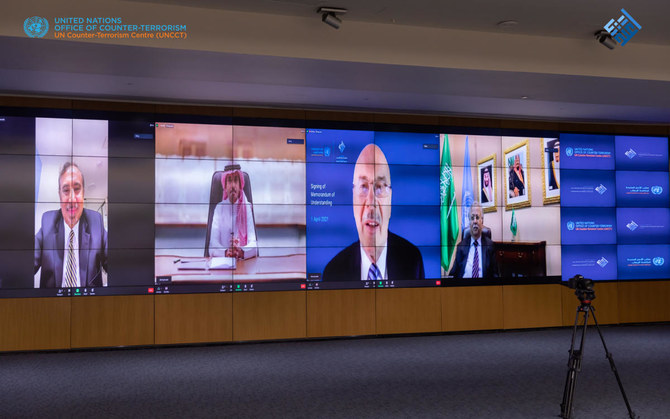
UN under-secretary for counterterrorism and UNCCT executive director, Vladimir Voronkov, penned the MoU with Etidal secretary-general, Dr. Mansour Al-Shammari, in the presence of the Saudi permanent representative to the UN and chairman of the UNCCT advisory board, Abdallah Al-Mouallimi.
The deal is part of the UNCCT’s ongoing efforts to unite the international community in tackling the scourge of terrorism and combating the spread of extremist ideologies.
Under the terms of the MoU, a number of joint projects will be developed to support the implementation of the UN’s global counterterrorism strategy. Activities will include capacity building workshops on strategic communications to prevent violent extremism and the use of the Internet for terrorist purposes, as well as awareness campaigns on youth engagement, tolerance, and support for victims of terrorism.
Al-Mouallimi said: “The memorandum of understanding with the UNCCT reflects Saudi Arabia’s keen interest and its continuous commitment to combating terrorism.”
Voronkov said: “The MoU marks the start of our plan to develop a sustainable, practical partnership between our two organizations, leveraging our respective comparative advantages in technology, analysis, and global capacity building.
“It will also allow the UNCCT and Etidal to find synergies in our work as centers of excellence in preventing and countering violent extremism and to share good practices in combatting the spread of violent extremist ideology.”
Al-Shammari noted the commitment of Etidal to support the UN’s global strategy for defeating terrorism.
“This is what we embody today in signing the MoU as we seek for cooperation and partnership in a systematic, accurate, and professional manner, using the center’s capabilities of ideological, media, and digital assets in order to achieve the desired noble goals,” he said.


![]()
![]()

UN, Saudi Arabia sign collaboration agreement to fight terrorism

Short Url
https://arab.news/v5eup
UN, Saudi Arabia sign collaboration agreement to fight terrorism
- The deal is part of UNCCT efforts to unite the international community in tackling the scourge of terrorism
- A number of joint projects will be developed to support the implementation of the UN’s counterterrorism strategy


Latest updates


© 2026 SAUDI RESEARCH & PUBLISHING COMPANY, All Rights Reserved And subject to Terms of Use Agreement.