

The Mummy returns? Egypt’s week of unfortunate events blamed on superstitious beliefs

1 / 5
(AP/AFP/Reuters/Ahram Online)
2 / 5
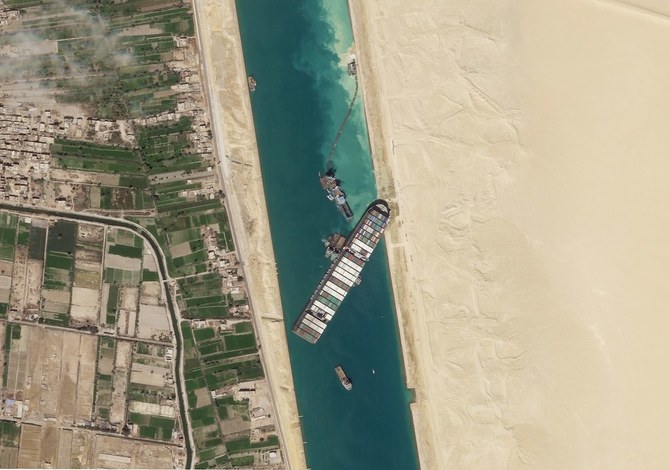
In this March 28, 2021, satellite file image from Planet Labs Inc, the cargo ship MV Ever Given sits stuck in the Suez Canal. (AP)
3 / 5
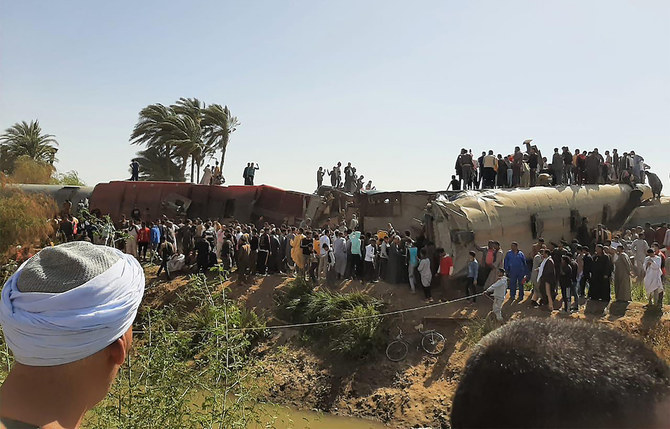
People gather around the wreckage of two trains that collided in the Tahta district of Sohag province. (AFP)
4 / 5
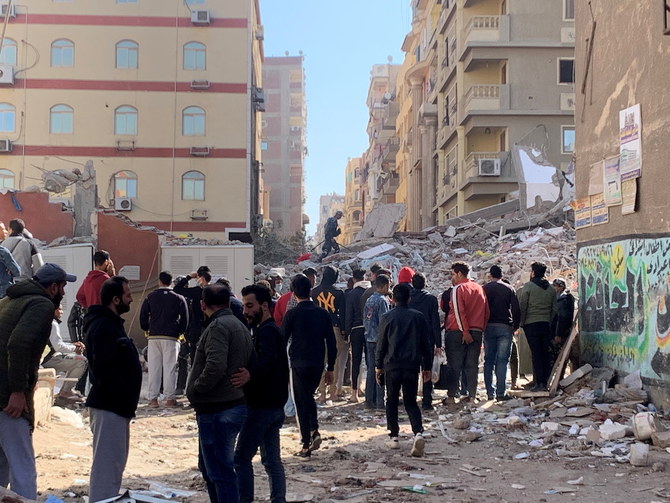
People inspect the area where a building was collapsed in Gesr al-Suez, Cairo. (Reuters)
5 / 5
Picture showing the fire that broke out at shops adjunct to Zagazig railway station. (Ahram Online)
Short Url
Updated 29 March 2021
Follow

The Mummy returns? Egypt’s week of unfortunate events blamed on superstitious beliefs

CAIRO: Egypt’s string of disasters that saw the vital Suez Canal entirely blocked and scores of people killed in multiple incidents, has been put down to angered pharaohs by some who think the country has been cursed by the ancient mummies.   

For many it was more than just a coincidence that all these travesties happened around the same time as when Egypt decided to transfer 22 royal mummies to a new museum and have said it must be down to what they have called “the curse of the Pharaohs” phenomenon.

The anticipated transfer was the major topic of discussion before the Ever Given container vessel blocked the Suez Canal – a major international shipping route. The incident was shortly followed by a massive train crash in Sohag that killed at least 19 people and left scores more injured.  
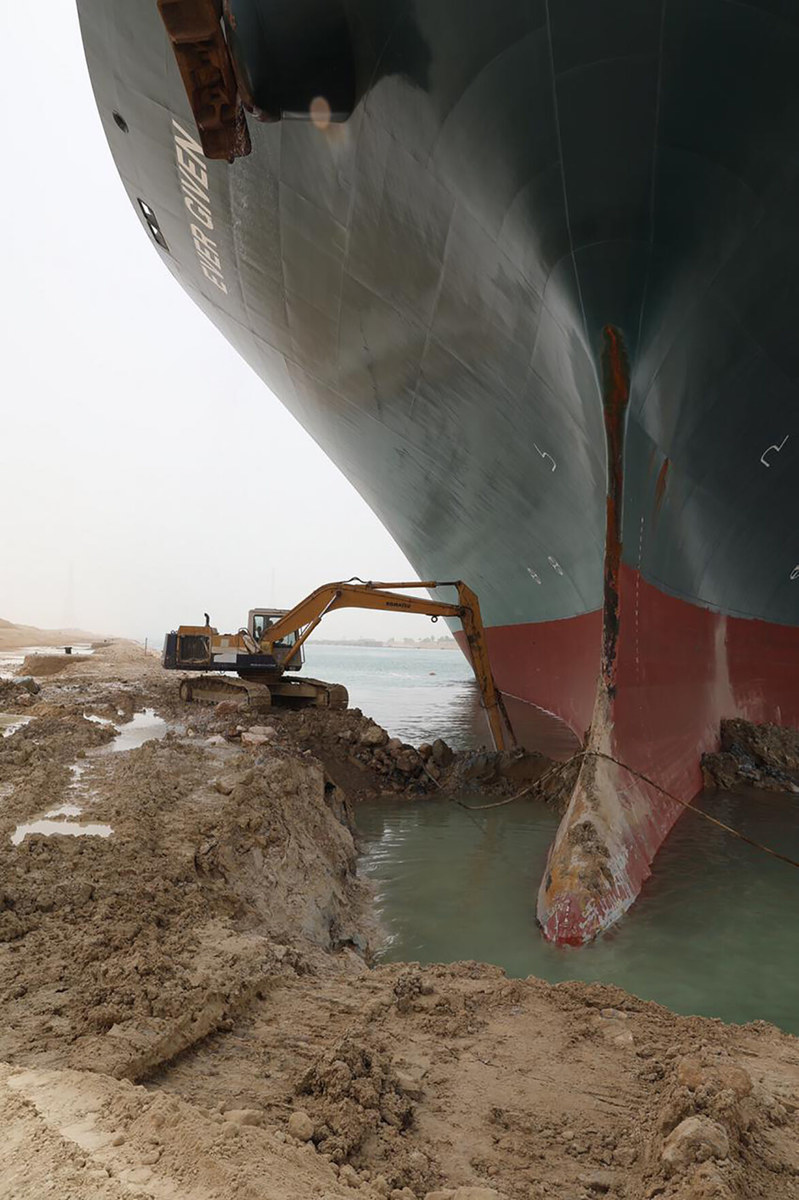


Crew use excavating equipment to dig out the Ever Given. (uncredited)

The next day a building collapse in Cairo’s Gesr Suez district killing a further 18 people and leaving many homeless. Later, a fire broke out at shops adjunct to Zagazig railway station and another small fire erupted inside Al-Azhar tunnel. Elsewhere, an under-construction bridge column collapsed in Mariotya. 

Many people have said it was unusual for all these incidents to occur one after the other, and that there must be a bigger reason to why they have happened – rather than just a run of devastatingly bad luck. 
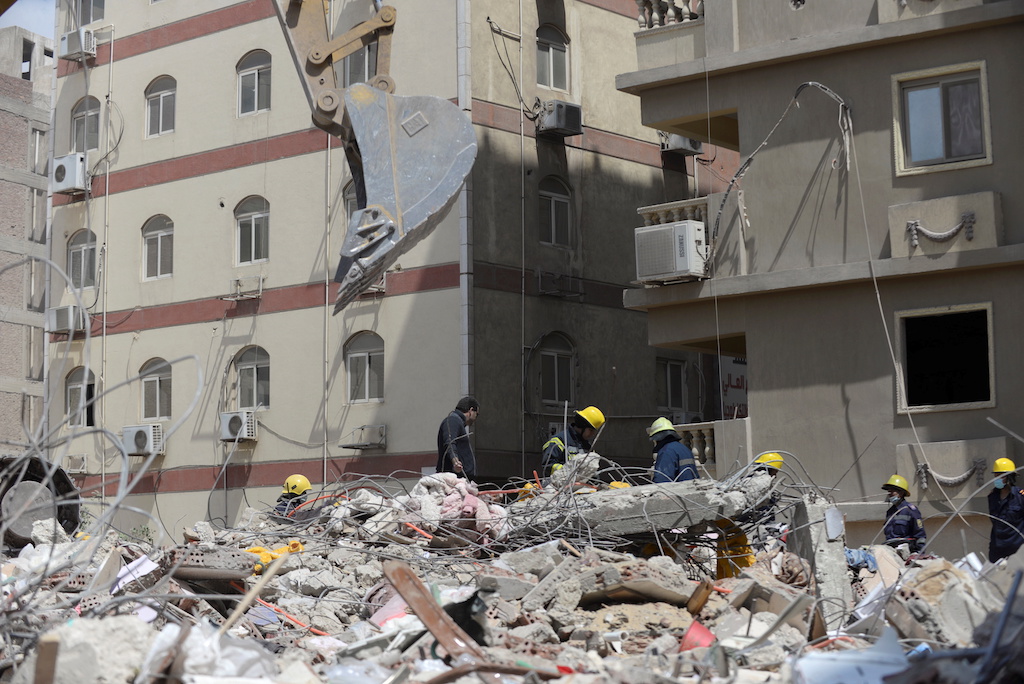


Rescurers work at the site where a building collapsed in Gesr al-Suez, Cairo. (Reuters)

So rather than taking a logical, scientific explanation, an inscription at an ancient tomb was widely circulated online as a possible reason behind the incidents. 

“Death will come on quick wings for those who disturb the king’s peace,” reads a curse written on King Tut's tomb.  

One Facebook user shared the inscription and wrote: “Please, do not move the mummies from their place, this is better... Beware of the wrath of the pharaohs”. 

A curse or bad luck? 

The ancient phenomenon suggests that a curse would be cast upon anyone who disturb the mummies of ancient Egypt. 

Renowned Egyptologist Zahi Hawass commented on the matter saying the supposed curse of the pharaohs cannot have any relation to the events happening in the country. 

Hawass went on to say that there was no such thing as “the curse of the pharaohs” during to a televised interview.   

Hawass said the event of transferring the mummies to a new museum will be watched worldwide and is going to be “the country’s biggest promotion”, as quoted by the Daily News Egypt. 

The parade of 22 royal mummies will be transferred from the museum in Tahrir Square to their new permanent display at the National Museum of Egyptian Civilization. The event is scheduled to take place in Cairo on April 3. 
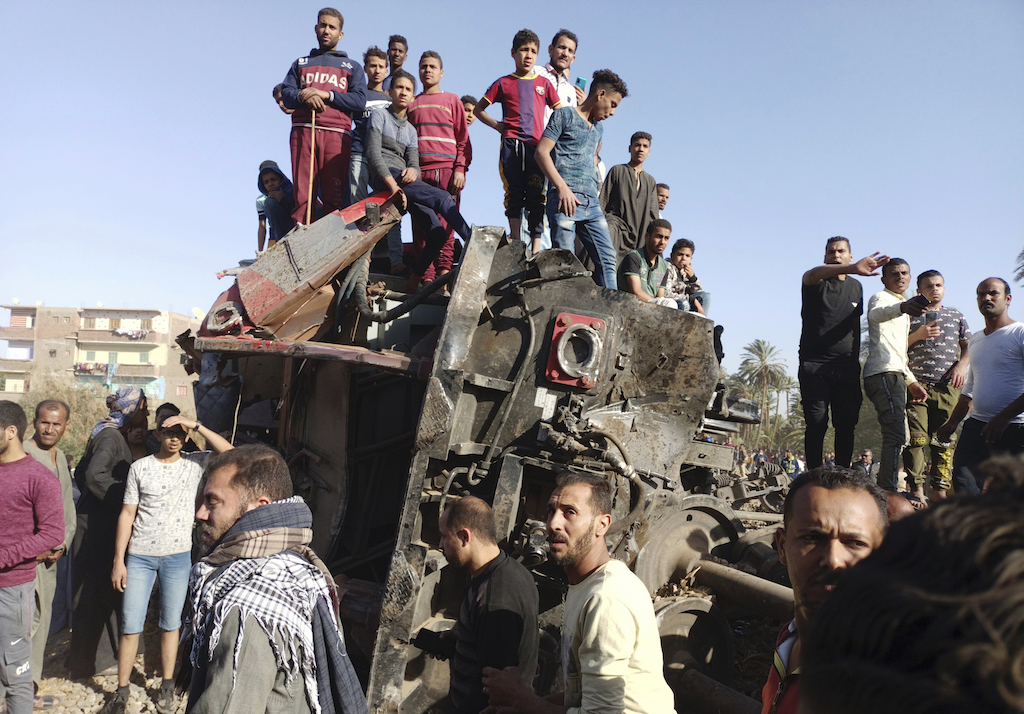


In this Friday, March 26, 2021 file photo, Egyptians gather around mangled train carriages at the scene of a train accident in the southern Egyptian city of Sohag. (AP)


St. Francis relics go on public show for first time in Italy

Updated 1 min 13 sec ago
Follow

St. Francis relics go on public show for first time in Italy

Assisi, Italy: Saint Francis of Assisi’s skeleton is going on public display from Sunday for the first time for the 800th anniversary of his death, drawing hundreds of thousands of visitors.
Inside a nitrogen-filled plexiglass case with the Latin inscription “Corpus Sancti Francisci” (The Body of St. Francis), the remains are being shown in the Italian hill town’s Basilica of St. Francis of Assisi.
St. Francis, who died on October 3, 1226, founded the Franciscan order after renouncing his wealth and devoting his life to the poor.
Giulio Cesareo, director of communications for the Franciscan convent in Assisi said he hoped the display could be “a meaningful experience” for believers and non-believers alike.
Cesareo, a Franciscan friar, said the “damaged” and “consumed” state of the bones showed that St. Francis “gave himself completely” to his life’s work.
His remains, which will be on display until March 22, were transferred to the basilica built in the saint’s honor in 1230.
But it was only in 1818, after excavations carried out in utmost secrecy, that his tomb was rediscovered.
Apart from previous exhumations for inspection and scientific examination, the bones of Saint Francis have only been displayed once, in 1978, to a very limited public and for just one day.
Usually hidden from view, the transparent case containing the relics since 1978 was brought out on Saturday from the metal coffer in which it is kept, inside his stone tomb in the crypt of the basilica.
The case is itself inside another bullet-proof and anti-burglary glass case.
Surveillance cameras will operate 24 hours a day for added protection of the remains.
St. Francis is Italy’s patron saint and the 800th anniversary commemorations of his death will also see the restoration of an October 4 public holiday in his honor.
The holiday had been scrapped nearly 50 years ago for budget reasons.
Its revival is also a tribute to late pope Francis who took on the saint’s name.
Pope Francis died last year at the age of 88.

‘Not a movie set’

Reservations to see the saint’s remains already amount to “almost 400,000 (people) coming from all parts of the world, with of course a clear predominance from Italy,” said Marco Moroni, guardian of the Franciscan convent.
“But we also have Brazilians, North Americans, Africans,” he added.
During this rather quiet time of year, the basilica usually sees 1,000 visitors per day on weekdays, rising to 4,000 on weekends.
The Franciscans said they were expecting 15,000 visitors per day on weekdays and up to 19,000 on Saturdays and Sundays for the month-long display of the remains.
“From the very beginning, since the time of the catacombs, Christians have venerated the bones of martyrs, the relics of martyrs, and they have never really experienced it as something macabre,” Cesareo said.
What “Christians still venerate today, in 2026, in the relics of a saint is the presence of the Holy Spirit,” he said.
Another church in Assisi holds the remains of Carlo Acutis, an Italian teenager who died in 2006 and who was canonized in September by Pope Leo XIV.
Experts said the extended display of St. Francis’s remains should not affect their state of preservation.
“The display case is sealed, so there is no contact with the outside air. In reality, it remains in the same conditions as when it was in the tomb,” Cesareo said.
The light, which will remain subdued in the church, should also not have an effect.
“The basilica will not be lit up like a stadium,” Cesareo said. “This is not a movie set.”