



NEW YORK CITY: It is an impending disaster that looms large over any talk of peace in Yemen, humanitarian efforts and ecological concerns.
The Safer oil tanker has been moored in the Red Sea off the coast of Yemen, near the Ras Isa oil terminal, for more than five years.
The vessel is a floating storage and offloading (FSO) terminal that was used as an offshore platform for ships loading crude oil from the Marib-Ras Isa pipeline.
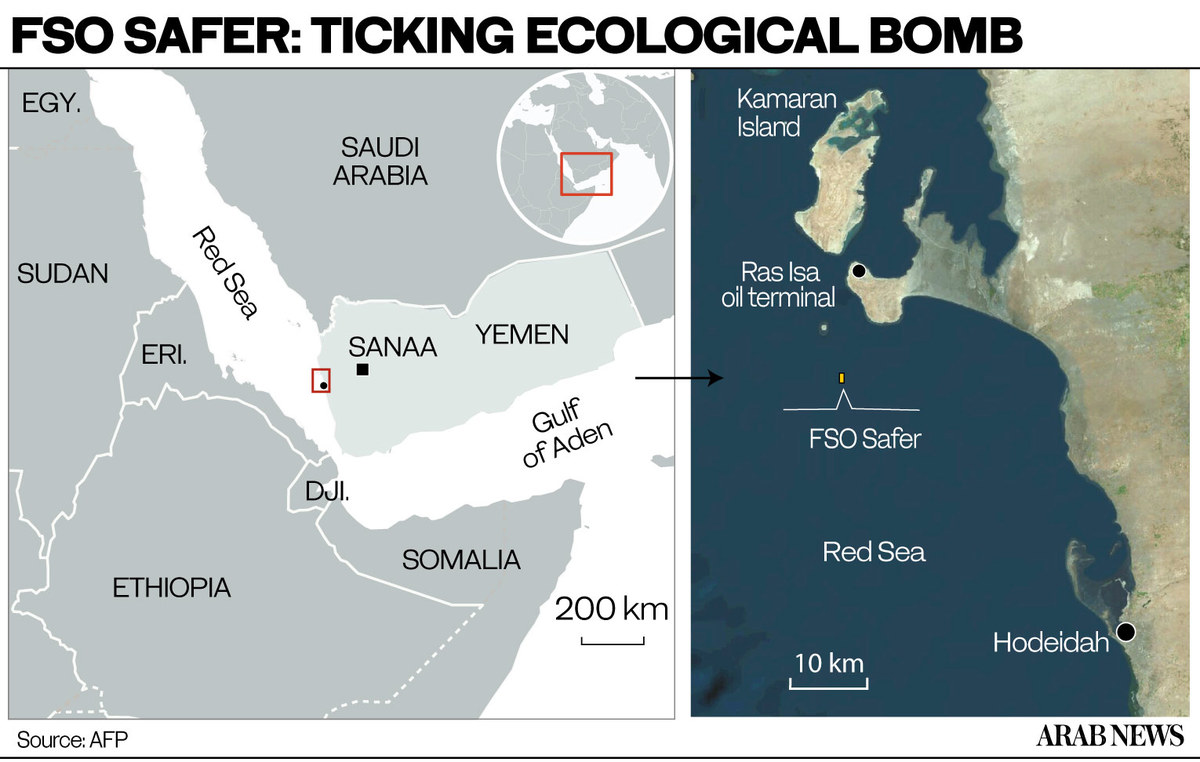
It is owned by Yemen’s national oil company, the Safer Exploration & Production Operation Company, but fell into the hands of the Houthis in 2015, early in the Yemeni civil war. Since then, no maintenance work has been carried out on the aging tanker.
When Saudi Foreign Minister Prince Faisal bin Farhan announced on March 22 a new initiative to bring peace to Yemen, Arab News asked him what could be done to defuse this ticking time bomb.
“We are extremely concerned about the Houthis continuing to put up obstacles to the UN doing what it needs to do to safeguard this oil tanker that threatens a true ecological disaster of unprecedented scale in the Red Sea,” Prince Faisal replied.
“It is something that is extremely concerning. It’s very, very disheartening that the Houthis are using the environment and the livelihoods of hundreds, if not thousands, of fishermen as a bargaining tool.
“And, therefore, we call on the international community to do all it can to ensure that this situation is addressed forthwith, (so) that this issue is not used by the Houthis to blackmail the international community.”
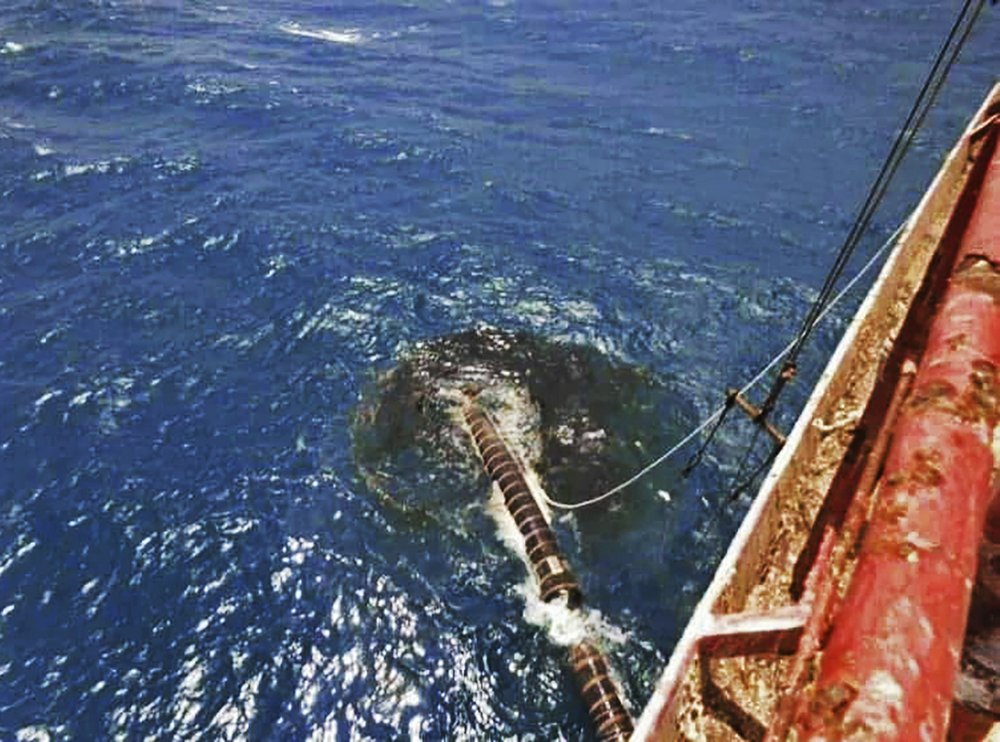
This image provided by I.R. Consilium taken in 2019, shows the external piping system of the FSO Safer and the hose failure that led to a spill, moored off Ras Issa port, Yemen. (AFP/File Photo)
FSO Safer’s structure, equipment and operating systems are deteriorating, leaving the tanker at risk of springing a leak, exploding or catching fire.
With 48 million gallons of oil on board, the UN warns a potential leak would be four times bigger than the 1989 Exxon Valdez disaster off the coast of Alaska, considered the world’s worst oil spill in terms of environmental damage.
Experts estimate a major leak could severely damage Red Sea ecosystems, upon which some 30 million people depend, including 1.6 million Yemenis, according to the UN.
A spill would devastate fisheries along Yemen’s west coast and destroy the livelihoods of fishing communities, many of which are already dependent on humanitarian aid to survive. If a fire occurs, more than 8.4 million people could be exposed to toxic pollutants.
Most concerning of all for the UN, however, is that an oil spill would lead to the closure of Hodeidah port, which would cause food and fuel prices to soar and lead to a blockage of humanitarian aid to millions of Yemenis.
This is at a time when Yemen faces the world’s worst man-made humanitarian disaster and stands on the brink of famine.
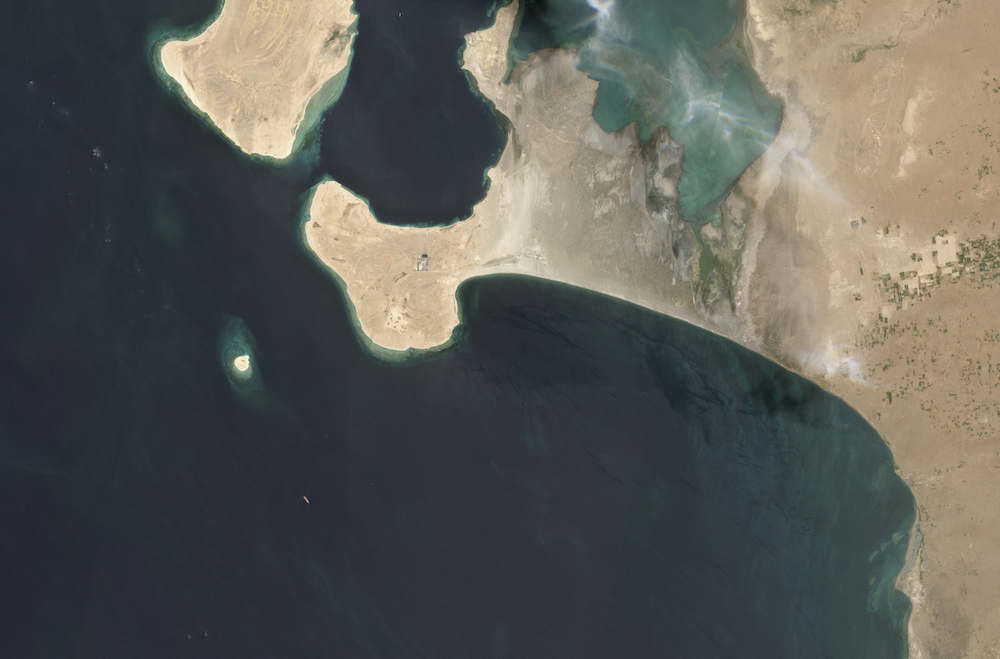
This handout satellite image obtained courtesy of Maxar Technologies on July 19, 2020 shows an overview of the FSO Safer oil tanker on June 19, 2020 off the port of Ras Isa. (AFP/File Photo)
A potential spill could also disrupt commercial shipping routes on the Red Sea, one of the world’s busiest waterways that accounts for 10 percent of global trade. It could also adversely impact littoral countries including Saudi Arabia, Djibouti and Eritrea.
Since 2019, the UN has been lobbying to deploy a team of experts to assess the condition of the tanker and conduct initial repairs. The first mission, which was deployed to Djibouti in August that year, was cancelled at the last minute when the Houthis abruptly withdrew their consent.
Negotiations about another mission have been going on ever since between the UN and the Houthis. These talks increased in urgency in May 2020 when seawater was reported in the Safer’s engine room.
Even though it was a relatively small leak, it took divers more than five days to contain it. The UN says it is unclear how long the patch will hold.
Antonio Guterres, the UN secretary-general, and the Security Council have pleaded with the Houthis to allow access to the tanker for assessment and repairs.
“It’s a bit of a cat-and-mouse (situation),” said Stephane Dujarric, spokesman for the UN secretary-general, after a new list of Houthi demands relating to “logistics and security arrangements” caused fresh delays last month.
“We hope that these discussions conclude quickly so we can move forward with booking the mission’s vessels.
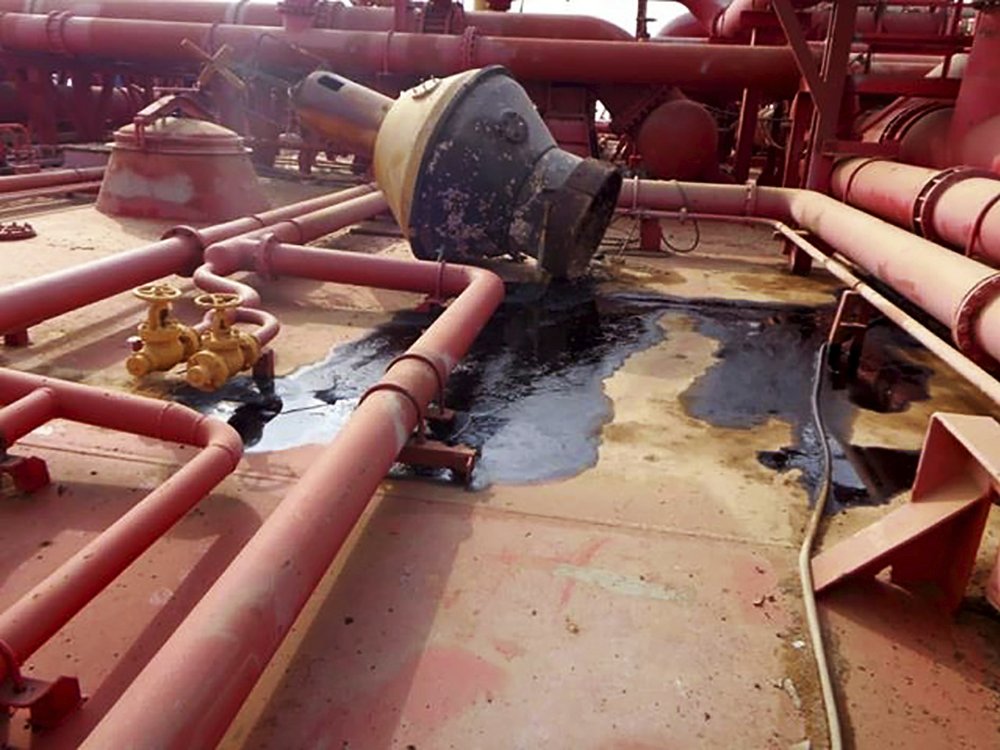
This image provided by I.R. Consilium taken in 2019, shows the deck of the FSO Safer, indicating the lack of basic maintenance for several years, leading to incidental smaller spills, moored off Ras Issa port, Yemen. (AFP/File Photo)
“The environmental and humanitarian disaster that is waiting to happen in case of an oil spill is entirely avoidable. We are doing everything possible to deploy this mission at the earliest possible opportunity as an important step toward averting this catastrophe.
“We understand that many member states, including donors to the project, are extremely concerned by these new delays. We of course share those concerns.”
Referring to the Houthis’ demands, Dujarric said: “We are working as diligently as possible on a field where sometimes the goalposts seem to shift.
“By the grace of God, there has not been a major leak. The more we wait, the chances of a major leak are increasing. Time is not on anyone’s side.
“The mission will give us the assessment we need to formulate a permanent solution. It is already two years late and cannot not be stalled any longer.
“This is not a matter of just sending UN staff to an area. This is having to procure highly specific and technical equipment, and getting people with very, very pointed experience who are able and willing, from a private sector company, to go on this first assessment mission.”
Asked whether enforcement action might be appropriate under Chapter 7 of the UN Charter — which provides a framework for the Security Council to act in response to threats to peace and acts of aggression, or to prevent the aggravation of a situation — Dujarric said this would be for member states to decide.
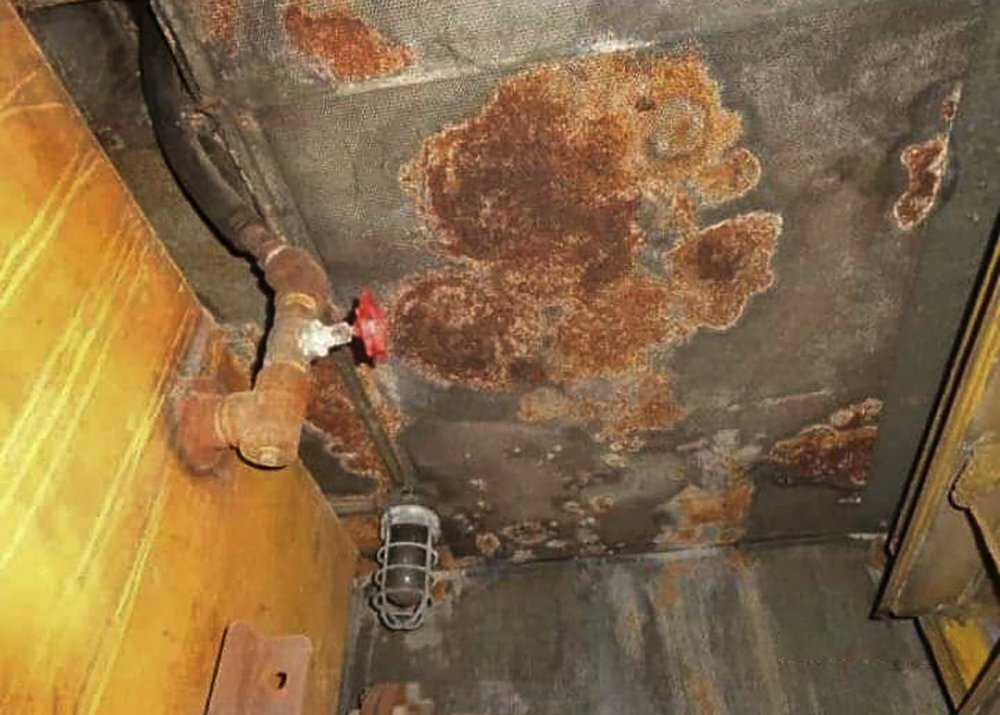
This image provided by I.R. Consilium taken in 2019, shows the internal decay of inside the FSO Safer and the lack of a functioning cathodic protection system, moored off Ras Issa port, Yemen. (AFP/File Photo)
The international community has made its stance clear. At the latest Security Council meeting on Yemen on March 16, the 15-member body spoke in unison against Houthi stalling.
“The Houthis are now threatening irreversible catastrophe delaying the UN’s assessment and initial repair of the Safer oil tanker. It is well past time for the Houthis to quit stalling,” said Linda Thomas-Greenfield, the US ambassador to the UN.
Her UK counterpart, Barbara Woodward, said: “The Houthis must urgently implement the multiple Security Council calls for them to facilitate the UN assessment and repair mission.”
Ireland’s top UN envoy Geraldine Byrne Nason said: “We have seen previous explosions and oil spills in recent memory cause tremendous devastation and lasting impact” — a reference that included the devastation caused by the Beirut port blast in August 2020.
“For the Houthis to allow this catastrophe to unfold, when help is being offered, would be simply unforgivable.”
In the meantime, UN talks with the Houthis to resolve “logistical and security” arrangements are continuing, according to Farhan Haq, deputy spokesman for the UN chief.
“We hope these discussions will come to a conclusion soon so we can get a timeline for deployment.
“There is also a technical meeting with the government of Yemen to brief them on the efforts to deploy the mission at the earliest opportunity.”
---------------
Twitter: @EphremKossaify

keywords


