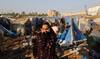
ISTANBUL: The trial of Turkey’s Saturday Mothers — a group that campaigns to find the whereabouts of sons, fathers and husbands who disappeared after the 1980 military coup — began on March 25 in Istanbul.
The group has been gathering in Istanbul’s Istiklal Street’s Galatasaray Square every Saturday since May 27, 1995. Their protest is partly inspired by the Mothers of Plaza de Mayo in Argentina who demanded to know the fates of loved ones who disappeared during their country’s dictatorship.
Forty-six group members had their first hearing of the trial on Thursday. They face charges of disrupting public order by “resisting police forces” in 2018, despite exercising their right to peaceful assembly, guaranteed by Article 34 of the Turkish constitution.
In August 2018, the ruling Justice and Development Party (AKP) banned the Saturday Mothers from assembling. During their 700th vigil, the police intervened brutally with tear gas and detained protesters, including 83-year-old Emine Ocak, dragging some of them to the ground.
Domestic and international rights groups monitoring the hearing have called for the dropping of all charges as well as the lifting of the unlawful ban on the peaceful sit-ins.
If found guilty, the 46 individuals, who include political activists, journalists, human rights defenders and relatives of victims, will face a jail term of between six months and three years.
A statement was read out on behalf of the group ahead of the trial emphasizing their determination not to give up their struggle for rights.
Amnesty International has asked for the acquittal of all people on trial. “Demanding truth and justice for disappeared loved ones is not a crime,” said Amnesty International’s Turkey campaigner, Milena Buyum.
A joint public statement released by Amnesty International, Human Rights Watch and Front Line Defenders said: “The baseless prosecution of these 46 individuals for exercising their rights to freedom of expression and peaceful assembly in defense of human rights is only the most recent government action in a relentless crackdown on civil society, human rights defenders and those who peacefully express their dissent in Turkey.”
Enforced disappearances were common during the 1980s and 1990s in Turkey as people, mostly left-wing and pro-Kurdish activists, were kidnapped, detained or unofficially taken into custody by individuals who introduced themselves as state officials.
“I would like to tell you what it looks like to be a relative of somebody who is missing. For my brother, who has been missing for 40 years, we received (his) voting paper in every election period,” Faruk Eren, brother of Hayrettin Eren, who disappeared in custody, said during the trial.
Despite the ban imposed in 2018, the Saturday Mothers have continued their peaceful vigils in Taksim, but always with police intervention and tear gas being used. Some mothers who last saw their sons or daughters almost two decades ago were attacked during the gatherings.
During the pandemic, the gatherings — the longest-lasting peaceful assembly in Turkey’s history at 830 weeks so far — were held online each week, attracting people from a variety of backgrounds around one cause: Keeping alive their struggle for finding their loved ones and holding the perpetrators accountable.
Recently, a socialist activist, Gokhan Gunes, was kidnapped in Istanbul in the middle of the street by a group and was missing for six days, during which time he was allegedly stripped naked, electrocuted and tortured with water by his abductors.
The kidnapping of Gunes was reminiscent of the struggle of the Saturday Mothers, who have been demanding justice for members of their family who were abducted in similar ways.
Ali Seker, a lawmaker from the main opposition CHP party who attended the trial, said that he was witness to police violence against the Saturday Mothers during their 700th gathering.
“These people held the world’s most peaceful demonstration for years at the same spot to remind of their loss. They asked for the bones of their children back. They asked for accountability. The third generation of Saturday Mothers grew up in at Galatasaray square,” he told Arab News.
“Rather than holding the perpetrators of that violence accountable, people who suffered violence and were taken into custody are facing charges today. This is unacceptable. I’m sure that the Saturday Mothers will be back to the same spot to search for justice and we’ll be always on their side,” Seker said.
Following the brutal police intervention in August 2018, AKP Spokesperson Omer Celik said: “We will not allow mothers to be abused by some terrorist groups.”
According to estimates by human rights groups, the number of forced disappearances and unidentified political murders may exceed more than 17,500 in Turkey.