
DUBAI: When historian Pierre de Coubertin looked to the distant past for sporting inspiration, he could never have imagined he would go on to be remembered as the father of the modern Olympic Games.
The Frenchman was a student of the ancient games, which took their name from the Panhellenic religious sanctuary of Olympia in western Greece, where they were originally held between the 8th century BC and the 4th century AD.
In 1894, Coubertin founded the International Olympic Committee (IOC) and, just two years later, the first modern Olympics were held in Athens in recognition of their historical origins.
Since then, the Summer Games have taken place every four years, save for those canceled by the world wars, just as they did in ancient Greece, with the introduction of the Winter Games in 1924, the Paralympics in 1948 and the Youth Olympics in 2010.
But when those first official games took place in 1896, modern Saudi Arabia’s foundation as an independent nation state was still 36 years away.
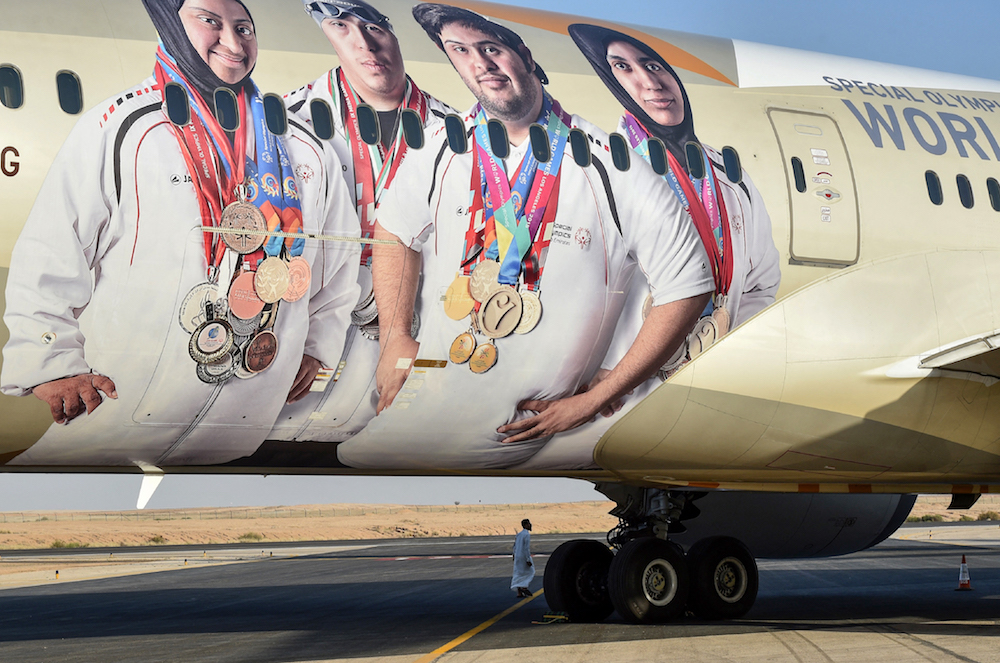
A picture taken on March 13, 2019 shows an aircraft by Abu Dhabi's Etihad carrier decorated to celebrate the upcoming Special Olympics World Games during the Saudi International Airshow at Thumamah Airport in the capital Riyadh. (AFP/File Photo)
The Kingdom joined the UN at its inception in 1945, but its engagement in general sporting development was slower off the starting blocks. Olympic participation, for long, remained a distant dream.
As football’s global popularity swept the Kingdom in the first half of the 20th century, many other Olympic sports, such as track and field, fencing and equestrianism, would take a little longer to catch on, officially at least, in Saudi Arabia.
The Saudi Arabian Football Federation was established in 1956 and immediately became a member of FIFA. By that time, several clubs were already in existence. Al-Ittihad of Jeddah, for instance, was established in 1927, five years before independence, while city neighbors Al-Ahli came 10 years later.
The trio of Riyadh clubs, Al-Shabab, Al-Nassr and Al-Hilal, were founded in 1947, 1955 and 1957 respectively.
By contrast, the Saudi National Olympic Committee (NOC) was not established until 1965, and Saudi athletes did not compete until the Munich Games of 1972.
READ MORE
The Saudi Arabian Olympic Committee (SAOC) managed to deliver tremendous achievements during 2020, despite the challenges the sports world has endured amid the coronavirus pandemic. Click here to read more.
Since then, the Kingdom has sent athletes to 11 of the 12 Summer Games, the only exception being Moscow 1980, when Saudi Arabia joined a US-led boycott of the USSR in response to the Russian invasion of Afghanistan six months earlier.
Remarkably, considering their impressive achievements in the 1980s, 1990s and beyond, generation after generation of Saudi footballers had, until recently, failed to qualify for the Olympics.
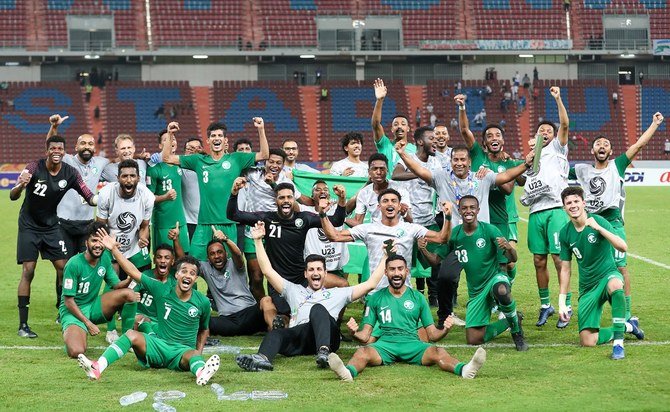
After three AFC Asian Cup triumphs in 1984, 1988 and 1996, and five World Cup appearances in 1994, 1998, 2002, 2006 and 2018, that record was put straight when the Saudi under-23s team qualified to compete at the Tokyo Games, due to take place this summer but postponed by the coronavirus pandemic.
Saudi Olympic medal success finally came in the Kingdom’s seventh games at Sydney 2000 when Hadi Soua’an Al-Somaily won silver in the 110-meter hurdles and Khaled Al-Eid claimed bronze in the individual show jumping event.
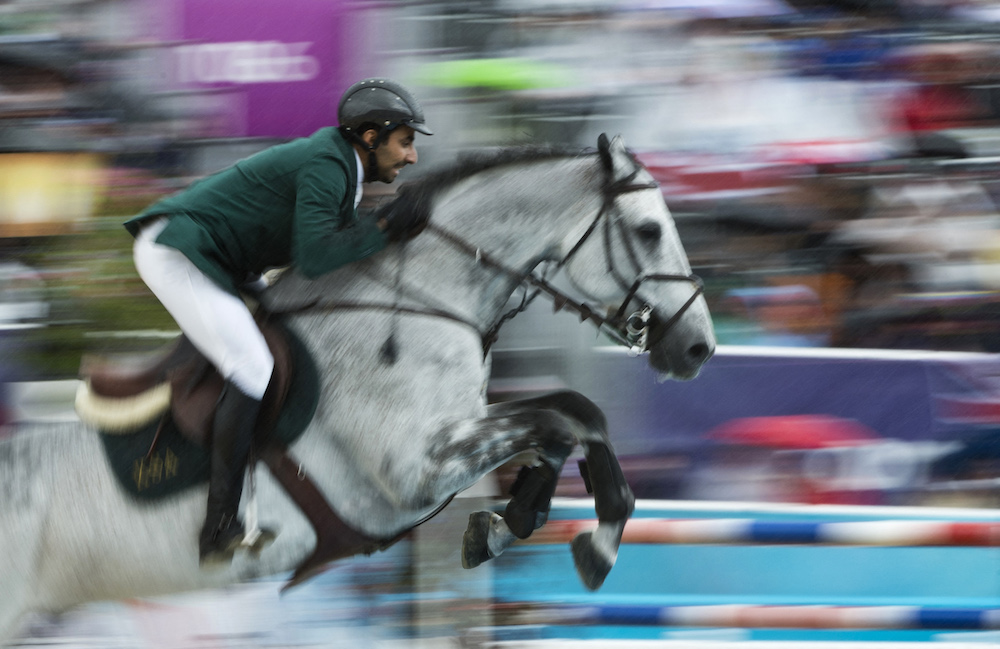
Prince Abdullah Al Saud of Saudi Arabia on Davos competes in the second Individual Show Jumping qualifier of the 2012 London Olympics at the Equestrian venue in Greenwich Park, London on August 5, 2012. (AFP/File Photo)
“Since the beginning of the modern Olympic movement in 1896, respect, excellence and friendship have been talked about mainly,” Prince Fahd bin Jalawi Al-Saud, vice president of the Saudi Olympic Committee, told Arab News in December.
“That is what has been happening for the last 124 years and that is what we can see in any Olympic event, either at the Olympic Games or any other event related to it.”
It was not until 2012 that a Saudi athlete set foot on the podium again, with equestrians Ramzy Al-Duhaim, Abdullah Al-Saud, Abdullah Sharbatly and Kamal Bahamdan winning bronze in the show jumping team event.
Perhaps more significantly, London 2012 were the first senior games to include female Saudi athletes — a change many felt had been a long time coming.
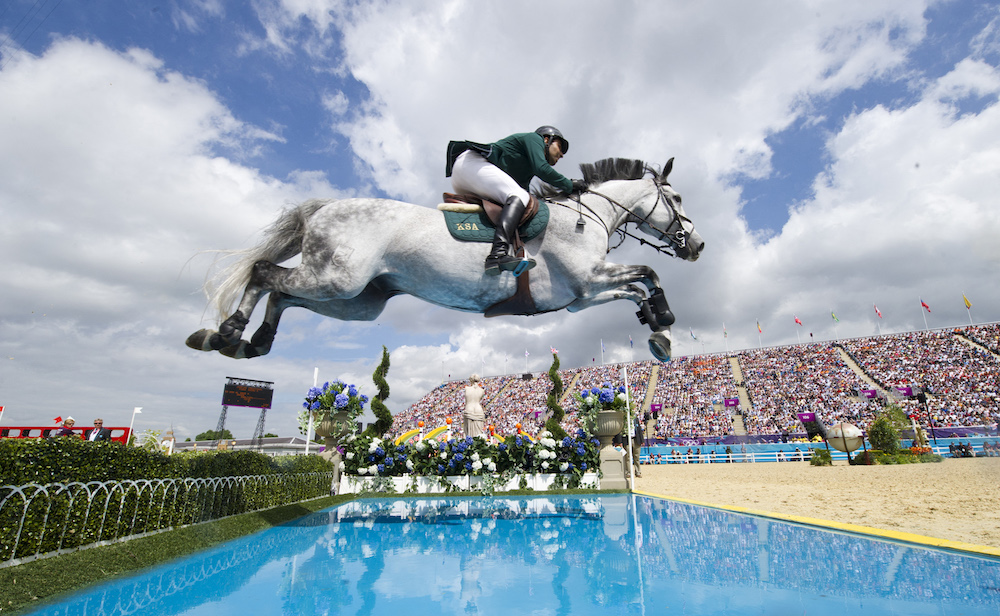
Prince Abdullah Al Saud of Saudi Arabia on Davos competes in the second Individual Show Jumping qualifier of the 2012 London Olympics at the Equestrian venue in Greenwich Park, London on August 5, 2012. (AFP/File Photo)
Changes in the Olympic charter meant that every participating nation must include at least one female competitor. At the 2010 Youth Olympics in Singapore, 18-year-old Dalma Rushdi Malhas had won bronze for Saudi Arabia in the individual show jumping event. Her podium finish was the Kingdom’s only victory at the competition.
Two years later in London, it was the turn of athlete Sarah Attar in the 800 meters and judo competitor Wojdan Shaherkani in the above 78kg event to make history as the first Saudi female athletes at the senior Olympics.
While there had been a genuine desire from the Saudi side to take female athletes to London, there was still an impulse within the NOC not to cause offense at a time when a still conservative Kingdom had not yet seen the cultural and societal changes of the late 2010s and early 2020s.
There were even last-minute concerns that Shaherkani would pull out if she was not allowed to wear her hijab during competition. But, having pushed the Saudi NOC to introduce women into the games, the IOC relented.
There would be no medals for either competitor, but a longstanding taboo had been broken.
“Any change will face some resistance. What we do in the Ministry of Sports and the Saudi Sport for all Federation is all about diversity and inclusion,” Prince Abdulaziz bin Turki Al-Faisal, who became the Kingdom’s first sports minister in early 2020, told Arab News late last year, while discussing women’s participation in sport.
“Things are changing in a positive way and we have to make sure that it changes in the right way with the right momentum.”
In the 2016 Olympic Games, Saudi Arabia took seven male and four female competitors to Rio.
Attar returned for her second games, but this time in the women’s marathon rather than the 800-meter dash. She was joined by Kariman Abuljadayel, who took part in the first heat of the women’s 100 meters, but did not progress further.
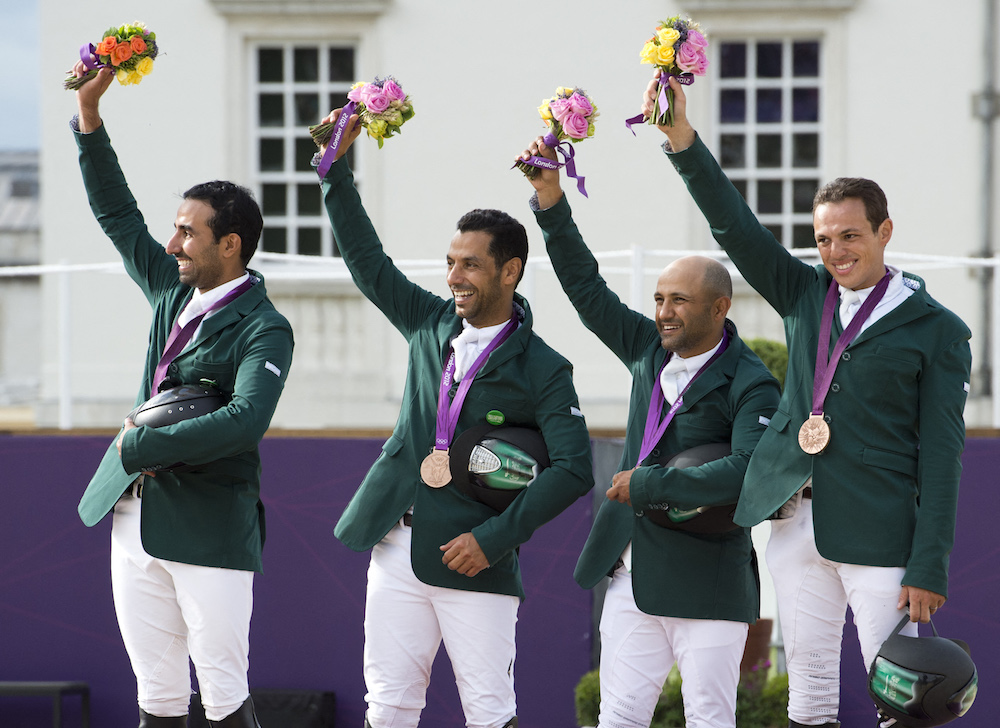
The Saudi team (from L) Prince Abdullah al Saud, Kamal Bahamdan, Ramzy Al Duhami and Abdullah Waleed Sharbatly (bronze) celebrate with their bronze medals on the podium of the team Show Jumping event of the 2012 London Olympics. (AFP/File Photo)
On the men’s side, Abdullah Abkar Mohammed ran in the 100-meter race, while long-distance runners Tariq Ahmed Al-Amri and Mukhlid Mahil Al-Otaibi took part in the 5,000 meters.
Sultan Al-Dawoodi competed in the discus, Atallah Al-Anazi in shooting and Sulaiman Hamad in judo.
Doubling the number of female athletes from the London Games, Joud Fahmy and Lubna Al-Omair took part respectively in judo and fencing.
Sadly, there would not be a single Saudi medal in Rio. But the days when simply taking part was seen as a minor triumph in itself are coming to an end.
Since the Kingdom launched its ambitious Vision 2030 plan to diversify the economy away from oil, Saudi Arabia has made several bids to host international sports tournaments and has eased social restrictions on participation and spectating.
With more and more male and female sports federations being established on an almost monthly basis, and genuine financial backing coming from the country’s authorities, the time is surely not far when more Saudi athletes will qualify for the Olympics.
--------------
Twitter: @AliKhaled_